Fernando Traverso: The Art of Absence and Solidarity with Palestine
Introduction: An Artist and His Universal Symbol
Fernando Traverso (Rosario, Argentina, 1951) is a visual artist whose work transcends borders and has become a powerful bridge of solidarity between Latin American memory and the Palestinian struggle. While he is known worldwide for an urban intervention deeply rooted in Argentine history, his art has evolved into a universal language of denunciation and empathy, finding a particularly resonant echo in the Palestinian cause.
The Bicycle: From Rosario to Ramallah
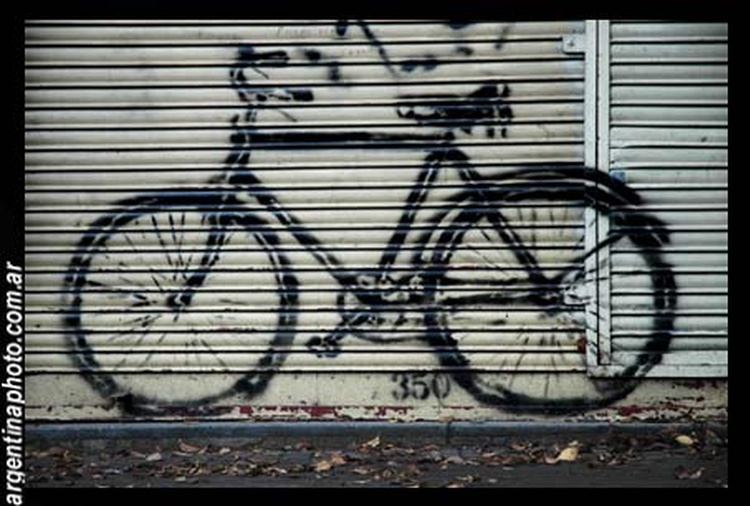
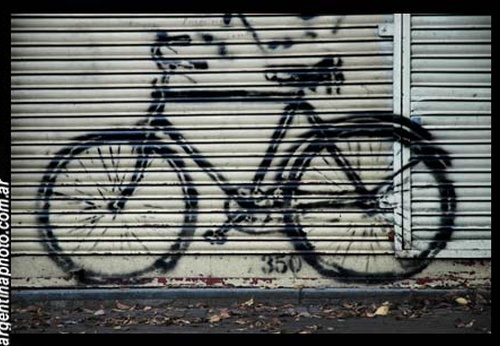
Traverso's emblematic work is the "painted bicycles" (silhouettes of ownerless bicycles painted on the walls of Rosario). Created in the 1990s, they initially represented the absence of the 300 people who disappeared from his city during the Argentine military dictatorship (1976-1983). The bicycle, an everyday object, was transformed into an invisible monument to interrupted lives.
This powerful metaphor for absence, grief, and memory resonated immediately with the Palestinian reality. Traverso has explained in interviews how his symbol speaks directly to the experiences of loss, occupation, and resistance in Palestine. For him, each painted bicycle could also represent a political prisoner, a demolished house, or a missing relative in Palestinian lands.
Work and Action: Solidarity Beyond the Canvas
Traverso's contribution is not limited to analogy. He has created an active and explicit body of work expressing solidarity:
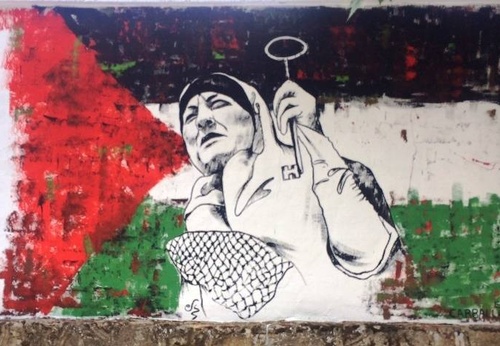
• Public Interventions: He has participated in projects where his iconic bicycle appears alongside Palestinian symbols such as the key (of return) or the olive tree, creating a hybrid visual of intertwined struggles.
• Thematic Exhibitions: He has included works in his exhibitions that directly reference the Israeli Separation Wall, comparing it to other walls of infamy throughout history.
• Thematic Exhibitions • Intellectual Commitment: He is a leading figure in forums and debates where he articulates the ethical and aesthetic connection between memory processes in Latin America and Palestine, arguing that "art is a territory for naming the unnamable" in both contexts.
Conclusion: A Bridge of Memories
Fernando Traverso embodies how Latin American art, nourished by its own histories of pain and resistance, can develop a universal visual vocabulary to accompany other struggles. His work demonstrates that solidarity is not just a discourse, but an artistic practice that intertwines memories, makes shared absences visible, and, above all, reaffirms humanity in the face of oppression. Through a simple bicycle silhouette, his art pedals ceaselessly between Rosario and Ramallah, uniting two distant geographies in a single demand for justice and truth.
Latamarte
.
Latest
Article
- February 09, 2026
Fernando Traverso: The Art of Absence and Solidarity with Palestine

Gallery
- February 09, 2026
Photography Gallery: Philippe Halsman, Latvian-American Photographer
Article
- February 09, 2026
Latin American Art and the Palestinian Cause

Gallery
- February 08, 2026
Gallery of Illustration by Léo Vargas – Brazil
Publications
- February 08, 2026
Book of Mexican Prints at the Vanguard
Article
- February 08, 2026
Indigenous Artistic Expressions of Latin America 2
Article
- February 08, 2026
Indigenous Artistic Expressions of Latin America1

News
- February 08, 2026
A Bridge Between Latin American Art and Diplomacy
Daily Artwork
- February 08, 2026
earthquake

- February 09, 2026
Fernando Traverso: The Art of Absence a…
- February 09, 2026
Latin American Art and the Palestinian …

- February 08, 2026
Indigenous Artistic Expressions of Lati…
- February 08, 2026
Indigenous Artistic Expressions of Lati…
- February 07, 2026
Muralism in Latin America: The Pictoria…
- February 07, 2026
Painting in Latin America: A Journey of…

- February 03, 2026
Artificial Intelligence and the Reconfi…
- February 02, 2026
10 most expensive Latin American painti…

- February 02, 2026
Importance of visual arts at School

- February 01, 2026
Impressionism and the Revolution of Lig…

- February 01, 2026
The Importance of Urban Art in the Iden…

- January 31, 2026
Artificial Intelligence in Graffiti Art
- January 31, 2026
The Future of Street Art

- January 28, 2026
Globalization and New Discourses in Con…
- January 28, 2026
Contemporary Art in Latin America

- January 27, 2026
The Evolution of Art: From Classical to…
- January 27, 2026
What are Visual Arts and Why Do They Ma…

- January 26, 2026
First artistic manifestations
- January 26, 2026
Art in the Street: Expression, Identity…

- January 25, 2026
text-to-image generator with ai
- August 29, 2023
The history of Bolivian art

- February 19, 2024
Analysis and meaning of Van Gogh's Star…
- January 28, 2024
Culture and Art in Argentina

- September 25, 2023
What is the importance of art in human …

- September 23, 2023
What is paint?

- August 23, 2023
The 11 types of art and their meanings
- August 10, 2023
14 questions and answers about the art …

- September 23, 2023
Painting characteristics
- August 30, 2023
First artistic manifestations
- January 12, 2024
10 most beautiful statues and sculpture…
- September 23, 2023
History of painting

- March 26, 2024
The importance of technology in art1

- July 13, 2024
The impact of artificial intelligence o…
- March 26, 2024
Cultural identity and its impact on art…
- April 07, 2024
Graffiti in Latin American culture
- April 06, 2024
History of visual arts in Ecuador
- August 16, 2023
The 15 greatest painters in art history

- April 02, 2024
History visual arts in Brazil
- October 18, 2023
History of sculpture

- August 24, 2023
The most famous image of Ernesto "Che" …
- February 19, 2024
Analysis and meaning of Van Gogh's Star…

- August 13, 2023
9 Latino painters and their great contr…
- August 23, 2023
The 11 types of art and their meanings
- August 10, 2023
14 questions and answers about the art …
- August 27, 2023
15 main works of Van Gogh
- August 29, 2023
The history of Bolivian art
- January 28, 2024
Culture and Art in Argentina
- November 06, 2023
5 Latin American artists and their works
- September 23, 2023
Painting characteristics
- September 23, 2023
What is paint?
- September 25, 2023
What is the importance of art in human …
- March 26, 2024
Cultural identity and its impact on art…
- August 30, 2023
First artistic manifestations
- December 18, 2023
10 iconic works by Oscar Niemeyer, geni…
- January 20, 2024
What is the relationship between art an…
- January 12, 2024
10 most beautiful statues and sculpture…
- August 24, 2023
The most famous image of Ernesto "Che" …

- October 30, 2023
Characteristics of Contemporary Art
- May 26, 2024
Técnicas de artes visuais

- August 22, 2023
What are Plastic Arts?