
Muralism in Latin America: The Pictorial Cry of the People
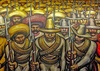
Muralism is undoubtedly one of Latin America's most powerful and distinctive contributions to world art. More than a technique or a style, it is a social and political phenomenon, a public art form that transformed walls into open pages of history, critique, and hope for the masses. Its epicenter was Mexico, but its influence spread throughout the continent.
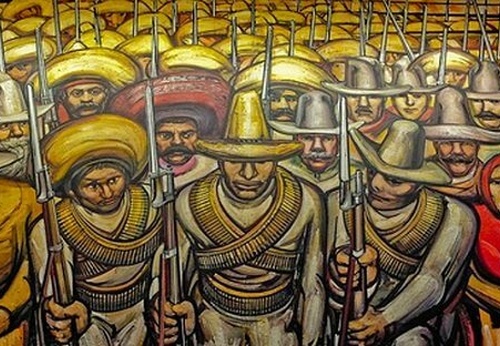
The movement was born in the 1920s, driven by the Mexican Revolution and a post-revolutionary government that sought to consolidate a national identity and educate a largely illiterate population. Under the motto "art for the people," the Big Three—Diego Rivera, David Alfaro Siqueiros, and José Clemente Orozco—elevated the mural to the status of national monumental art.
Each with a unique language: Rivera, with his epic and detailed narrative, glorified the pre-Hispanic world and the work of the peasant; Orozco, with his fierce expressionism, captured human tragedy and critiqued corruption; Siqueiros, the most technically experimental, used dynamic perspectives and new materials to convey a message of struggle and hope for the future. His works in public buildings such as the Ministry of Public Education and the National Palace are testaments to a nation in reconstruction.
The influence of Mexican muralism crossed borders. In countries like Ecuador, the Indigenist School of Quito, led by Oswaldo Guayasamín, used murals to denounce the oppression of indigenous peoples. In Peru, José Sabogal and the Cuzco School revalued indigenous culture. In Brazil, Cândido Portinari painted gigantic murals that reflected the harshness of life in the sugarcane fields.
However, muralism did not stagnate in the 1940s. It found new and vigorous inspiration in the 20th century with the emergence of murals as a tool for resistance and remembrance. Following the dictatorial regimes of the 1970s and 80s in the Southern Cone, walls became covered with protests. The most emblematic case is that of the Ramona Parra Brigade in Chile, during the government of Salvador Allende, and later during the dictatorship, where street murals became acts of courage and protest.
Today, muralism is experiencing a diverse golden age. From the powerful urban art and political graffiti in cities like Bogotá, São Paulo, and Mexico City, where contemporary artists address issues of social justice, feminism, and human rights, to community projects that seek to beautify and give voice to marginalized neighborhoods. The wall remains a democratic space, a pictorial megaphone that proves that in Latin America, art is not only contemplated: it is lived, discussed, and sometimes fought for from the wall into the street. It is the canvas of collective consciousness.
Latamarte
Latest
Article
- February 07, 2026
Muralism in Latin America: The Pictorial Cry of the People
Article
- February 07, 2026
Painting in Latin America: A Journey of Identity and Expression
Gallery
- February 07, 2026
Gallery of Typographic Posters by Jarr Geerligs – Netherlands
Publications
- February 06, 2026
The Ultimate Guide to Exploring the Galapagos
Gallery
- February 05, 2026
Gallery of Cartoon by Cuban Cartoonists
Publications
- February 05, 2026
Explore the Wonders of PERU from the Amazon to the Andes

Publications
- February 04, 2026
Brazil's Pantanal: South America's Grandest Wildlife Realm
Daily Artwork
- February 03, 2026
A hole in one

Article
- February 03, 2026
Artificial Intelligence and the Reconfiguration of Matter
- February 07, 2026
Muralism in Latin America: The Pictoria…
- February 07, 2026
Painting in Latin America: A Journey of…

- February 03, 2026
Artificial Intelligence and the Reconfi…
- February 02, 2026
10 most expensive Latin American painti…

- February 02, 2026
Importance of visual arts at School

- February 01, 2026
Impressionism and the Revolution of Lig…
- February 01, 2026
The Importance of Urban Art in the Iden…

- January 31, 2026
Artificial Intelligence in Graffiti Art

- January 31, 2026
The Future of Street Art

- January 28, 2026
Globalization and New Discourses in Con…

- January 28, 2026
Contemporary Art in Latin America

- January 27, 2026
The Evolution of Art: From Classical to…
- January 27, 2026
What are Visual Arts and Why Do They Ma…

- January 26, 2026
First artistic manifestations
- January 26, 2026
Art in the Street: Expression, Identity…

- January 25, 2026
text-to-image generator with ai

- January 25, 2026
The 'uncomfortable' muralist who portra…

- January 24, 2026
Artificial Intelligence as a Tool and C…

- January 24, 2026
Artificial Intelligence in Art

- January 21, 2026
Art of Artificial Intelligence and its …
- August 29, 2023
The history of Bolivian art

- February 19, 2024
Analysis and meaning of Van Gogh's Star…
- January 28, 2024
Culture and Art in Argentina

- September 25, 2023
What is the importance of art in human …

- September 23, 2023
What is paint?

- August 23, 2023
The 11 types of art and their meanings

- August 10, 2023
14 questions and answers about the art …

- September 23, 2023
Painting characteristics
- August 30, 2023
First artistic manifestations
- January 12, 2024
10 most beautiful statues and sculpture…
- September 23, 2023
History of painting

- March 26, 2024
The importance of technology in art1

- July 13, 2024
The impact of artificial intelligence o…
- March 26, 2024
Cultural identity and its impact on art…
- April 07, 2024
Graffiti in Latin American culture

- April 06, 2024
History of visual arts in Ecuador
- August 16, 2023
The 15 greatest painters in art history

- April 02, 2024
History visual arts in Brazil
- October 18, 2023
History of sculpture

- January 31, 2024
Examples of Street Art – Urban Art
- February 19, 2024
Analysis and meaning of Van Gogh's Star…

- August 13, 2023
9 Latino painters and their great contr…
- August 23, 2023
The 11 types of art and their meanings
- August 10, 2023
14 questions and answers about the art …
- August 27, 2023
15 main works of Van Gogh
- August 29, 2023
The history of Bolivian art
- January 28, 2024
Culture and Art in Argentina

- November 06, 2023
5 Latin American artists and their works
- September 23, 2023
Painting characteristics
- September 23, 2023
What is paint?
- September 25, 2023
What is the importance of art in human …
- March 26, 2024
Cultural identity and its impact on art…
- August 30, 2023
First artistic manifestations
- December 18, 2023
10 iconic works by Oscar Niemeyer, geni…

- January 20, 2024
What is the relationship between art an…
- January 12, 2024
10 most beautiful statues and sculpture…

- August 24, 2023
The most famous image of Ernesto "Che" …

- October 30, 2023
Characteristics of Contemporary Art
- May 26, 2024
Técnicas de artes visuais
- August 22, 2023
What are Plastic Arts?