
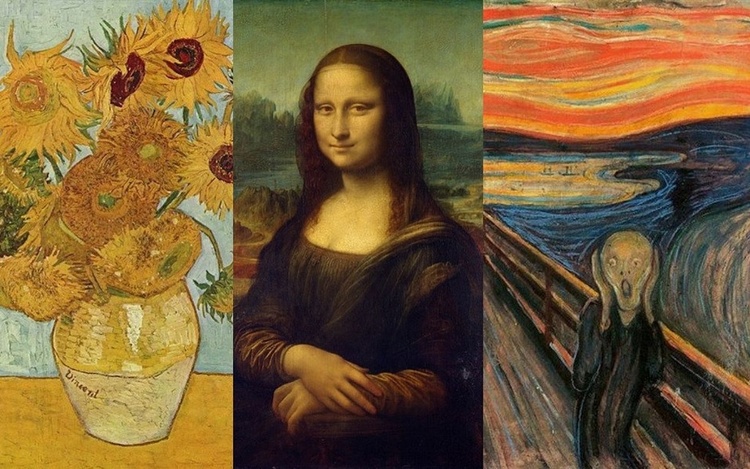
The Difference Between Contemporary Art and Modern Art
It's normal to wonder about the difference between contemporary art and modern art. Of course, contemporary and modern paintings have their own particular characteristics.
At Aura Galleries, you'll find the work of contemporary Mexican and international artists, showcasing their best pieces. We have 40 years of experience in the art market.
Modern Art
Some disagree on the exact date of the beginning of modern art, but most agree that it began in France in the mid-19th century. This was when styles like Impressionism emerged and broke with the academic lines that had prevailed until then. Painters like Gustave Courbet and Édouard Manet are representative of this era.
Paintings like Manet's "Déjeuner sur l'herbe" (Luncheon on the Grass) broke with classical and mythological traditions. This particular painting depicts a nude woman with two men, a work that art critics at the time failed to appreciate.
This paved the way for the Post-Impressionist movement, which emphasized rejecting a collective way of seeing things. The colors, lines, and themes they used brought about a shift in common perception.
Somewhat removed from contemporary Mexican art, but undoubtedly, the entire history of art and its various schools have a certain influence on artists from different eras and countries.
Furthermore, within modern art, Wassily Kandinsky was one of the first to break with convention and began painting in a completely non-objective way. Thus, some of his paintings display colors, lines, and movements without an apparent starting point or recognizable subjects.
We can say that modern art arose from the need to take a stance, a response to modernity. Society was undergoing significant changes: the Industrial Revolution and the rise of capitalism in the economy.
This is why artists questioned the representational role of paintings. Alongside this, it's not surprising that artistic movements emerged, such as the avant-garde, Impressionism, and Post-Impressionism, among others.
Contemporary Art
The art world reached a turning point: the late 1970s. Most consider that anything created after this period is contemporary art. These creations include contemporary Mexican art, but also conceptual art, performance art, Minimalism, and Pop Art.
It was at this time that the most important aspect of a work shifted from its artistic characteristics to its concept. During these years, the artistic process also gained more importance than the final work. Performance art was also born.
Likewise, artists were questioning the meaning and cultural value of art itself. Their aim was to challenge representational art. Furthermore, a trend emerged in which the idea, or rather the concept, of the work was prioritized over the objective itself, the final product.
Contemporary art is distinguished by its many approaches and styles. Furthermore, contemporary works are committed to questioning current society and its ways, proposing a different way of seeing and experiencing the era in which we live.
Therefore, the first way we can distinguish between modern and contemporary art is that they represent distinct periods. While modern art encompasses the late 19th and early 20th centuries, its end being considered the 1960s, it focuses on a past time.
Contemporary art, on the other hand, places society in a central role, focusing on the present and future, emphasizing the concept, and questioning the importance of the artwork's meaning in and of itself. Each has its own specific and precise characteristics, its own era, and its own key artists.
At Aura Galerías, we offer contemporary paintings as well as services such as museography, framing, virtual installation, professional packing, and appraisals of contemporary Mexican and Latin American artists.
Source
Latest

Gallery
- February 11, 2026
Colorful Cuba: Life Through the Lens of Jim Zuckerman (USA)

Gallery
- February 11, 2026
Brasileirão | Football Illustrations by Léo Vargas (Brazil)

Gallery
- February 10, 2026
Gallery of Cartoons by Ares-Cuba
News
- February 10, 2026
Latin American Art Cultural Encounter for the France-Mexico Bicentennial

Daily Artwork
- February 10, 2026
Show

Daily Artwork
- February 10, 2026
Comfort zone
Gallery
- February 10, 2026
Gallery of illustration by Rodrigo Rosa -Brazil

Gallery
- February 10, 2026
Gallery of Cartoon & Caricature by Kleber Sales-Brazil
Article
- February 10, 2026
The Forging of Modern Mexican Sculpture
- February 10, 2026
The Forging of Modern Mexican Sculpture

- February 10, 2026
The Legacy of the Avant-Garde in Modern…

- February 09, 2026
Fernando Traverso: The Art of Absence a…

- February 09, 2026
Latin American Art and the Palestinian …

- February 08, 2026
Indigenous Artistic Expressions of Lati…
- February 08, 2026
Indigenous Artistic Expressions of Lati…

- February 07, 2026
Muralism in Latin America: The Pictoria…
- February 07, 2026
Painting in Latin America: A Journey of…

- February 03, 2026
Artificial Intelligence and the Reconfi…

- February 02, 2026
10 most expensive Latin American painti…

- February 02, 2026
Importance of visual arts at School

- February 01, 2026
Impressionism and the Revolution of Lig…

- February 01, 2026
The Importance of Urban Art in the Iden…

- January 31, 2026
Artificial Intelligence in Graffiti Art

- January 31, 2026
The Future of Street Art

- January 28, 2026
Globalization and New Discourses in Con…

- January 28, 2026
Contemporary Art in Latin America

- January 27, 2026
The Evolution of Art: From Classical to…

- January 27, 2026
What are Visual Arts and Why Do They Ma…

- January 26, 2026
First artistic manifestations

- August 29, 2023
The history of Bolivian art

- February 19, 2024
Analysis and meaning of Van Gogh's Star…

- January 28, 2024
Culture and Art in Argentina

- September 25, 2023
What is the importance of art in human …

- September 23, 2023
What is paint?

- August 23, 2023
The 11 types of art and their meanings

- August 10, 2023
14 questions and answers about the art …

- September 23, 2023
Painting characteristics
- August 30, 2023
First artistic manifestations

- January 12, 2024
10 most beautiful statues and sculpture…

- September 23, 2023
History of painting

- March 26, 2024
The importance of technology in art1

- July 13, 2024
The impact of artificial intelligence o…
- October 18, 2023
History of sculpture

- March 26, 2024
Cultural identity and its impact on art…

- April 07, 2024
Graffiti in Latin American culture

- December 20, 2024
What is art? Definition, concept and ar…
- August 16, 2023
The 15 greatest painters in art history

- April 06, 2024
History of visual arts in Ecuador

- April 02, 2024
History visual arts in Brazil
- February 19, 2024
Analysis and meaning of Van Gogh's Star…

- August 13, 2023
9 Latino painters and their great contr…
- August 23, 2023
The 11 types of art and their meanings

- August 27, 2023
15 main works of Van Gogh
- August 10, 2023
14 questions and answers about the art …
- August 29, 2023
The history of Bolivian art
- January 28, 2024
Culture and Art in Argentina

- November 06, 2023
5 Latin American artists and their works
- September 23, 2023
Painting characteristics
- September 23, 2023
What is paint?
- September 25, 2023
What is the importance of art in human …
- March 26, 2024
Cultural identity and its impact on art…
- August 30, 2023
First artistic manifestations

- December 18, 2023
10 iconic works by Oscar Niemeyer, geni…

- January 20, 2024
What is the relationship between art an…
- January 12, 2024
10 most beautiful statues and sculpture…

- August 24, 2023
The most famous image of Ernesto "Che" …

- October 30, 2023
Characteristics of Contemporary Art

- August 22, 2023
What are Plastic Arts?

- May 26, 2024
Técnicas de artes visuais