
Artificial Intelligence as a Tool and Co-Author of Contemporary Art
Artificial Intelligence as a Tool and Co-Author of Contemporary Art
The advancement of artificial intelligence (AI) has redefined the boundaries of contemporary art, introducing new forms of creation, production, and artistic interpretation. More than just a technological resource, AI acts as a co-author, actively participating in the creative process and challenging traditional notions of authorship, originality, and artistic expression.
AI and the Creative Process
In traditional art, the creative process is closely tied to the personal experience of the artist, their emotions, and the socio-cultural context in which they are immersed. With the introduction of artificial intelligence, this process now includes systems capable of analyzing data, recognizing patterns, and generating visual, auditory, or textual results based on human instructions.
Contemporary artists use algorithms to explore aesthetic possibilities that would be difficult to achieve manually. AI allows for experimentation with almost infinite variations of shapes, colors, and styles in a short period of time, expanding the field of artistic investigation and opening space for innovation.
Co-Authorship Between Humans and Machines
One of the most significant aspects of AI-created art is the idea of co-authorship. Although the machine performs calculations and generates results, humans remain responsible for conceptual decisions, data selection, parameter setting, and final curation of the work. In this way, artistic creation becomes a dialogue between human intention and computational capability.
This relationship raises important questions: To what extent does the work belong to the human artist? What is the role of the algorithm in the final result? These questions show that authorship in contemporary art is no longer purely individual but shared.
New Digital Languages and Aesthetics
Artificial intelligence contributes to the emergence of new visual and auditory languages. AI-generated works often present hybrid aesthetics, mixing recognizable elements with abstract and unexpected forms. This experimental character challenges audiences to rethink traditional criteria of beauty, technique, and meaning.
Moreover, AI-based art strongly engages with the digital environment, being widely disseminated through online platforms, virtual galleries, and interactive exhibitions. This increases access to art and transforms the relationship between the artwork, the artist, and the viewer.
Ethical and Cultural Challenges
Despite its creative possibilities, the use of artificial intelligence in art also presents ethical challenges. The use of databases without authorization, the reproduction of artists’ styles without recognition, and the potential replacement of human labor are central topics in current debates.
From a cultural perspective, there is a risk of aesthetic standardization if algorithms are trained on limited datasets. Therefore, it is essential to promote diversity, transparency, and responsibility in the development and use of these technologies.
Future Perspectives
The future of art with artificial intelligence points to an increasing integration between technology and artistic expression. Rather than replacing the artist, AI is likely to consolidate as a support and experimentation tool, capable of expanding the limits of human creativity.
As society adapts to these transformations, it will be essential to develop ethical and legal frameworks that ensure respect for artists’ rights and encourage the responsible use of technology. In this way, art will continue to fulfill its fundamental role of questioning, inspiring, and reflecting on the contemporary world.
Conclusion
Artificial intelligence redefines contemporary art by introducing new forms of creation and collaboration. As both a tool and a co-author, AI expands expressive possibilities while sparking debates about authorship, ethics, and artistic identity. The dialogue between humans and machines, far from limiting art, proves to be a powerful engine of cultural innovation.
Latest

Article
- January 27, 2026
The Evolution of Art: From Classical to Digital

Article
- January 27, 2026
What are Visual Arts and Why Do They Matter Today?

Gallery
- January 27, 2026
Selected Illustration Gallery of Venezuelan Artists

Gallery
- January 27, 2026
Selected Caricature Gallery of Cuban Artists
Publications
- January 26, 2026
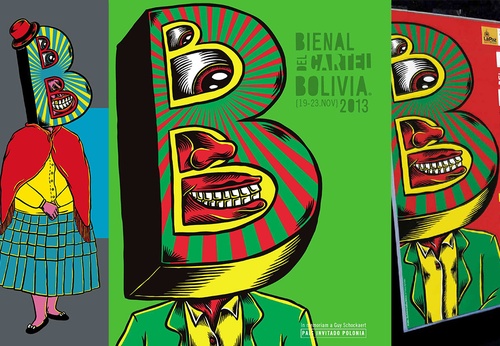
Bolivia Poster Biennial (BICeBé 2013)
Gallery
- January 26, 2026
Selected Gallery of Paintings by Peruvian Artists

Gallery
- January 26, 2026
Selected Gallery of Watercolor Paintings by Peruvian Artists

Article
- January 26, 2026
First artistic manifestations

Article

- January 27, 2026
The Evolution of Art: From Classical to…
- January 27, 2026
What are Visual Arts and Why Do They Ma…

- January 26, 2026
First artistic manifestations
- January 26, 2026
Art in the Street: Expression, Identity…

- January 25, 2026
text-to-image generator with ai

- January 25, 2026
The 'uncomfortable' muralist who portra…

- January 24, 2026
Artificial Intelligence as a Tool and C…
- January 24, 2026
Artificial Intelligence in Art
- January 21, 2026
Art of Artificial Intelligence and its …
- January 21, 2026
5 most striking features of modernism
- January 19, 2026
History of painting

- January 19, 2026
Conditions and characteristics of sacre…

- January 08, 2026
The art of caricature in Latin America
- January 07, 2026
Languages, Aesthetics, and Meaning of C…
- January 07, 2026
Street Art as a Form of Social and Cult…

- January 06, 2026
Symbolism and Spirituality in Latin Ame…
- January 06, 2026
Sacred Art in Latin America: Meeting be…
- January 05, 2026
The Importance of Art in Society

- January 04, 2026
Graphic Art: Much More Than an Image, a…
- January 04, 2026
The Future of NFTs and AI-Generated Art
- August 29, 2023
The history of Bolivian art
- February 19, 2024
Analysis and meaning of Van Gogh's Star…
- January 28, 2024
Culture and Art in Argentina
- September 25, 2023
What is the importance of art in human …

- September 23, 2023
What is paint?

- August 23, 2023
The 11 types of art and their meanings

- August 10, 2023
14 questions and answers about the art …

- September 23, 2023
Painting characteristics
- August 30, 2023
First artistic manifestations

- January 12, 2024
10 most beautiful statues and sculpture…
- September 23, 2023
History of painting
- March 26, 2024
The importance of technology in art1

- July 13, 2024
The impact of artificial intelligence o…
- March 26, 2024
Cultural identity and its impact on art…
- April 07, 2024
Graffiti in Latin American culture

- April 02, 2024
History visual arts in Brazil

- April 06, 2024
History of visual arts in Ecuador
- August 16, 2023
The 15 greatest painters in art history
- October 18, 2023
History of sculpture

- March 05, 2024
The art of sculpture in Latin America
- February 19, 2024
Analysis and meaning of Van Gogh's Star…

- August 13, 2023
9 Latino painters and their great contr…
- August 23, 2023
The 11 types of art and their meanings
- August 10, 2023
14 questions and answers about the art …

- August 27, 2023
15 main works of Van Gogh
- August 29, 2023
The history of Bolivian art
- January 28, 2024
Culture and Art in Argentina
- November 06, 2023
5 Latin American artists and their works
- September 23, 2023
Painting characteristics
- September 23, 2023
What is paint?
- September 25, 2023
What is the importance of art in human …
- March 26, 2024
Cultural identity and its impact on art…
- August 30, 2023
First artistic manifestations

- December 18, 2023
10 iconic works by Oscar Niemeyer, geni…
- January 20, 2024
What is the relationship between art an…
- January 12, 2024
10 most beautiful statues and sculpture…

- August 24, 2023
The most famous image of Ernesto "Che" …

- October 30, 2023
Characteristics of Contemporary Art
- May 26, 2024
Técnicas de artes visuais
- August 22, 2023
What are Plastic Arts?