Artificial Intelligence and the Reconfiguration of Matter
Artificial Intelligence and the Reconfiguration of Matter: A New Chapter in Sculpture
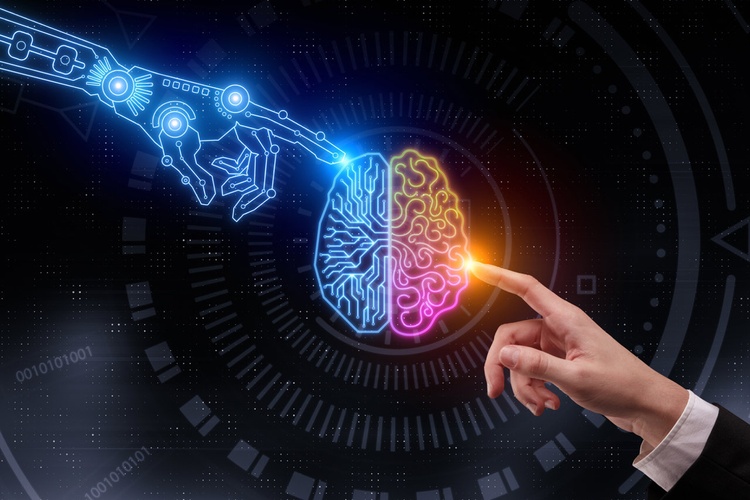
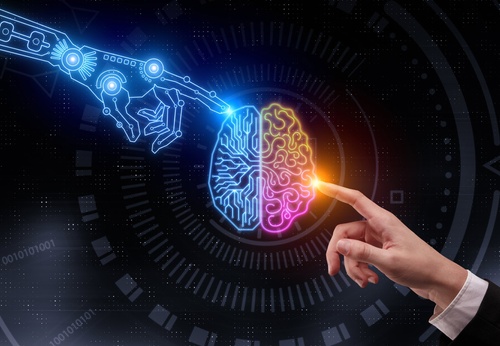
Sculpture, one of the oldest and most tangible forms of artistic expression, has always been defined by the direct dialogue between the artist's hand and matter. From Michelangelo's sculpted marble to Richard Serra's welded steel, the history of this art is the history of force, intention, and resistance transformed into form. Today, this age-old dialogue is being mediated and expanded by an immaterial entity: artificial intelligence. AI does not come to replace the chisel or hands, but to inaugurate a new conceptual and practical frontier, challenging notions of authorship, process, and materiality itself.
The Algorithm as a Design Tool
In the initial stage of creation, AI acts as a cognitive collaborator. Artists can feed language or image models with complex textual descriptions, eclectic visual references, or abstract philosophical concepts. In response, AI generates a profusion of forms, compositions, and structures that purely human thought could not conceive in a linear flow. These visualizations are not the final product, but rather generative schemes, visual scores that inspire the artist. They break formal preconceptions and pave the way for hybrid, organic, and impossible morphologies, serving as a starting point for a sculptural project. Authorship, here, becomes a feedback loop: the artist's intention is interpreted and reinterpreted by the machine, in a cycle that amplifies creative potential.
From the Data Cloud to the Physical Object: Digital Fabrication
It is in the encounter with the physical world that the contribution of AI to sculpture becomes more palpable. The digitally generated concepts are realized through AI-driven digital fabrication technologies:
· Generative 3D Printing: AI can optimize internal structures, creating latticeworks (complex networks) that maximize strength and minimize material use, resulting in lightweight and resilient forms, unthinkable with traditional techniques. Matter is distributed not by empirical intuition, but by algorithmic calculation of efficiency.
• Robotic Sculpture: Robotic arms, guided by AI models, can sculpt blocks of wood, stone, or foam with superhuman precision, mixed with programmed stochastic variations. They translate the digital file into physical gestures, creating a new "hand" whose technique is pure information.
• Smart Materials: Experimental projects explore materials whose properties (color, shape, rigidity) can change in response to stimuli. AI can model and predict these behaviors, designing sculptures that are not static, but organisms that transform in time and space.
Challenges and Questions: The Soul of Matter
This technical revolution brings with it profound questions:
• Authorship and Touch: If the form is conceived by an algorithm and executed by a machine, where does the "artist's hand" reside? The answer may lie in the curation of the process: in the selection of training data, in the fine-tuning of parameters, in the critical choice among the generated options and, above all, in the conceptual intention that guides the entire process. The human touch migrates from the physical gesture to the intellectual and curatorial gesture.
· The New Materiality: AI-generated sculpture often possesses a distinctive aesthetic: fluid surfaces, complex topologies, fusions between the biological and the mechanical. This is the materialization of the logic of data, an aesthetic intrinsic to the medium.
· The Demiurge and the Tool: AI is best understood not as an autonomous creator, but as a demiurge – an artificer that shapes a world from ideas and data provided by the artist-philosopher. It is the radical extension of creative will, a tool of unprecedented power.
Conclusion: Contemporary Alchemy
Artificial intelligence in sculpture represents a contemporary alchemy. It does not transform lead into gold, but transforms data – pixels, texts, codes – into physical presence. This new chapter does not negate the previous ones; on the contrary, it puts them into perspective. The strength of a Rodin torso and the fluid geometry of an AI-generated piece coexist, both bearing witness to the human impulse to give form to the invisible.
Sculpture, now, is also the art of programming matter. The dialogue continues, but the voices in the studio have increased: those of the artist, the algorithm, and the robot, in a complex symphony that is rewriting, layer by layer, the future of three-dimensional form. The challenge for the 21st-century artist is to master not only mass and volume, but also the language and logic that give them new life.
Latamarte
Latest
Daily Artwork
- February 03, 2026
A hole in one
Article
- February 03, 2026
Artificial Intelligence and the Reconfiguration of Matter
Gallery
- February 03, 2026
Gallery of Graphic Design & Branding Works by Andrei J Castanha – Brazil

Publications
- February 03, 2026
The Ultimate Guide to Nature Photo Expeditions
Daily Artwork
- February 02, 2026
Liberty
Daily Artwork
- February 02, 2026
Peacerael Nothing changed. The killing goes on.
Publications
- February 02, 2026
Paintings by Fitz Hugh Lane by John Wilmerding
Article
- February 02, 2026
10 most expensive Latin American paintings in the world
Article
- February 02, 2026
Importance of visual arts at School

- February 03, 2026
Artificial Intelligence and the Reconfi…
- February 02, 2026
10 most expensive Latin American painti…

- February 02, 2026
Importance of visual arts at School
- February 01, 2026
Impressionism and the Revolution of Lig…
- February 01, 2026
The Importance of Urban Art in the Iden…
- January 31, 2026
Artificial Intelligence in Graffiti Art

- January 31, 2026
The Future of Street Art
- January 28, 2026
Globalization and New Discourses in Con…
- January 28, 2026
Contemporary Art in Latin America

- January 27, 2026
The Evolution of Art: From Classical to…
- January 27, 2026
What are Visual Arts and Why Do They Ma…

- January 26, 2026
First artistic manifestations
- January 26, 2026
Art in the Street: Expression, Identity…

- January 25, 2026
text-to-image generator with ai

- January 25, 2026
The 'uncomfortable' muralist who portra…

- January 24, 2026
Artificial Intelligence as a Tool and C…
- January 24, 2026
Artificial Intelligence in Art
- January 21, 2026
Art of Artificial Intelligence and its …
- January 21, 2026
5 most striking features of modernism
- January 19, 2026
History of painting
- August 29, 2023
The history of Bolivian art
- February 19, 2024
Analysis and meaning of Van Gogh's Star…
- January 28, 2024
Culture and Art in Argentina

- September 25, 2023
What is the importance of art in human …

- September 23, 2023
What is paint?

- August 23, 2023
The 11 types of art and their meanings
- August 10, 2023
14 questions and answers about the art …

- September 23, 2023
Painting characteristics
- August 30, 2023
First artistic manifestations
- January 12, 2024
10 most beautiful statues and sculpture…

- March 26, 2024
The importance of technology in art1
- September 23, 2023
History of painting

- July 13, 2024
The impact of artificial intelligence o…
- March 26, 2024
Cultural identity and its impact on art…
- April 07, 2024
Graffiti in Latin American culture

- April 06, 2024
History of visual arts in Ecuador
- April 02, 2024
History visual arts in Brazil
- August 16, 2023
The 15 greatest painters in art history
- October 18, 2023
History of sculpture

- March 05, 2024
The art of sculpture in Latin America
- February 19, 2024
Analysis and meaning of Van Gogh's Star…

- August 13, 2023
9 Latino painters and their great contr…
- August 23, 2023
The 11 types of art and their meanings
- August 10, 2023
14 questions and answers about the art …
- August 27, 2023
15 main works of Van Gogh
- August 29, 2023
The history of Bolivian art
- January 28, 2024
Culture and Art in Argentina
- November 06, 2023
5 Latin American artists and their works
- September 23, 2023
Painting characteristics
- September 23, 2023
What is paint?
- September 25, 2023
What is the importance of art in human …
- March 26, 2024
Cultural identity and its impact on art…
- August 30, 2023
First artistic manifestations
- December 18, 2023
10 iconic works by Oscar Niemeyer, geni…
- January 20, 2024
What is the relationship between art an…
- January 12, 2024
10 most beautiful statues and sculpture…

- August 24, 2023
The most famous image of Ernesto "Che" …
- October 30, 2023
Characteristics of Contemporary Art
- May 26, 2024
Técnicas de artes visuais

- August 22, 2023
What are Plastic Arts?