
Urban and Street Art
Urban and Street Art: The Visual Echo of Social Realities
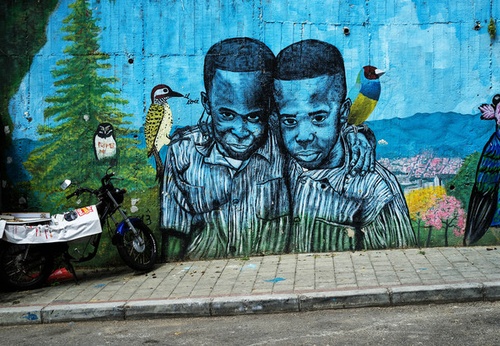
Urban and street art has transcended its origins as mere acts of vandalism to become one of the most direct, democratic, and powerful means of expressing and debating the social issues of our time. Far from the hallowed spaces of museums and galleries, art encounters citizens in their everyday environment, transforming city walls into a gigantic canvas that reflects the joys, contradictions, struggles, and hopes of its inhabitants.
The essence of urban art as a tool for social expression lies in its accessibility and immediacy. Anyone walking down a street can be confronted by a mural, without needing a ticket or prior knowledge of art. This quality makes it an ideal medium for amplifying marginalized voices and bringing messages of protest directly to the public sphere. Whether denouncing real estate speculation and gentrification, as seen in neighborhoods of Barcelona or Cape Town, or protesting racism and police violence, like the "Black Lives Matter" murals that emerged in the United States, street art acts as a barometer of social tension and a visual chronicler of history in real time.
Its capacity for rapid response is one of its greatest strengths. While other media require lengthy production processes, an artist can transform an anonymous wall into a powerful political statement overnight. This immediacy allows urban art to engage with current events, becoming a space for counter-information and resistance against hegemonic narratives. Artists like Banksy have elevated this practice to the status of a global phenomenon, using public space to launch scathing critiques of war, capitalism, and the refugee crisis, demonstrating that an image on the street can generate international debate.
However, this relationship with public space is complex and often paradoxical. Urban art is constantly caught between its original transgressive spirit and its increasing co-optation by the market and institutions. What begins as an anti-capitalist expression of space appropriation can quickly be absorbed by the logic of capitalist "placemaking," used for urban marketing, increasing property values, or attracting tourism—a process that often leads to the gentrification of the very neighborhoods the art sought to defend. This tension, far from weakening it, keeps the movement constantly evolving and self-critical, forcing artists to innovate and constantly question the true purpose of their work.
Despite these contradictions, urban art remains a fundamental vehicle for building identity and collective memory. In many places, it has become a tool for civic engagement, where entire communities collaborate with artists to beautify their neighborhoods, preserve their culture, and tell their own stories. From the vibrant murals celebrating Mexican-American heritage in Chicago's "Pilsen Murals" project to the works in Cape Town that "whisper about heritage, hope, and healing," street art demonstrates its ability to weave the social fabric, transforming the urban landscape into a space for dialogue, recognition, and, above all, profound human meaning. It is, ultimately, the voice of the street, a visual echo that reminds us that cities are not just concrete and steel, but, first and foremost, a mosaic of lives and stories that cry out to be told.
Latamarte
Latest
Article
- February 14, 2026
Urban and Street Art
Article
- February 14, 2026
Art as the Awakening of the People
Daily Artwork
- February 14, 2026
Epstein Earthquake
Daily Artwork
- February 14, 2026
Political puzzle

Publications
- February 14, 2026
Latin America in Caricature by John J. Johnson

Publications
- February 13, 2026
Michal Batory Posters
Publications
- February 12, 2026
WAR AGAINST WAR | Photography and World War One
Article
- February 12, 2026
Contemporary Printmaking and the Concept of Expanded Field

Article
- February 12, 2026
Graphic design as visual language in contemporary culture
- February 14, 2026
Urban and Street Art
- February 14, 2026
Art as the Awakening of the People

- February 12, 2026
Contemporary Printmaking and the Concep…

- February 12, 2026
Graphic design as visual language in co…
- February 10, 2026
The Forging of Modern Mexican Sculpture

- February 10, 2026
The Legacy of the Avant-Garde in Modern…

- February 09, 2026
Fernando Traverso: The Art of Absence a…
- February 09, 2026
Latin American Art and the Palestinian …

- February 08, 2026
Indigenous Artistic Expressions of Lati…
- February 08, 2026
Indigenous Artistic Expressions of Lati…
- February 07, 2026
Muralism in Latin America: The Pictoria…
- February 07, 2026
Painting in Latin America: A Journey of…

- February 03, 2026
Artificial Intelligence and the Reconfi…
- February 02, 2026
10 most expensive Latin American painti…

- February 02, 2026
Importance of visual arts at School

- February 01, 2026
Impressionism and the Revolution of Lig…
- February 01, 2026
The Importance of Urban Art in the Iden…

- January 31, 2026
Artificial Intelligence in Graffiti Art
- January 31, 2026
The Future of Street Art

- January 28, 2026
Globalization and New Discourses in Con…
- August 29, 2023
The history of Bolivian art

- February 19, 2024
Analysis and meaning of Van Gogh's Star…
- January 28, 2024
Culture and Art in Argentina

- September 25, 2023
What is the importance of art in human …

- September 23, 2023
What is paint?

- August 23, 2023
The 11 types of art and their meanings
- August 10, 2023
14 questions and answers about the art …

- September 23, 2023
Painting characteristics
- August 30, 2023
First artistic manifestations
- January 12, 2024
10 most beautiful statues and sculpture…

- September 23, 2023
History of painting

- March 26, 2024
The importance of technology in art1

- July 13, 2024
The impact of artificial intelligence o…
- October 18, 2023
History of sculpture
- March 26, 2024
Cultural identity and its impact on art…

- December 20, 2024
What is art? Definition, concept and ar…
- April 07, 2024
Graffiti in Latin American culture
- August 16, 2023
The 15 greatest painters in art history

- April 06, 2024
History of visual arts in Ecuador

- April 02, 2024
History visual arts in Brazil
- February 19, 2024
Analysis and meaning of Van Gogh's Star…

- August 13, 2023
9 Latino painters and their great contr…
- August 23, 2023
The 11 types of art and their meanings
- August 27, 2023
15 main works of Van Gogh
- August 10, 2023
14 questions and answers about the art …
- August 29, 2023
The history of Bolivian art
- January 28, 2024
Culture and Art in Argentina

- November 06, 2023
5 Latin American artists and their works
- September 23, 2023
Painting characteristics
- September 23, 2023
What is paint?
- September 25, 2023
What is the importance of art in human …
- March 26, 2024
Cultural identity and its impact on art…
- August 30, 2023
First artistic manifestations
- December 18, 2023
10 iconic works by Oscar Niemeyer, geni…
- January 12, 2024
10 most beautiful statues and sculpture…
- January 20, 2024
What is the relationship between art an…

- August 24, 2023
The most famous image of Ernesto "Che" …
- October 30, 2023
Characteristics of Contemporary Art
- August 22, 2023
What are Plastic Arts?
- May 26, 2024
Técnicas de artes visuais