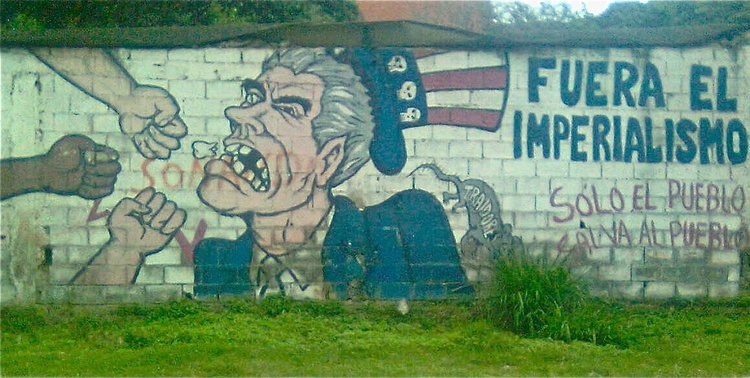
Key Latin American Artists in the Anti-Imperialist Struggle
Below, a more detailed look at some fundamental artists, including references to the Brazilian context.
Frida Kahlo (Mexico, 1907-1954)
• Anti-Imperialist Approach: Her work is a radical affirmation of Mexican (Tehuana, pre-Columbian) culture in opposition to Eurocentric and North American modernity.
• Emblematic Work: "Self-Portrait on the Border Between Mexico and the United States" (1932). In this painting, Kahlo positions herself on the threshold between an ancestral, vibrant, and natural Mexico, and an industrialized, mechanical, and sterile USA, criticizing cultural and economic imposition.
Wifredo Lam (Cuba, 1902-1982)
• Anti-Imperialist Approach: He developed a unique visual vocabulary, fusing European Cubism and Surrealism with symbols of Afro-Cuban culture and religions of African origin.
• Emblematic Work: "The Jungle" (1943). This dense and mysterious painting presents hybrid figures of human, animal, and plant life, creating a powerful and non-exotic vision of Caribbean identity, resisting colonial interpretations.
Luz Donoso (Chile, 1921-2008)
• Anti-imperialist Approach: Art as direct political action and a tool for denunciation during the dictatorship.
• Emblematic Work: The installation "Huincha sin fin" (1978), a courageous act of memory that openly challenged an externally supported regime.
Feliciano Centurión (Paraguay, 1962-1996)
• Anti-imperialist Approach: Amidst the Stroessner dictatorship and the AIDS epidemic, he used domestic techniques (such as embroidery) on humble materials (blankets) to celebrate the affection, vulnerability, and culture of the Guarani people, resisting oppressive political and gender norms. In Brazil: The anti-imperialist tradition manifested itself in Cinema Novo (1960s), with directors like Glauber Rocha, who in films such as "Terra em Transe" criticized exploitation and alienation. In the visual arts, the Graffiti and Urban Art movement continues to be a vital tool for social denunciation, addressing racial inequalities and state violence.
Conclusion: Art as Action and Hope
Anti-imperialist art in Latin America has never been just about aesthetics; it is, as the South African artist Thami Mnyele said, an act that must "be rooted in the struggle of the majority of our people." It fulfills vital functions: it is an instrument of denunciation, a space of memory, an act of identity affirmation, and an exercise in political imagination for a more just future.
From the monumental murals of Mexico to the delicate embroideries of Paraguay and the installations with trash from the Caribbean, artists in the region continue to respond creatively to the mechanisms of domination. Their works remind us that, in the words of the Zapatistas, it is necessary to "protect our past in order to have a future"—a future of sovereignty, diversity, and dignity.
Latamarte
Latest
Daily Artwork
- February 03, 2026
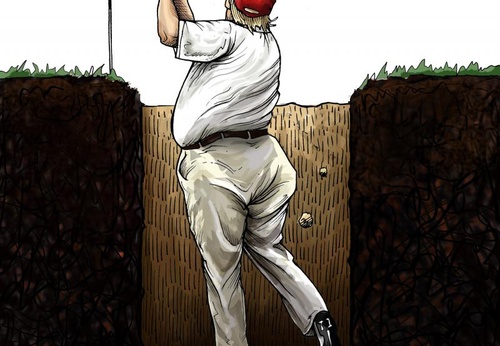
A hole in one

Article
- February 03, 2026
Artificial Intelligence and the Reconfiguration of Matter

Gallery
- February 03, 2026
Gallery of Graphic Design & Branding Works by Andrei J Castanha – Brazil

Publications
- February 03, 2026
The Ultimate Guide to Nature Photo Expeditions

Daily Artwork
- February 02, 2026
Liberty

Daily Artwork
- February 02, 2026
Peacerael Nothing changed. The killing goes on.
Publications
- February 02, 2026
Paintings by Fitz Hugh Lane by John Wilmerding
Article
- February 02, 2026
10 most expensive Latin American paintings in the world
Article
- February 02, 2026
Importance of visual arts at School

- February 03, 2026
Artificial Intelligence and the Reconfi…
- February 02, 2026
10 most expensive Latin American painti…

- February 02, 2026
Importance of visual arts at School

- February 01, 2026
Impressionism and the Revolution of Lig…

- February 01, 2026
The Importance of Urban Art in the Iden…

- January 31, 2026
Artificial Intelligence in Graffiti Art

- January 31, 2026
The Future of Street Art

- January 28, 2026
Globalization and New Discourses in Con…

- January 28, 2026
Contemporary Art in Latin America

- January 27, 2026
The Evolution of Art: From Classical to…

- January 27, 2026
What are Visual Arts and Why Do They Ma…

- January 26, 2026
First artistic manifestations

- January 26, 2026
Art in the Street: Expression, Identity…

- January 25, 2026
text-to-image generator with ai

- January 25, 2026
The 'uncomfortable' muralist who portra…

- January 24, 2026
Artificial Intelligence as a Tool and C…

- January 24, 2026
Artificial Intelligence in Art

- January 21, 2026
Art of Artificial Intelligence and its …

- January 21, 2026
5 most striking features of modernism
- January 19, 2026
History of painting

- August 29, 2023
The history of Bolivian art

- February 19, 2024
Analysis and meaning of Van Gogh's Star…

- January 28, 2024
Culture and Art in Argentina

- September 25, 2023
What is the importance of art in human …

- September 23, 2023
What is paint?

- August 23, 2023
The 11 types of art and their meanings

- August 10, 2023
14 questions and answers about the art …

- September 23, 2023
Painting characteristics
- August 30, 2023
First artistic manifestations

- January 12, 2024
10 most beautiful statues and sculpture…
- September 23, 2023
History of painting

- March 26, 2024
The importance of technology in art1

- July 13, 2024
The impact of artificial intelligence o…

- March 26, 2024
Cultural identity and its impact on art…
- April 07, 2024
Graffiti in Latin American culture

- April 06, 2024
History of visual arts in Ecuador

- April 02, 2024
History visual arts in Brazil
- August 16, 2023
The 15 greatest painters in art history
- October 18, 2023
History of sculpture

- August 24, 2023
The most famous image of Ernesto "Che" …
- February 19, 2024
Analysis and meaning of Van Gogh's Star…

- August 13, 2023
9 Latino painters and their great contr…
- August 23, 2023
The 11 types of art and their meanings
- August 10, 2023
14 questions and answers about the art …
- August 27, 2023
15 main works of Van Gogh
- August 29, 2023
The history of Bolivian art
- January 28, 2024
Culture and Art in Argentina

- November 06, 2023
5 Latin American artists and their works
- September 23, 2023
Painting characteristics
- September 23, 2023
What is paint?
- September 25, 2023
What is the importance of art in human …
- March 26, 2024
Cultural identity and its impact on art…
- August 30, 2023
First artistic manifestations

- December 18, 2023
10 iconic works by Oscar Niemeyer, geni…

- January 20, 2024
What is the relationship between art an…
- January 12, 2024
10 most beautiful statues and sculpture…
- August 24, 2023
The most famous image of Ernesto "Che" …

- October 30, 2023
Characteristics of Contemporary Art

- May 26, 2024
Técnicas de artes visuais

- August 22, 2023
What are Plastic Arts?