Painting in the Americas: Origins and Early Development in Latin America
The history of painting in Latin America is a rich and complex tapestry, interwoven with ancestral traditions, the impact of European conquest and colonization, and the slow emergence of its own voice. To understand it, it is essential to look beyond the arrival of Europeans and recognize the vigor of pre-Columbian artistic expressions.
Pre-Columbian Roots
Long before 1492, various civilizations developed sophisticated forms of pictorial expression. Although easel painting, as known in the West, did not exist, color and drawing were fundamental.
• Mural Painting: Civilizations such as the Maya (at sites like Bonampak, with their narrative murals detailing battles and ceremonies), the Teotihuacans (in Mexico), and the Mochicas (in Peru) created vibrant frescoes and murals, using mineral and vegetable pigments. These works were not merely decorative; They had religious, political, and historical functions, serving to communicate myths, rituals, and the power of rulers.
· Codices and Painted Ceramics: The Aztecs and Mayans produced codices (folded books) with pictograms and painted narratives. Ceramics, especially in Andean cultures such as Nazca, Moche, and Chimu, were an essential canvas, presenting scenes of daily life, deities, and highly complex geometric patterns. Body painting was also an ephemeral but significant art form.
The Impact of the Conquest and the Colonial Period
The arrival of the Spanish and Portuguese represented a violent rupture, but also the beginning of a long process of cultural syncretism. Painting was a fundamental tool in the evangelizing project.
• The Cusco School of Painting (Escola Cuzqueña): In the viceroyalties of Peru and New Spain (Mexico), schools of painting emerged that mixed European techniques and styles (mainly Mannerism and Baroque) with indigenous sensibilities, materials, and iconography. The Cusco School in Peru is the most emblematic example. Indigenous and mestizo artists, often anonymous, created religious works where saints and madonnas could wear Andean costumes (Virgin of Cerro de Potosí), angels appeared with indigenous features, and local flora and fauna were incorporated into biblical scenes. The abundant use of gold and intense colors is a trademark.
• New Spain and Notable Artists: In Mexico, painters such as Cristóbal de Villalpando and Juan Correa stood out, adapting European Baroque with their own grandeur and drama. Later, Miguel Cabrera, a mixed-race painter of the 18th century, became one of the most celebrated artists of the colony, known for his portraits of Saint Gertrude and for his caste paintings (representations of racial mixing in colonial society).
Colonial Brazil: Under Portuguese influence, painting in colonial Brazil was closely linked to the ornamentation of churches and monasteries. Baroque-Rococo flourished, especially in Minas Gerais during the Gold Cycle. The main name of this period is Mestre Ataíde (1762-1830), a mulatto painter and gilder whose works, such as the ceiling of the Church of São Francisco de Assis in Ouro Preto, exhibit a peculiar color and grace, with mixed-race angels and a palette of soft colors.
Characteristics and Legacy
Latin American colonial painting was not a mere passive copy. It developed unique characteristics:
Syncretism: The fusion of European, indigenous, and, in the case of Brazil, African cultural elements.
• Didactic Narrative: It served to educate a largely illiterate population in the dogmas of the Catholic faith.
• Original Iconography: The creation of new symbols and representations, such as the Virgin of Guadalupe in Mexico, whose image synthesizes Catholic and indigenous beliefs.
• Expressive Use of Color and Gold: Resources that went beyond ornamentation, laden with spiritual meaning and power.
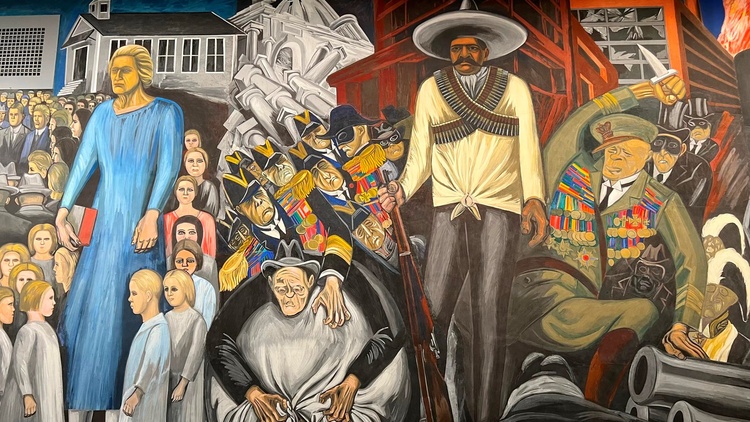
Conclusion The early paintings of Latin America tell a story of resistance, adaptation, and creativity. From the walls of Mayan temples to the gilded altarpieces of colonial churches, the artists, many of them anonymous and of diverse origins, forged a unique visual language. This period laid the groundwork for Latin American artists in the 19th and 20th centuries to seek their own national identities and, subsequently, revolutionize international modern art. Studying these origins is fundamental to understanding the depth and richness of the region's artistic tradition.
Latamarte
Latest
Daily Artwork
- February 03, 2026
A hole in one

Article
- February 03, 2026
Artificial Intelligence and the Reconfiguration of Matter

Gallery
- February 03, 2026
Gallery of Graphic Design & Branding Works by Andrei J Castanha – Brazil

Publications
- February 03, 2026
The Ultimate Guide to Nature Photo Expeditions
Daily Artwork
- February 02, 2026
Liberty

Daily Artwork
- February 02, 2026
Peacerael Nothing changed. The killing goes on.
Publications
- February 02, 2026
Paintings by Fitz Hugh Lane by John Wilmerding
Article
- February 02, 2026
10 most expensive Latin American paintings in the world
Article
- February 02, 2026
Importance of visual arts at School

- February 03, 2026
Artificial Intelligence and the Reconfi…
- February 02, 2026
10 most expensive Latin American painti…

- February 02, 2026
Importance of visual arts at School

- February 01, 2026
Impressionism and the Revolution of Lig…

- February 01, 2026
The Importance of Urban Art in the Iden…

- January 31, 2026
Artificial Intelligence in Graffiti Art

- January 31, 2026
The Future of Street Art

- January 28, 2026
Globalization and New Discourses in Con…

- January 28, 2026
Contemporary Art in Latin America

- January 27, 2026
The Evolution of Art: From Classical to…

- January 27, 2026
What are Visual Arts and Why Do They Ma…

- January 26, 2026
First artistic manifestations
- January 26, 2026
Art in the Street: Expression, Identity…

- January 25, 2026
text-to-image generator with ai

- January 25, 2026
The 'uncomfortable' muralist who portra…

- January 24, 2026
Artificial Intelligence as a Tool and C…

- January 24, 2026
Artificial Intelligence in Art

- January 21, 2026
Art of Artificial Intelligence and its …

- January 21, 2026
5 most striking features of modernism
- January 19, 2026
History of painting
- August 29, 2023
The history of Bolivian art

- February 19, 2024
Analysis and meaning of Van Gogh's Star…

- January 28, 2024
Culture and Art in Argentina

- September 25, 2023
What is the importance of art in human …

- September 23, 2023
What is paint?

- August 23, 2023
The 11 types of art and their meanings
- August 10, 2023
14 questions and answers about the art …

- September 23, 2023
Painting characteristics
- August 30, 2023
First artistic manifestations
- January 12, 2024
10 most beautiful statues and sculpture…

- March 26, 2024
The importance of technology in art1
- September 23, 2023
History of painting

- July 13, 2024
The impact of artificial intelligence o…
- March 26, 2024
Cultural identity and its impact on art…
- April 07, 2024
Graffiti in Latin American culture

- April 06, 2024
History of visual arts in Ecuador

- April 02, 2024
History visual arts in Brazil
- August 16, 2023
The 15 greatest painters in art history
- October 18, 2023
History of sculpture
- March 05, 2024
The art of sculpture in Latin America
- February 19, 2024
Analysis and meaning of Van Gogh's Star…

- August 13, 2023
9 Latino painters and their great contr…
- August 23, 2023
The 11 types of art and their meanings
- August 10, 2023
14 questions and answers about the art …
- August 27, 2023
15 main works of Van Gogh
- August 29, 2023
The history of Bolivian art
- January 28, 2024
Culture and Art in Argentina

- November 06, 2023
5 Latin American artists and their works
- September 23, 2023
Painting characteristics
- September 23, 2023
What is paint?
- September 25, 2023
What is the importance of art in human …
- March 26, 2024
Cultural identity and its impact on art…
- August 30, 2023
First artistic manifestations

- December 18, 2023
10 iconic works by Oscar Niemeyer, geni…

- January 20, 2024
What is the relationship between art an…
- January 12, 2024
10 most beautiful statues and sculpture…

- August 24, 2023
The most famous image of Ernesto "Che" …

- October 30, 2023
Characteristics of Contemporary Art
- May 26, 2024
Técnicas de artes visuais
- August 22, 2023
What are Plastic Arts?