Brushes of Resistance: Colonial Artists Who Challenged the Hegemonic Order
When we talk about anticolonial art in Latin America, we only think about movements from the 20th century. However, the semblances of visual resistance appeared much earlier, in the very heart of the colonial period, when artists — many indigenous, black or mixed-race — found subtle and powerful ways of subverting the discourse of power from within the system. These creators, ready to be mere copyists of European models, use their brushes to assert identities, make silenced histories visible and dispute the hegemonic social order.
In the 18th century, colonial Habana was the testimony of a revealing paradox. While the Spanish and Spanish elites promoted the founding of the Academy of San Alejandro (1818) with the argument that black people were "dominating" the arts and should be excluded from formal education, there were African-descendant artists of notable talent and awareness. Two figures exemplify this tension: the painter Vicente Escobar and the conspirator leader José Antonio Aponte. Escobar, a free man of color, became the favorite portrait artist of the Habanero elite, immortalizing bishops, captains generals and aristocrats. But his artistic practice was not a simple act of disappearance; After registering as a "painter" in official documents and confirming his works with pride, Escobar claimed professional status and an agency that the colonial order denied to those of his condition. His art, personal and transformative, operated in the visible light, building a respectable black identity in a world that sought to make it invisible.
On the other hand, José Antonio Aponte took visual resistance to a radically different plane. His only known work, a "book of paintings" (now missing), was a collage of images that told a "black universal history", connecting the kings of Europe with Ethiopian emperors and black military hazañas in Cuba. This book, described in judicial archives after his trial for conspiring to organize slave rebellions, was not a simple album; It was a visual weapon that articulated a line of black power, an ancestral memory and a call to insurrection. While Escobar worked on the visible and personal, he operated on the invisible and collective, demonstrating that art could be "historically effective" in transforming colonial identity and mobilizing an entire community.
In the reign of Peru, resistance took more subtle but equally significant forms. At the end of the 18th century, painters such as Cristóbal de Lozano, Cristóbal de Aguilar and José Joaquín Bermejo faced a paradox: they had to portray the elite using archaic conventions that reinforced the stability of the empire in a time of increasing political instability. However, instead of being mere repeaters of European formulas, these Limeño artists invented their own tradition. They introduced pictorial innovations — more complex compositions, ornate surfaces, unusual dynamism — within the framework of the official portrait, thus reflecting the subtle disintegration of the colonized social body. His brushes captured on the ground the appearance of the powerful, but also the fissures of an order that began to recede, adapting the genre of the portrait to American realities and laying the foundations of a visual expression that is uniquely Latin American.
These colonial artists, each in their own way, embodied what we would today call an anti-colonial artistic agency. The flags of rebellion were not always open, but their works — such as elite portraits, prohibited books or formal innovations — disputed the monopoly of representation, asserted subaltern identities and demonstrated that, even under the colonial government, art could be a territory of resistance and the creation of alternative worlds.
Latamarte
Latest
Article
Article
Daily Artwork
Daily Artwork
- February 23, 2026
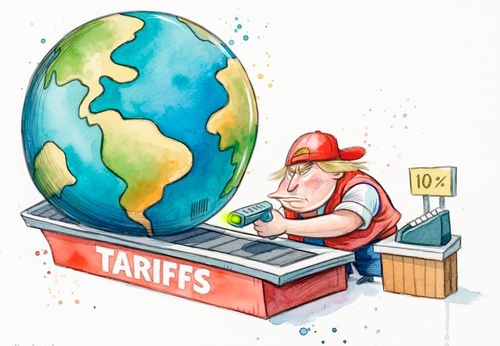
The Supermarket of the World.
Publications
- February 23, 2026
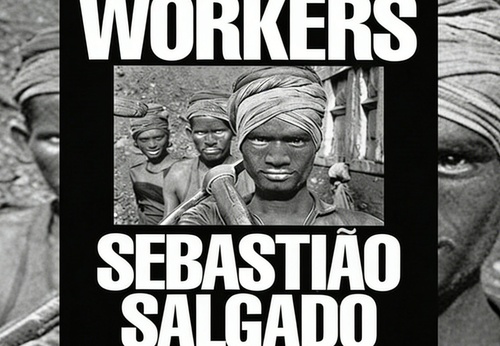
Workers by Sebastiao Salgado
Gallery
News
- February 22, 2026
Blanton’s New “Paper Trails” Exhibition Explores Prints
Article
- February 23, 2026
Decolonial Perspectives: Contemporary A…
- February 23, 2026
Brushes of Resistance: Colonial Artists…
- February 22, 2026
Graphic Art as Political and Social Exp…

- February 22, 2026
Graphic Art as a Builder of Collective …
- February 21, 2026
The Importance of Modern Art in Society
- February 21, 2026
The Birth of Modern Art
- February 19, 2026
Remedios Varo: Alchemical Surrealism in…

- February 19, 2026
Spatialism and Light in the Work of Luc…

- February 18, 2026
Frida Kahlo: The Aesthetics of Pain and…

- February 18, 2026
Tarsila do Amaral's Anthropophagy and B…
- February 17, 2026
Art in the Street: Expression, Resistan…

- February 17, 2026
Most famous male cartoonists in Latin A…

- February 16, 2026
The Art of Caricature: Expression, Humo…
- February 16, 2026
The Art of Caricature in Latin America
- February 15, 2026
Joaquín Torres-García and Constructive …
- February 15, 2026
Mexican Muralism: A Dialogue Between Ar…
- February 14, 2026
Urban and Street Art
- February 14, 2026
Art as the Awakening of the People

- February 12, 2026
Contemporary Printmaking and the Concep…

- February 12, 2026
Graphic design as visual language in co…
- August 29, 2023
The history of Bolivian art
- February 19, 2024
Analysis and meaning of Van Gogh's Star…
- January 28, 2024
Culture and Art in Argentina

- September 25, 2023
What is the importance of art in human …

- September 23, 2023
What is paint?

- August 23, 2023
The 11 types of art and their meanings
- August 10, 2023
14 questions and answers about the art …

- September 23, 2023
Painting characteristics
- August 30, 2023
First artistic manifestations
- January 12, 2024
10 most beautiful statues and sculpture…
- September 23, 2023
History of painting

- March 26, 2024
The importance of technology in art1
- March 26, 2024
Cultural identity and its impact on art…
- July 13, 2024
The impact of artificial intelligence o…
- October 18, 2023
History of sculpture
- April 07, 2024
Graffiti in Latin American culture
- December 20, 2024
What is art? Definition, concept and ar…

- April 02, 2024
History visual arts in Brazil
- August 16, 2023
The 15 greatest painters in art history
- April 06, 2024
History of visual arts in Ecuador
- February 19, 2024
Analysis and meaning of Van Gogh's Star…

- August 13, 2023
9 Latino painters and their great contr…
- August 23, 2023
The 11 types of art and their meanings
- August 27, 2023
15 main works of Van Gogh
- August 10, 2023
14 questions and answers about the art …
- August 29, 2023
The history of Bolivian art
- January 28, 2024
Culture and Art in Argentina
- November 06, 2023
5 Latin American artists and their works
- September 23, 2023
Painting characteristics
- September 23, 2023
What is paint?
- September 25, 2023
What is the importance of art in human …
- March 26, 2024
Cultural identity and its impact on art…
- August 30, 2023
First artistic manifestations
- December 18, 2023
10 iconic works by Oscar Niemeyer, geni…
- January 12, 2024
10 most beautiful statues and sculpture…

- January 20, 2024
What is the relationship between art an…

- August 24, 2023
The most famous image of Ernesto "Che" …
- October 30, 2023
Characteristics of Contemporary Art
- August 22, 2023
What are Plastic Arts?
- May 26, 2024
Técnicas de artes visuais