Art in the Street: Expression, Resistance, and Urban Identity
Street art, also known as urban art or street art, is one of the most vibrant and democratic forms of contemporary cultural expression. Present on walls, facades, viaducts, and public spaces, it transforms the city into an open-air gallery, bringing reflection, social critique, and beauty to people's daily lives.
Origins and Evolution
Urban art gained strength in the 1970s and 1980s, especially in cities like New York, where graffiti became a symbol of identity and cultural resistance. Young people used trains and walls as a medium to mark their presence, claim space, and express their realities.
Over time, what was once seen only as vandalism came to be recognized as a legitimate artistic expression. Artists began to develop more elaborate techniques, incorporating stencils, collage, giant murals, and three-dimensional interventions.
Great Names in Urban Art
Among the artists who helped consolidate the movement on the international scene is Banksy, known for his critical and provocative works, often with strong political and social content. His anonymous work questions wars, inequality, and consumerism.
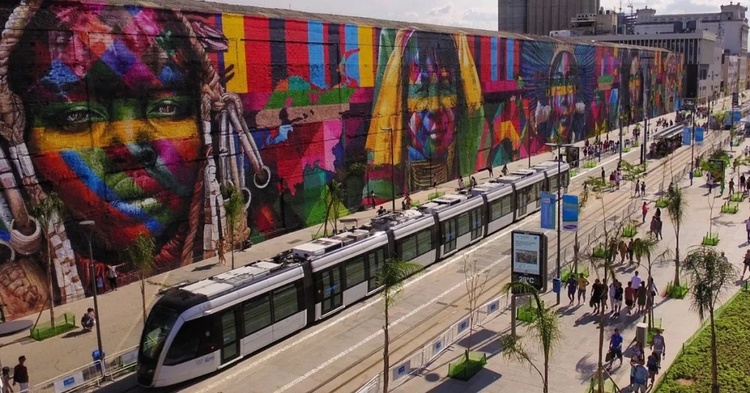
In Brazil, Eduardo Kobra stands out, famous for his colorful murals and portraits of historical figures scattered around the world. Another example is Os Gêmeos, a duo from São Paulo internationally recognized for their unique style and striking yellow characters.
Art, Society, and Politics
Street art directly engages with society. It denounces injustices, celebrates peripheral cultures, and provokes questioning. Because it is in public spaces, it reaches a broad and diverse audience, breaking down economic and institutional barriers imposed by museums and galleries.
In many cases, urban art also participates in the revitalization of degraded areas, contributing to the cultural and touristic appreciation of entire neighborhoods.
Between Legality and Transgression
Despite growing recognition, urban art still faces debates about its legality. When carried out without authorization, it can be considered a crime; on the other hand, when encouraged by public policies, it becomes a cultural and educational tool.
This duality is part of the essence of street art: it is born from transgression, but also seeks dialogue and social transformation.
Conclusion
Street art is more than just painting on walls—it is voice, identity, and resistance. It transforms cities, inspires people, and records, in colors and forms, the feelings and struggles of an era. By occupying urban space, it democratizes access to art and reaffirms that human creativity knows no limits or borders.
Latamarte
Latest
Daily Artwork
- February 17, 2026
When actions involve
Daily Artwork
- February 17, 2026
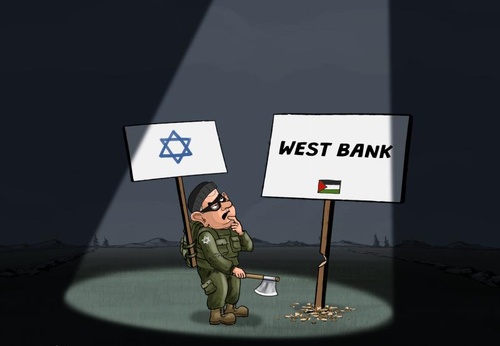
Land grabbing in the West Bank

Publications
- February 17, 2026
Medieval Art by Veronica Sekules
Gallery
- February 17, 2026
Gallery of cartoon by Alfredo Mrtirena Hernandez -Cuba
News
- February 17, 2026
Seven Free Art Exhibitions to Enjoy in February

Daily Artwork
- February 17, 2026
Donald Trump-Ku Klux Klan

Article
- February 17, 2026
Art in the Street: Expression, Resistance, and Urban Identity

Publications
- February 17, 2026
How to Draw Birds by Mitch Leeuwe
Article
- February 17, 2026
Most famous male cartoonists in Latin America
- February 17, 2026
Art in the Street: Expression, Resistan…

- February 17, 2026
Most famous male cartoonists in Latin A…

- February 16, 2026
The Art of Caricature: Expression, Humo…
- February 16, 2026
The Art of Caricature in Latin America
- February 15, 2026
Joaquín Torres-García and Constructive …
- February 15, 2026
Mexican Muralism: A Dialogue Between Ar…

- February 14, 2026
Urban and Street Art
- February 14, 2026
Art as the Awakening of the People

- February 12, 2026
Contemporary Printmaking and the Concep…

- February 12, 2026
Graphic design as visual language in co…
- February 10, 2026
The Forging of Modern Mexican Sculpture

- February 10, 2026
The Legacy of the Avant-Garde in Modern…

- February 09, 2026
Fernando Traverso: The Art of Absence a…
- February 09, 2026
Latin American Art and the Palestinian …

- February 08, 2026
Indigenous Artistic Expressions of Lati…
- February 08, 2026
Indigenous Artistic Expressions of Lati…
- February 07, 2026
Muralism in Latin America: The Pictoria…
- February 07, 2026
Painting in Latin America: A Journey of…

- February 03, 2026
Artificial Intelligence and the Reconfi…
- February 02, 2026
10 most expensive Latin American painti…
- August 29, 2023
The history of Bolivian art

- February 19, 2024
Analysis and meaning of Van Gogh's Star…
- January 28, 2024
Culture and Art in Argentina

- September 25, 2023
What is the importance of art in human …

- September 23, 2023
What is paint?

- August 23, 2023
The 11 types of art and their meanings
- August 10, 2023
14 questions and answers about the art …

- September 23, 2023
Painting characteristics
- August 30, 2023
First artistic manifestations
- January 12, 2024
10 most beautiful statues and sculpture…

- March 26, 2024
The importance of technology in art1
- September 23, 2023
History of painting

- July 13, 2024
The impact of artificial intelligence o…
- October 18, 2023
History of sculpture
- March 26, 2024
Cultural identity and its impact on art…

- December 20, 2024
What is art? Definition, concept and ar…
- April 07, 2024
Graffiti in Latin American culture
- August 16, 2023
The 15 greatest painters in art history

- April 06, 2024
History of visual arts in Ecuador

- April 02, 2024
History visual arts in Brazil
- February 19, 2024
Analysis and meaning of Van Gogh's Star…

- August 13, 2023
9 Latino painters and their great contr…
- August 23, 2023
The 11 types of art and their meanings
- August 27, 2023
15 main works of Van Gogh
- August 10, 2023
14 questions and answers about the art …
- August 29, 2023
The history of Bolivian art
- January 28, 2024
Culture and Art in Argentina

- November 06, 2023
5 Latin American artists and their works
- September 23, 2023
Painting characteristics
- September 23, 2023
What is paint?
- September 25, 2023
What is the importance of art in human …
- March 26, 2024
Cultural identity and its impact on art…
- August 30, 2023
First artistic manifestations
- December 18, 2023
10 iconic works by Oscar Niemeyer, geni…
- January 12, 2024
10 most beautiful statues and sculpture…
- January 20, 2024
What is the relationship between art an…

- August 24, 2023
The most famous image of Ernesto "Che" …

- October 30, 2023
Characteristics of Contemporary Art
- August 22, 2023
What are Plastic Arts?
- May 26, 2024
Técnicas de artes visuais