Remedios Varo and the Enduring Legacy of Her Art in Mexico
More than 60 years after her death, Remedios Varo remains a vital presence in Mexican art.
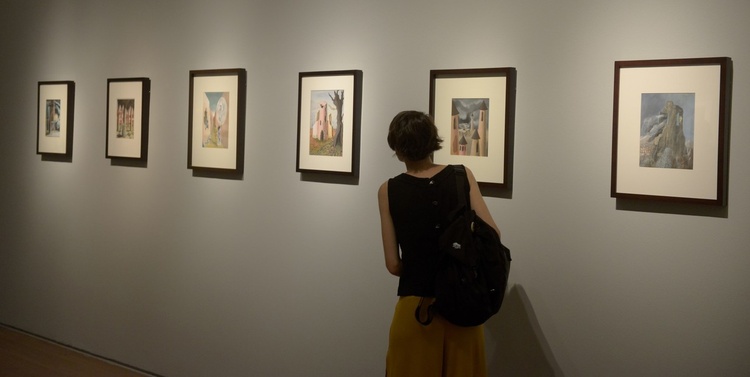
The Remedios Varo collection, housed at the Museum of Modern Art in Mexico City, brings together paintings, drawings, and personal archives.
This collection allows us to understand the development of her surrealist and fantastical language.
Mexico was the place where the artist reached her creative maturity.
More than six decades after the death of the Spanish painter Remedios Varo (1908-1963), her work retains remarkable relevance in Mexico, where her surrealist imagery continues to captivate new generations, solidifying her position as one of the most valued legacies of modern art in the country.
Housed at the Museum of Modern Art (MAM) in Mexico City, the most important public collection of the Catalan artist's work allows visitors to trace her career, from drawings influenced by European Surrealism to the creative maturity she reached in Mexico, the country where she developed the visual language that made her a key figure in 20th-century fantastic art.
"We not only have her paintings, but also preparatory drawings and her personal archive, which includes letters, writings, the literature she frequented, and some personal objects that allow us to immerse ourselves in her world," explained Carlos Segoviano, associate curator at the MAM.
Fantastic Art
For the Mexican specialist, Varo's legacy is crucial not only for understanding Surrealism as a movement, but also for understanding all the offshoots of fantastic art.
"Remedios Varo became involved with the Surrealist movement early on. First with a branch in Barcelona, Spain, and later she connected with some of the artists in Paris, France. However, the development of her career and her full artistic maturity took place in Mexico," Segoviano pointed out.
Comprising 39 works and an extensive archive, the collection has not only allowed for a deeper understanding of the painter's work, but has also enabled the Mexican public to recognize and embrace her magnificent oeuvre.
In 2000, at the initiative of the collection's owners and heirs, Anna Alexandra Varsoviano and Walter Gruen, 37 paintings and an exquisite corpse that the artist created in France before embarking for Mexico were added on permanent loan.
A year later, the couple incorporated "The Escape" (1960), a key piece because it is one of the few large-format works she created and is part of a triptych.
The donation process was finalized and signed in 2002, and from then on the collection was under the care of the Museum of Modern Art (MAM) under the name of Isabel Gruen Varsoviano, as the donation was made in memory of the couple's daughter.
The Development of a Career
"In this sense, we can fully see the development of Remedios Varo's career, from early works such as 'Vegetable Puppets,' where she was already experimenting with some mechanisms of Surrealism, to a more mature work in the late 1950s and early 1960s, where her entire universe of medieval spaces, mysterious forests, and characters always poised between scientific discovery and some magical apparition began to appear," he explained.
In addition, the cultural manager highlighted the profound relationship the painter established with Mexico, because although it is often said that her work lacks Mexican elements in a context dominated by muralism, it was in the Latin American country where the artist found a space of creative tranquility that allowed her to consolidate her work.
Remedios Varo, the curator added, continues to expand into new public spaces, solidifying in Mexico the legacy of an international artist whose work reached its "full realization" in the Latin American country.
Source
Latest
Article
- October 08, 2026
Peru: Indigenism, Photography, and the Memory of the Andes
Article
- October 08, 2026
Mexico: Surrealism and the Power of Women's Art
Daily Artwork
- October 08, 2026
Genocide tunnel .. Gaza genocide did not stop yet ..
Publications

Article
- October 07, 2026
Art and Artificial Intelligence: A New Frontier of Creation
Article
- October 07, 2026
Urban Art: How Art Transforms Cities
Daily Artwork

Daily Artwork
- October 07, 2026
Netanyahu and International Laws…
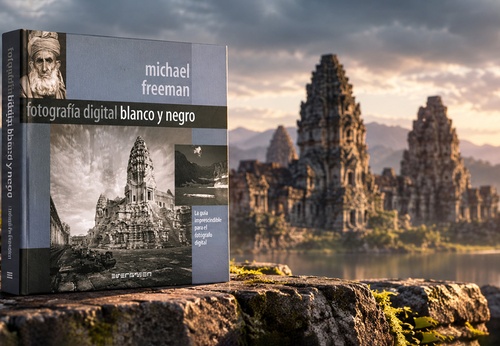
Publications
- October 07, 2026
Digital Black and White Photography
- October 04, 2026
MALBA in Buenos Aires Celebrates 25 Yea…
- August 26, 2026
The Passing of Sliman Mansour: An Artis…
- August 13, 2026
Botero Returns to New York to Revisit t…
- August 11, 2026
"Malba-Costantini Collection: Latin Ame…
- August 10, 2026
The Most Important Exhibition on the Me…

- August 06, 2026
Cau Gomez Launches Official Website
- July 04, 2026
Football and Art at Museo Jumex
- June 29, 2026
Gazan Art at the Palestinian Museum: "T…
- June 28, 2026
Works from the Venice Biennale at the E…
- June 27, 2026
A Frida Kahlo Retrospective Arrives at …

- June 11, 2026
Two Argentinians Selected for Internati…

- June 05, 2026
“Noise” Wins Award and Expands Internat…
- June 03, 2026
Julio Le Parc, artist of light and move…
- May 31, 2026
Latin American Art Arrives at the Museu…
- May 26, 2026
MPPM AT THE 5TH EDITION OF ART FOR PALE…
- May 25, 2026
Pro-Gaza Monument Gains Prominence in t…
- May 25, 2026
Botero Sold His First Painting for Two …
- May 24, 2026
MALBA Celebrates 25 Years

- May 23, 2026
Andrea Giunta presents her book “Lesson…

- May 21, 2026
Latin American Art Exhibition and Aucti…

- October 08, 2023
Illustrations reflect the brutal Israel…

- December 25, 2023
The jury statement of the Iran-Brazil F…
- June 05, 2026
“Noise” Wins Award and Expands Internat…

- March 21, 2024
The history of art in Palestine

- July 29, 2023
History of Caricature in Brazil

- September 01, 2023
Neural Filters in new photoshop 2023
- April 20, 2024
Poignant Image of Grief Wins Mohammed S…

- May 22, 2025
Brady Izquierdo’s Personal Exhibition O…
- February 18, 2024
7 Ways to Understand What Visual Arts A…

- October 21, 2023
Erick Meyenberg and Tania Ragasol at th…
- June 29, 2024
Exhibition at Centro MariAntonia contra…

- May 15, 2024
Eleven murals for Gaza painted across t…

- May 25, 2025
Bordalo II to hold exhibition in Paris …
- June 03, 2026
Julio Le Parc, artist of light and move…
- March 14, 2024
museum of statue of van gogh
- August 09, 2023
Venezuela mural expresses solidarity wi…
- March 15, 2024
museum of sculpture of Salvador Dali
- May 20, 2024
Latin American Festival of Performing A…
- March 30, 2024
illustration websites in Latin America

- October 30, 2023
Palestinian turns images of the Gaza co…
- May 15, 2024
Eleven murals for Gaza painted across t…
- February 18, 2024
7 Ways to Understand What Visual Arts A…

- January 02, 2025
13 commemorations that will mark the cu…
- February 03, 2024
THE HISTORY OF NAIF ART
- October 17, 2023
The influence of Latin American artists…

- July 02, 2024
One of the largest urban art galleries …

- November 17, 2023
Fernando Botero's work is booming after…
- July 29, 2023
Piracicaba International Humor Exhibiti…
- October 08, 2023
Illustrations reflect the brutal Israel…
- December 25, 2023
The jury statement of the Iran-Brazil F…
- November 06, 2023
Heba Zagout: Palestinian artist murdere…
- December 10, 2023
Sliman Mansour and Palestinian art on t…
- March 14, 2024
museum of statue of van gogh
- March 21, 2024
The history of art in Palestine
- February 01, 2025
A maior exposição de Botero em Barcelona

- February 08, 2024
Art Week 2024 in CDMX

- July 20, 2024
First International Mail Art Biennial 2…
- April 20, 2024
Poignant Image of Grief Wins Mohammed S…
- October 30, 2023
Palestinian turns images of the Gaza co…
- September 01, 2023
Neural Filters in new photoshop 2023