Julio Le Parc, artist of light and movement, dies
A world-renowned figure in optical and kinetic art, the Argentine artist passed away in Paris at the age of 97
Argentine Julio Le Parc, a world-renowned figure in optical and kinetic art, died this Saturday at the age of 97 in Paris, the city where he lived. A pioneer of artistic experimentation with light, color, and movement, Le Parc became one of the best-known and most influential Argentine artists. Although his health deteriorated rapidly in the last month, his son Yamil revealed that he was very excited about the retrospective exhibition of his work that will open at the Tate Gallery in London on June 11.
“With deep sorrow, we bid farewell to Julio Le Parc,” wrote Argentina’s Secretary of Culture, Leonardo Cifelli, on social media. His work “transformed contemporary art,” added Cifelli, who described Le Parc as “a symbol of Argentine creativity projected onto the world stage.”
Le Parc was born in 1928 in Palmira, in the province of Mendoza, into a humble family. The son of a seamstress and a railway worker, his life changed when he went to study in Buenos Aires and discovered an unknown world that he never left. He began to alternate various jobs with his studies at the School of Fine Arts, and during this formative period, he was taught by Lucio Fontana, the founder of Spatialism.
Thanks to a scholarship, he traveled to Paris in 1958, where he settled. He was still a newcomer when he participated in the founding of G.R.A.V. (Groupe de Recherche d’Art Visuel), an artistic collective in which colleagues such as the Spanish sculptor Francisco Sobrino and the Argentine painter Hugo Demarco also collaborated. These were the first steps in an experimentation with light, color, and movement as creative materials that marked his entire artistic career. Along with Venezuelans Carlos Cruz-Diez and Jesús Rafael Soto, Le Parc is considered one of the great masters of Latin American Op Art and Kinetic Art.
Latest
Article
- October 16, 2026
Uruguay: Torres García, Constructivism, and the School of the South
Article
- October 16, 2026
Venezuela: Kinetic Art, Modernity, and Art in Times of Crisis
Daily Artwork
- October 16, 2026
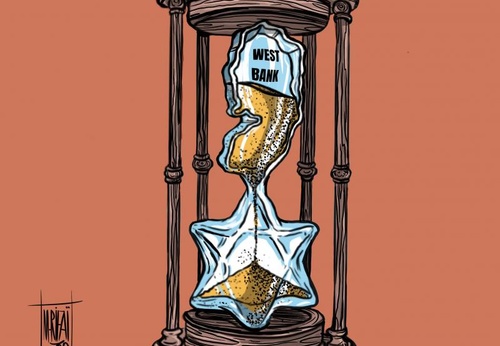
West bank
Daily Artwork
- October 16, 2026
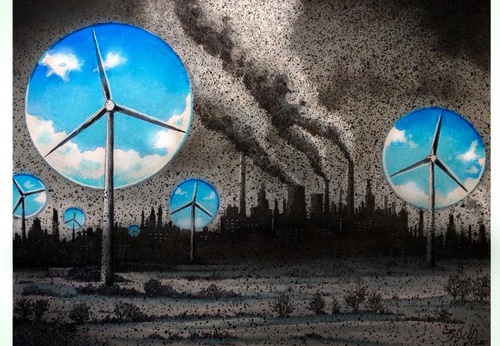
Renewable energy

Publications
- October 16, 2026
DK | WEAPON: A VISUAL HISTORY OF ARMS AND ARMOR
Publications
- October 15, 2026
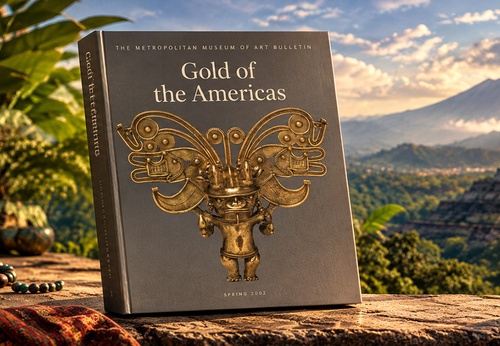
Gold of the Americas
Daily Artwork
- October 15, 2026
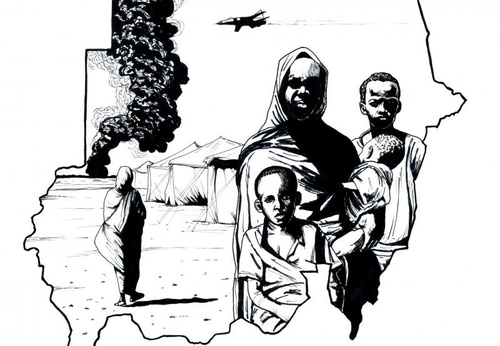
Sudan

Gallery
- October 15, 2026
Gallery Of Humor Drawing By Aziz Bouzekri - Morocco

Publications
- October 15, 2026
Mediaeval Folk in Painting (Milner Craft Series) by Ann Johnston

- October 04, 2026
MALBA in Buenos Aires Celebrates 25 Yea…
- August 26, 2026
The Passing of Sliman Mansour: An Artis…
- August 13, 2026
Botero Returns to New York to Revisit t…
- August 11, 2026
"Malba-Costantini Collection: Latin Ame…
- August 10, 2026
The Most Important Exhibition on the Me…

- August 06, 2026
Cau Gomez Launches Official Website
- July 04, 2026
Football and Art at Museo Jumex
- June 29, 2026
Gazan Art at the Palestinian Museum: "T…
- June 28, 2026
Works from the Venice Biennale at the E…
- June 27, 2026
A Frida Kahlo Retrospective Arrives at …

- June 11, 2026
Two Argentinians Selected for Internati…

- June 05, 2026
“Noise” Wins Award and Expands Internat…
- June 03, 2026
Julio Le Parc, artist of light and move…
- May 31, 2026
Latin American Art Arrives at the Museu…
- May 26, 2026
MPPM AT THE 5TH EDITION OF ART FOR PALE…
- May 25, 2026
Pro-Gaza Monument Gains Prominence in t…
- May 25, 2026
Botero Sold His First Painting for Two …
- May 24, 2026
MALBA Celebrates 25 Years

- May 23, 2026
Andrea Giunta presents her book “Lesson…
- May 21, 2026
Latin American Art Exhibition and Aucti…

- October 08, 2023
Illustrations reflect the brutal Israel…

- December 25, 2023
The jury statement of the Iran-Brazil F…

- July 29, 2023
History of Caricature in Brazil

- March 21, 2024
The history of art in Palestine
- June 05, 2026
“Noise” Wins Award and Expands Internat…

- September 01, 2023
Neural Filters in new photoshop 2023

- May 22, 2025
Brady Izquierdo’s Personal Exhibition O…
- April 20, 2024
Poignant Image of Grief Wins Mohammed S…
- June 29, 2024
Exhibition at Centro MariAntonia contra…
- February 18, 2024
7 Ways to Understand What Visual Arts A…

- October 21, 2023
Erick Meyenberg and Tania Ragasol at th…

- May 15, 2024
Eleven murals for Gaza painted across t…

- May 25, 2025
Bordalo II to hold exhibition in Paris …
- March 14, 2024
museum of statue of van gogh
- June 03, 2026
Julio Le Parc, artist of light and move…
- March 15, 2024
museum of sculpture of Salvador Dali
- August 09, 2023
Venezuela mural expresses solidarity wi…
- March 30, 2024
illustration websites in Latin America
- May 20, 2024
Latin American Festival of Performing A…
- August 24, 2023
Latin American contemporary art sales r…
- May 15, 2024
Eleven murals for Gaza painted across t…
- February 18, 2024
7 Ways to Understand What Visual Arts A…

- January 02, 2025
13 commemorations that will mark the cu…

- February 03, 2024
THE HISTORY OF NAIF ART

- October 17, 2023
The influence of Latin American artists…

- July 02, 2024
One of the largest urban art galleries …

- November 17, 2023
Fernando Botero's work is booming after…
- July 29, 2023
Piracicaba International Humor Exhibiti…
- October 08, 2023
Illustrations reflect the brutal Israel…
- December 25, 2023
The jury statement of the Iran-Brazil F…
- November 06, 2023
Heba Zagout: Palestinian artist murdere…
- December 10, 2023
Sliman Mansour and Palestinian art on t…
- March 14, 2024
museum of statue of van gogh
- March 21, 2024
The history of art in Palestine
- February 01, 2025
A maior exposição de Botero em Barcelona
- February 08, 2024
Art Week 2024 in CDMX

- July 20, 2024
First International Mail Art Biennial 2…
- April 20, 2024
Poignant Image of Grief Wins Mohammed S…

- October 30, 2023
Palestinian turns images of the Gaza co…
- September 01, 2023
Neural Filters in new photoshop 2023