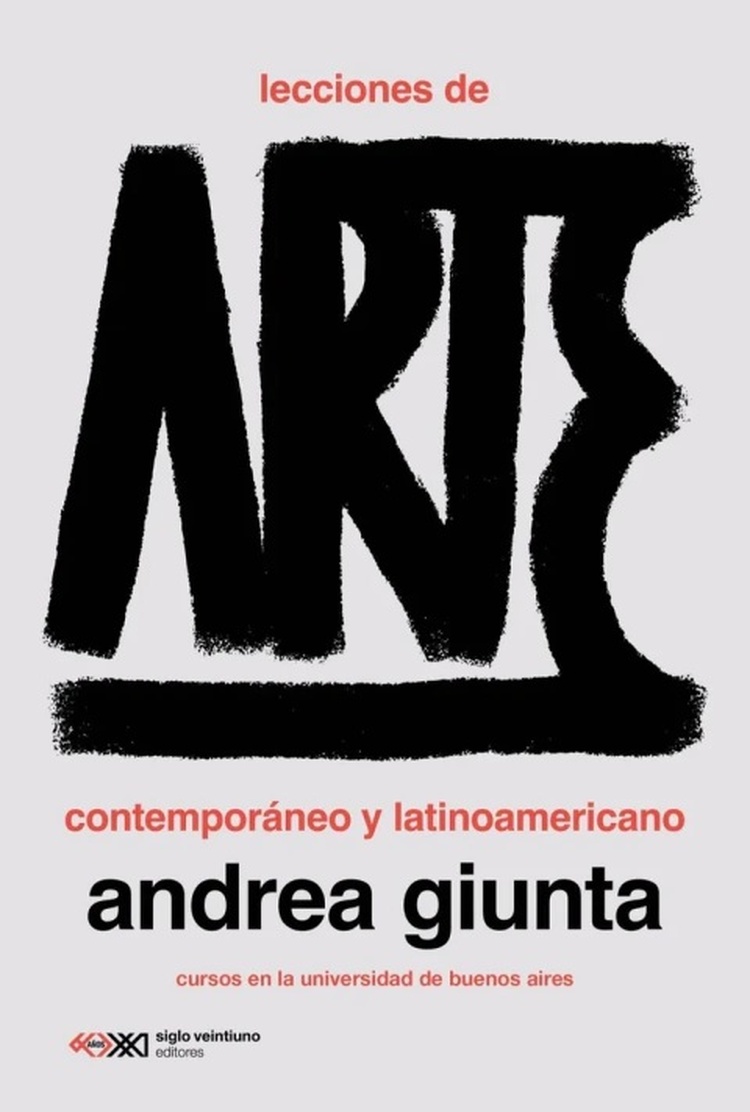
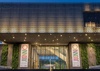
Andrea Giunta presents her book “Lessons in Contemporary and Latin American Art”
The author holds a doctorate, is a researcher at CONICET (National Scientific and Technical Research Council), and until recently was a tenured professor of Latin American and International Art at the Faculty of Philosophy and Letters of the University of Buenos Aires.
Art history can be considered an activity exclusive to specialists, encapsulated in techniques, materials, styles, and the trajectories of artistic schools, or the ruptures that generate new lines of work. But it is also a discipline in which the disputes that permeate every society can be glimpsed in these characteristics, allowing us to understand history in its purest form, with all its tensions, evolutions, and exclusions. “A work of art encapsulates a world,” Andrea Giunta proposed in Lessons in Contemporary and Latin American Art (Siglo XXI Editores), and, in a conversation with Página/12, she elaborates: “They say a picture is worth a thousand words, but no, it’s that there are more than a thousand words in a picture. That’s interesting,” she points out. The author recalls how fascinated she was to listen to an artist speak for “an hour” about one of his own works: “You don’t see everything that’s in a work, even if it’s represented there, if you don’t break down its elements in relation to different contexts. That compacted world that’s in the image, but you’re expanding it.” She adds: “It was incredible that this person could talk so much about an image. You have millions of words, and obviously everything he described, which was in the work, I didn’t see.”
Giunta, author of numerous books (Feminism and Latin American Art; Against the Canon; Avant-garde, Internationalism, and Politics, among others), holds a doctorate, is a researcher at CONICET (National Scientific and Technical Research Council), and until recently was a tenured professor of Latin American and International Art at the Faculty of Philosophy and Letters of the University of Buenos Aires. Lessons… is comprised of three chapters that trace Giunta’s artistic journey: the first on characteristics of contemporary Latin American art, the second on the contexts in which these works were produced and how these works influenced others; And the last one, both personal and collective, is about how he put together a course syllabus while simultaneously studying the books that were being published during those years of academic reformulation after the return to democracy. The book concludes with a glossary in which he presents the definitions he used throughout.
"What are the characteristics of contemporary Latin American art? There must have been suffering in Europe and the United States, but it doesn't appear as much. More technical issues, approaches, or ways of producing art emerge, but here, with different types of artists, with different techniques and approaches, there is a colonial tradition of exploitation, plunder, and suffering."
"We Latin Americanists have argued quite a bit about this desire to find an identifying mark for Latin American art. Thinking about things from another perspective, I prefer to replace the concept of identity, which is quite essentialist, and instead of talking about identity, I talk about the place from which art is produced. That's why it's not art of Latin America that I study, but art from Latin America." Changing your perspective allows you to understand the processes involved. For example, if we compare Oswaldo Guayasamín with Diego Rivera, we clearly have an artist who is like a storyteller, a chronicler, like Rivera. The great mural in the National Palace—all those figures can be identified if you study them. In contrast, Guayasamín's process is more allegorical, focusing on the idea of the suffering subject rather than a chronicle.
But you also have to be able to enter that narrative, and not everyone can. In fact, there was an exclusion of women, minorities, and dissidents, which you explain in the book. How do you combat that?
We need to be interested in mapping out the stories of women, stories of African or Afro-American artists who were left out of what's called the canon—the canon that tells the story of modern art, which artists are included in that history. When you analyze that history, it's almost 95% male artists, from Post-Impressionism to Pop Art. There it changes a little, but the names of male artists still dominate. I believe that art and culture are fundamental in shaping the concept of citizenship, and I think that the more viewpoints, the more diverse the public visiting a museum, the more it contributes not only to their knowledge but also to their critical development. The ability to see not only Picasso, Cézanne, or Van Gogh but also other artists. I turn the issue around: it's always said that the women artists who were left out weren't valued, and the problem is placed on them. What did they lose? Why were they undervalued? My question comes from the other side.
What does the public lose when it is denied access to works that offer alternative perspectives, sensibilities, and concepts? I see it from the audience's point of view.
These alternative perspectives are pathways to understanding society through art, viewed through the lens of the social sciences, which are "questioned from a clichéd, parodic, and devaluing perspective," Giunta reflects. "I hope this book will also serve as a way to visualize what is specific to art, art history, and the humanities in general. Why they remain necessary, insofar as they offer ways of thinking, in shaping a critical citizen," she asserts. She considers museums, but also networks and the internet, as spaces for social inquiry: "Something about a work catches your attention, and you begin to investigate, to create a world around it, to see things you hadn't seen before, and to explore different possibilities. That's something art helps us do," she emphasizes. “For example, with so much geopolitical reformulation happening today, it might be helpful for a reader to understand what Latin America means, to explore the various ways of naming the continent that are historically inscribed,” the author suggests.
“Why that third chapter? You mention studying under the dictatorship, entering the faculty, reading books as soon as they came out to include them in your classes, how you grew up at the university…”
“Initially, it was the book’s introduction (laughs). The introduction, like the conclusions, which delve into the debate about the necessity of the humanities, is, as my editor always tells me, when you write the conclusions, you start a new book. I can’t help but write those conclusions already in dialogue with what I’m thinking. That was the introduction, and in truth, of course, the introduction was meant to explain the phenomenology or subjectivity surrounding that process of starting to teach those classes, which are the opening classes of the Latin American Art and International Art year.” And it's an archaeological history, because it's an archaeology of the library. What was that process of ideas about Latin Americanism and the idea of Latin American art like? How did it develop through a history of books? Through a history of art historians, of critics, how they reformulated these problems of Latin American identity?
-How did the idea for the glossary come about?
-I work a lot with glossaries. There's already a glossary in the book *Postcrisis: Argentine Art After 2001*. And later, when we did *Verboamérica* at MALBA, we curated the permanent collection, and the designer, before adding the credits, included the glossary, which you open the catalog with and it starts with the word "activism." I love making glossaries because I work on concepts, not searching for the true, unique, absolute definition. All the work surrounding the concept of the avant-garde exemplifies this: many authors define what the avant-garde is, but the real issue is what that definition leaves out. So I prefer the struggle for meaning; when I include a glossary, I'm essentially offering a definition in that moment. Furthermore, since I often work with the present, it's important, as in the case of the "cacerolazo" (pot-banging protest). It was the vocabulary of the time: cartoneros (cardboard collectors), artists' collectives. Anyone who looks at the glossary will find a set of words related to the issues the book addresses. It's incomplete, but it's useful for understanding the book's subject matter.
"Lessons in Contemporary and Latin American Art" will be presented on Wednesday the 20th at 6:30 p.m. at the MNBA (Av. Del Libertador 1473). Participants include Gonzalo Aguilar, Mariana Marchesi, Pablo Fasce, Ana Inciarte, and the author.
Source
Latest
Daily Artwork
- October 09, 2026
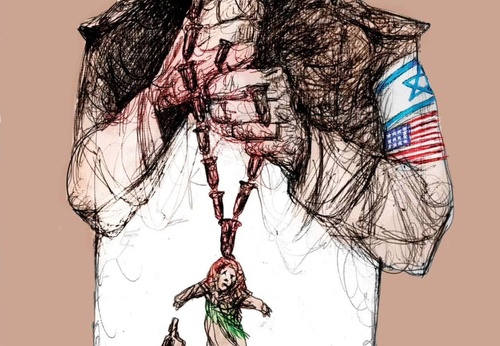
The captivity of Palestinian children
Publications
- October 09, 2026
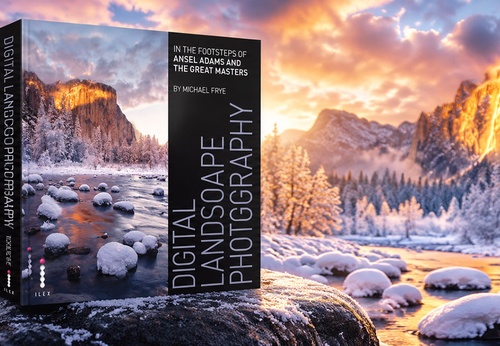
DIGITAL LANDSCAPE PHOTOGRAPHY
Article
- October 08, 2026
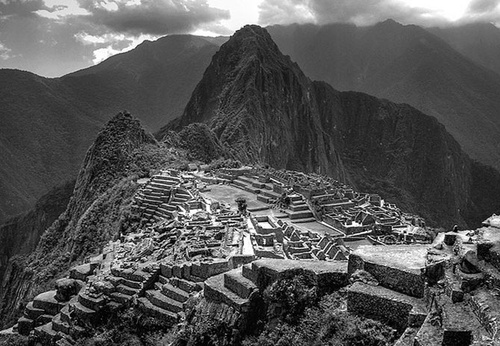
Peru: Indigenism, Photography, and the Memory of the Andes
Article
- October 08, 2026
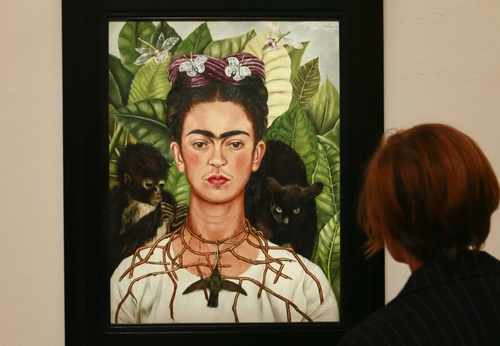
Mexico: Surrealism and the Power of Women's Art
Daily Artwork
- October 08, 2026
Genocide tunnel .. Gaza genocide did not stop yet ..
Publications
Article
- October 07, 2026
Art and Artificial Intelligence: A New Frontier of Creation
Article
- October 07, 2026
Urban Art: How Art Transforms Cities
Daily Artwork
- October 04, 2026
MALBA in Buenos Aires Celebrates 25 Yea…
- August 26, 2026
The Passing of Sliman Mansour: An Artis…
- August 13, 2026
Botero Returns to New York to Revisit t…
- August 11, 2026
"Malba-Costantini Collection: Latin Ame…
- August 10, 2026
The Most Important Exhibition on the Me…
- August 06, 2026
Cau Gomez Launches Official Website
- July 04, 2026
Football and Art at Museo Jumex
- June 29, 2026
Gazan Art at the Palestinian Museum: "T…
- June 28, 2026
Works from the Venice Biennale at the E…
- June 27, 2026
A Frida Kahlo Retrospective Arrives at …
- June 11, 2026
Two Argentinians Selected for Internati…
- June 05, 2026
“Noise” Wins Award and Expands Internat…
- June 03, 2026
Julio Le Parc, artist of light and move…
- May 31, 2026
Latin American Art Arrives at the Museu…
- May 26, 2026
MPPM AT THE 5TH EDITION OF ART FOR PALE…
- May 25, 2026
Pro-Gaza Monument Gains Prominence in t…
- May 25, 2026
Botero Sold His First Painting for Two …
- May 24, 2026
MALBA Celebrates 25 Years

- May 23, 2026
Andrea Giunta presents her book “Lesson…
- May 21, 2026
Latin American Art Exhibition and Aucti…

- October 08, 2023
Illustrations reflect the brutal Israel…
- December 25, 2023
The jury statement of the Iran-Brazil F…
- June 05, 2026
“Noise” Wins Award and Expands Internat…
- March 21, 2024
The history of art in Palestine

- July 29, 2023
History of Caricature in Brazil
- September 01, 2023
Neural Filters in new photoshop 2023
- May 22, 2025
Brady Izquierdo’s Personal Exhibition O…
- April 20, 2024
Poignant Image of Grief Wins Mohammed S…
- February 18, 2024
7 Ways to Understand What Visual Arts A…

- October 21, 2023
Erick Meyenberg and Tania Ragasol at th…
- June 29, 2024
Exhibition at Centro MariAntonia contra…
- May 15, 2024
Eleven murals for Gaza painted across t…

- May 25, 2025
Bordalo II to hold exhibition in Paris …
- June 03, 2026
Julio Le Parc, artist of light and move…
- March 14, 2024
museum of statue of van gogh
- August 09, 2023
Venezuela mural expresses solidarity wi…
- May 20, 2024
Latin American Festival of Performing A…
- March 15, 2024
museum of sculpture of Salvador Dali
- March 30, 2024
illustration websites in Latin America

- October 30, 2023
Palestinian turns images of the Gaza co…
- May 15, 2024
Eleven murals for Gaza painted across t…
- February 18, 2024
7 Ways to Understand What Visual Arts A…
- January 02, 2025
13 commemorations that will mark the cu…
- February 03, 2024
THE HISTORY OF NAIF ART
- October 17, 2023
The influence of Latin American artists…
- July 02, 2024
One of the largest urban art galleries …
- November 17, 2023
Fernando Botero's work is booming after…
- July 29, 2023
Piracicaba International Humor Exhibiti…
- October 08, 2023
Illustrations reflect the brutal Israel…
- December 25, 2023
The jury statement of the Iran-Brazil F…
- November 06, 2023
Heba Zagout: Palestinian artist murdere…
- December 10, 2023
Sliman Mansour and Palestinian art on t…
- March 14, 2024
museum of statue of van gogh
- March 21, 2024
The history of art in Palestine
- February 01, 2025
A maior exposição de Botero em Barcelona
- February 08, 2024
Art Week 2024 in CDMX
- July 20, 2024
First International Mail Art Biennial 2…
- April 20, 2024
Poignant Image of Grief Wins Mohammed S…
- October 30, 2023
Palestinian turns images of the Gaza co…
- September 01, 2023
Neural Filters in new photoshop 2023