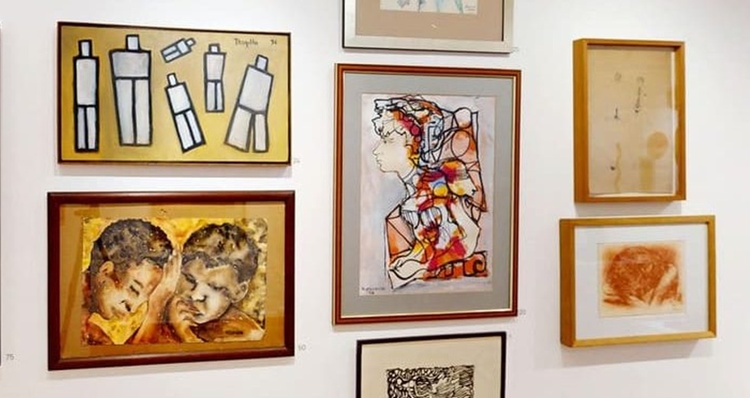
More than 120 works of Colombian and Latin American art, modern and contemporary.
Exhibition open to the public, free admission, until May 21. Monday to Friday from 10:00 a.m. to 6:00 p.m. Saturdays from 11:00 a.m. to 5:00 p.m. Bogotá Auctions, Calle 70 # 10A – 59, Quinta Camacho neighborhood. Live auction on Thursday, May 21 at 8:00 p.m.
Fernando Botero, Alejandro Obregón, Beatriz González, Débora Arango, Santiago Cárdenas, Emma Reyes, Juan Cárdenas, Ana Mercedes Hoyos, Luis Caballero, Saturnino Ramírez, Óscar Jaramillo, Álvaro Barrios, Óscar Muñoz, José Antonio Suárez, César del Valle, Bernardo Salcedo, Jim Amaral, Teresa Sánchez, Nadín Ospina, Ramiro Gómez, Ignacio Gómez Jaramillo, Pedro Ruiz, Gonzalo Ariza, Mauricio Arango Mejía, Lydia Azout, Luis Fernando Peláez, Manuel Hernández, Hugo Zapata, and Darío Morales, among other great, truly great artists.
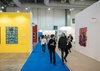
At Bogotá Auctions, the country's first auction house, an exhibition of over 120 treasures of Colombian and Latin American art, both modern and contemporary, is open to the public – admission is free. These unique pieces will be auctioned next Thursday, May 21, at 8:00 p.m. during an in-person event.
According to Charlotte Pieri, director of Bogotá Auctions, “the selection brings together an exceptional group of works spanning different generations, artistic languages, and key moments in Colombian and regional art, offering a broad and rigorous perspective for both established collectors and new audiences interested in Latin American art.
In the Colombian context, Fanny Sanín’s Acrylic No. 4 (1979) stands out for its geometric rigor and the tension between formal precision and chromatic vibrancy; while Manuel Hernández Gómez’s Decimal Sign (1980) unfolds an abstraction articulated from the sign, whose variation generates a pictorial writing of an introspective nature. Ana Mercedes Hoyos is represented by a work from her celebrated Sunflowers series, in which she proposes a synthesis between figuration and abstraction through circular forms of intense chromatic presence. Fernando Botero is highlighted by two works from his crucial formative period: The Prayer (1949), where an expressive register linked to the world predominates. "Peasant during the years of La Violencia," and "Girl with Flowers" (1960), a representative piece from his neo-figurative period, in which a search for anti-heroic monumentality is combined with resources of abstract expressionism.
Alejandro Obregón is also featured with one of his emblematic barracudas, where pictorial energy transforms nature into a symbol of American majesty, while Juan Cárdenas Arroyo, in "Variations on Philip the Prosper" (1991), articulates a sophisticated dialogue with the history of art and representation. Finally, Manolo Vellojín, with "Office of Darkness," and two pieces by Gregorio Cuartas—a human figure with a Leonardesque air and an abstracting landscape—introduce a spiritual and contemplative dimension.
To this core group is added the presence of still lifes from different periods and styles by Marco Ospina, Antonio Samudio, and Jim Amaral, which allow us to appreciate the evolution of this genre in the Colombian context.
The exhibition then highlights a group of unique pieces by four of the most important Colombian artists of the 20th century: Débora Arango, with two of her characteristic watercolors—one of portraits and the other a river landscape; Emma Reyes, with a rare landscape from the 1940s and several examples of her characteristic “modernist” portraits, where primitivism is combined with neocubism; Beatriz González, with two ink drawings on paper from her strongly socially engaged work of the early 1990s; and Marlene Hoffmann, with a large gilded textile wall sculpture. These are complemented by works with pop art influences by Elsa Zambrano (Colegialas, 1979), Maripaz Jaramillo, and Ofelia Rodríguez.
“Another outstanding section comprises a series of works from the Antioquia School, drawn from an important collection in Medellín. A pair of Florentine landscapes by Pedro Nel Gómez and Eladio Vélez stand out, both fundamental testimonies of their formative period and of a friendship that was crucial for Antioquia art. This core group is complemented by watercolors by Rafael Sáenz, Jesusita Vallejo, and Pedro Nel Gómez himself,” notes Charlotte Pieri.
The auction also includes a large and significant landscape section, dominated by an oil painting of the Andes Mountains by Gonzalo Ariza. This is complemented by a view of Bogotá by Gastón Lelarge—a French architect active in Colombia at the beginning of the 20th century—as well as works by Óscar Rodríguez Naranjo, Ignacio Gómez Jaramillo, Luis Núñez Borda (Hacienda Siecha, La Calera), a Spanish landscape by Miguel Díaz Vargas, two pieces by Ricardo Borrero, a view of the San Miguel Arcángel Parish Church in Villeta by Pierre Daguet, and more recent oil paintings by María Cristina Cortés (2000) and Pedro Ruiz (Oriente, 1998).
Sculpture also occupies a prominent place, with pieces by Aníbal Gil, Bernardo Salcedo, Jim Amaral, Teresa Sánchez, Nadín Ospina, Ramiro Gómez, Mauricio Arango Mejía, Lydia Azout, Luis Fernando Peláez, Manuel Hernández Gómez, Hugo Zapata, and Darío Morales.
Finally, drawing—a central technique in the history of Colombian art—is represented by works from some of its most refined exponents, such as Darío Morales, Luis Caballero, Santiago Cárdenas, Juan Cárdenas Arroyo, Saturnino Ramírez, Óscar Jaramillo, Álvaro Barrios, Óscar Muñoz, José Antonio Suárez, and César del Valle.
“Internationally, a selection of works stands out that engage with central issues in 20th-century art. A piece by the German artist Mary Bauermeister (Image, 1969) reveals an experimental approach akin to Fluxus, where diverse materials and languages converge in conceptual compositions. Meanwhile, a bronze by the internationally renowned Polish artist Igor Mitoraj reinterprets classical tradition through fragmented figures that evoke memory and loss. From Latin America, the Argentine artist Eduardo Mac Entyre, in Negro, espacio negro (1973), introduces the principles of generative painting through geometric structures that produce effects of vibration and movement, while the Chilean artist Nemesio Antúnez, in Cerca de San Cristóbal (1972), constructs a scene of poetic resonance where figure, landscape, and space are articulated symbolically. Finally, the Ecuadorian artist Víctor Mideros, with Yaraví (1929), contributes a symbolist dimension in which the traditional folk art and indigenous themes are transformed into “An emblem of national identity,” Pieri points out.
The invitation is to delight in the marvelous exhibition of works by visiting Bogotá Auctions in person and/or virtually, enjoying this unmissable opportunity to get up close to these pieces, learn about them, explore them, share them, and take advantage of the unique occasion next Thursday, May 21, when it will be possible to acquire these unique pieces at auction, pieces with history, character, and a value that transcends time. In-person auction on Thursday, May 21, at 8:00 p.m.
Source
Latest
Article
- October 08, 2026
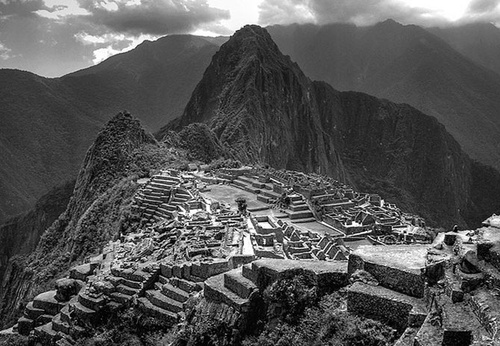
Peru: Indigenism, Photography, and the Memory of the Andes
Article
- October 08, 2026
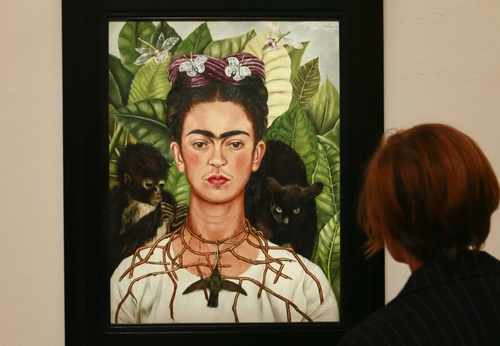
Mexico: Surrealism and the Power of Women's Art
Daily Artwork
- October 08, 2026
Genocide tunnel .. Gaza genocide did not stop yet ..
Publications

Article
- October 07, 2026
Art and Artificial Intelligence: A New Frontier of Creation
Article
- October 07, 2026
Urban Art: How Art Transforms Cities

Daily Artwork

Daily Artwork
- October 07, 2026
Netanyahu and International Laws…
Publications
- October 07, 2026
Digital Black and White Photography

- October 04, 2026
MALBA in Buenos Aires Celebrates 25 Yea…

- August 26, 2026
The Passing of Sliman Mansour: An Artis…
- August 13, 2026
Botero Returns to New York to Revisit t…
- August 11, 2026
"Malba-Costantini Collection: Latin Ame…
- August 10, 2026
The Most Important Exhibition on the Me…

- August 06, 2026
Cau Gomez Launches Official Website
- July 04, 2026
Football and Art at Museo Jumex
- June 29, 2026
Gazan Art at the Palestinian Museum: "T…
- June 28, 2026
Works from the Venice Biennale at the E…
- June 27, 2026
A Frida Kahlo Retrospective Arrives at …

- June 11, 2026
Two Argentinians Selected for Internati…

- June 05, 2026
“Noise” Wins Award and Expands Internat…

- June 03, 2026
Julio Le Parc, artist of light and move…
- May 31, 2026
Latin American Art Arrives at the Museu…
- May 26, 2026
MPPM AT THE 5TH EDITION OF ART FOR PALE…

- May 25, 2026
Pro-Gaza Monument Gains Prominence in t…

- May 25, 2026
Botero Sold His First Painting for Two …
- May 24, 2026
MALBA Celebrates 25 Years

- May 23, 2026
Andrea Giunta presents her book “Lesson…
- May 21, 2026
Latin American Art Exhibition and Aucti…

- October 08, 2023
Illustrations reflect the brutal Israel…

- December 25, 2023
The jury statement of the Iran-Brazil F…
- June 05, 2026
“Noise” Wins Award and Expands Internat…
- March 21, 2024
The history of art in Palestine

- July 29, 2023
History of Caricature in Brazil
- September 01, 2023
Neural Filters in new photoshop 2023

- April 20, 2024
Poignant Image of Grief Wins Mohammed S…

- May 22, 2025
Brady Izquierdo’s Personal Exhibition O…
- February 18, 2024
7 Ways to Understand What Visual Arts A…

- October 21, 2023
Erick Meyenberg and Tania Ragasol at th…
- June 29, 2024
Exhibition at Centro MariAntonia contra…

- May 15, 2024
Eleven murals for Gaza painted across t…

- May 25, 2025
Bordalo II to hold exhibition in Paris …
- June 03, 2026
Julio Le Parc, artist of light and move…
- March 14, 2024
museum of statue of van gogh
- August 09, 2023
Venezuela mural expresses solidarity wi…
- March 15, 2024
museum of sculpture of Salvador Dali
- May 20, 2024
Latin American Festival of Performing A…
- March 30, 2024
illustration websites in Latin America

- October 30, 2023
Palestinian turns images of the Gaza co…
- May 15, 2024
Eleven murals for Gaza painted across t…
- February 18, 2024
7 Ways to Understand What Visual Arts A…

- January 02, 2025
13 commemorations that will mark the cu…

- February 03, 2024
THE HISTORY OF NAIF ART
- October 17, 2023
The influence of Latin American artists…

- July 02, 2024
One of the largest urban art galleries …

- November 17, 2023
Fernando Botero's work is booming after…
- July 29, 2023
Piracicaba International Humor Exhibiti…
- October 08, 2023
Illustrations reflect the brutal Israel…
- December 25, 2023
The jury statement of the Iran-Brazil F…
- November 06, 2023
Heba Zagout: Palestinian artist murdere…

- December 10, 2023
Sliman Mansour and Palestinian art on t…
- March 14, 2024
museum of statue of van gogh
- March 21, 2024
The history of art in Palestine
- February 01, 2025
A maior exposição de Botero em Barcelona
- February 08, 2024
Art Week 2024 in CDMX

- July 20, 2024
First International Mail Art Biennial 2…
- April 20, 2024
Poignant Image of Grief Wins Mohammed S…
- October 30, 2023
Palestinian turns images of the Gaza co…
- September 01, 2023
Neural Filters in new photoshop 2023