Latin American Art Arrives at the Museum of the Americas in Madrid
Latin American Art Arrives at the Museum of the Americas in Madrid: SEMANA Speaks with the Exhibition Curator
Adrián Contreras Guerrero shared details about the 36 wooden trays featured in the Madrid exhibition.
The Americas, as a result of its numerous exchanges with diverse cultures, including European ones, have produced artistic expressions that stand out in the history of art.
In line with this, many techniques brought from Europe were adopted by the continent and adapted to the materials available in this part of the world.
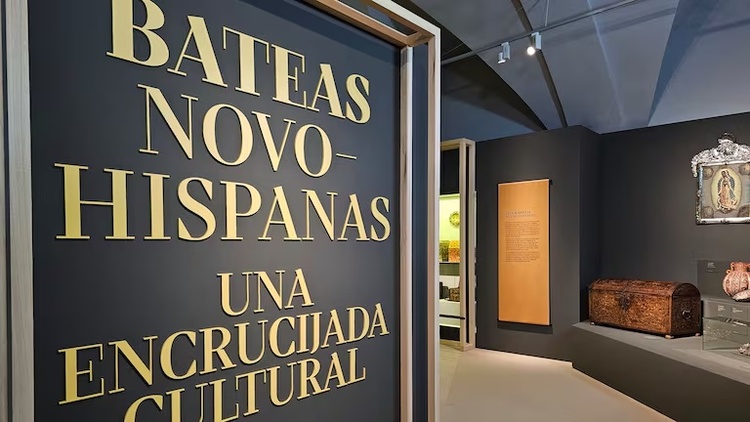
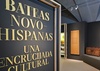
On May 21, an exhibition titled "New Spanish Wooden Trays: A Cultural Crossroads" opened at the Museum of the Americas in Madrid, a space of great importance for the research and dissemination of Latin American heritage.
Adrián Contreras Guerrero, the exhibition's curator, spoke exclusively with SEMANA, sharing details and explaining the significance of the exhibition held in Europe.
Contreras Guerrero is Spanish and a tenured professor in the Department of Art History at the University of Granada. He holds a Master's degree in Advanced Museum Studies and Historical and Artistic Heritage. He also has degrees in Fine Arts and Art History, and possesses extensive knowledge of American art.
Contreras's research on Latin American artistic heritage has established him as a key promoter of research and dissemination for art from this part of the world.
He asserts that he is "convinced that the decorative arts best reflect the blending of cultures that occurred after the conquest of America, primarily due to their more utilitarian and domestic nature."
Speaking of the exhibition, he says that in the displayed wooden trays, "we see scenes from Greco-Roman mythology alongside Chinese weeping willows, all painted by Indigenous artists using an ancestral Mesoamerican technique," which is the origin of the name "New Spanish Wooden Trays: A Cultural Crossroads."
He specifies that “there is no doubt that the conquest and colonization of America represented a drastic break with the natural evolution of the various cultures existing on the continent, but it is no less true that, in the field of decorative arts, this cultural clash produced fascinating hybrid artifacts.”
The museum exhibition included 36 trays. Nineteen of them date from the 17th and 18th centuries; the other nine are pieces made in the 20th century.
When Contreras is asked about the significance of this exhibition, he says that it “marks two important milestones in the study of viceregal decorative arts: firstly, it is the first time a monographic exhibition has been dedicated to New Spanish trays, and secondly, it is also the first time that all 14 lacquered trays belonging to the Museum of the Americas can be seen together in their entirety and simultaneously, making it the most important collection of this type of object in the world given the quantity, quality, and provenance of its pieces.”
.
Latest

Article

Article
- October 12, 2026
Art and Artificial Intelligence: A New Form of Creativity
Daily Artwork
- October 12, 2026
Logo and impact

Daily Artwork
- October 12, 2026
Nobel Prize

Publications
- October 12, 2026
DK | Pocket Genius: CARS — Facts at Your Fingertips

Article
- October 11, 2026
The Future of Artists in the Age of Artificial Intelligence

Article
- October 11, 2026
Artificial intelligence and art: creativity or imitation?

Daily Artwork
- October 11, 2026
The Palestinian trees

Daily Artwork
- October 11, 2026
Almost done...

- October 04, 2026
MALBA in Buenos Aires Celebrates 25 Yea…

- August 26, 2026
The Passing of Sliman Mansour: An Artis…
- August 13, 2026
Botero Returns to New York to Revisit t…
- August 11, 2026
"Malba-Costantini Collection: Latin Ame…
- August 10, 2026
The Most Important Exhibition on the Me…

- August 06, 2026
Cau Gomez Launches Official Website

- July 04, 2026
Football and Art at Museo Jumex
- June 29, 2026
Gazan Art at the Palestinian Museum: "T…

- June 28, 2026
Works from the Venice Biennale at the E…

- June 27, 2026
A Frida Kahlo Retrospective Arrives at …

- June 11, 2026
Two Argentinians Selected for Internati…

- June 05, 2026
“Noise” Wins Award and Expands Internat…

- June 03, 2026
Julio Le Parc, artist of light and move…
- May 31, 2026
Latin American Art Arrives at the Museu…
- May 26, 2026
MPPM AT THE 5TH EDITION OF ART FOR PALE…

- May 25, 2026
Pro-Gaza Monument Gains Prominence in t…

- May 25, 2026
Botero Sold His First Painting for Two …

- May 24, 2026
MALBA Celebrates 25 Years

- May 23, 2026
Andrea Giunta presents her book “Lesson…

- May 21, 2026
Latin American Art Exhibition and Aucti…

- October 08, 2023
Illustrations reflect the brutal Israel…

- December 25, 2023
The jury statement of the Iran-Brazil F…

- March 21, 2024
The history of art in Palestine

- July 29, 2023
History of Caricature in Brazil
- June 05, 2026
“Noise” Wins Award and Expands Internat…

- September 01, 2023
Neural Filters in new photoshop 2023

- April 20, 2024
Poignant Image of Grief Wins Mohammed S…

- May 22, 2025
Brady Izquierdo’s Personal Exhibition O…

- June 29, 2024
Exhibition at Centro MariAntonia contra…

- October 21, 2023
Erick Meyenberg and Tania Ragasol at th…

- February 18, 2024
7 Ways to Understand What Visual Arts A…

- May 15, 2024
Eleven murals for Gaza painted across t…

- May 25, 2025
Bordalo II to hold exhibition in Paris …

- March 30, 2024
illustration websites in Latin America
- June 03, 2026
Julio Le Parc, artist of light and move…

- May 20, 2024
Latin American Festival of Performing A…
- August 09, 2023
Venezuela mural expresses solidarity wi…

- March 15, 2024
museum of sculpture of Salvador Dali

- March 14, 2024
museum of statue of van gogh

- March 14, 2024
OpenAI Announces New Leadership
- May 15, 2024
Eleven murals for Gaza painted across t…
- February 18, 2024
7 Ways to Understand What Visual Arts A…

- January 02, 2025
13 commemorations that will mark the cu…

- February 03, 2024
THE HISTORY OF NAIF ART

- October 17, 2023
The influence of Latin American artists…

- July 02, 2024
One of the largest urban art galleries …

- November 17, 2023
Fernando Botero's work is booming after…
- July 29, 2023
Piracicaba International Humor Exhibiti…
- October 08, 2023
Illustrations reflect the brutal Israel…
- December 25, 2023
The jury statement of the Iran-Brazil F…

- November 06, 2023
Heba Zagout: Palestinian artist murdere…

- December 10, 2023
Sliman Mansour and Palestinian art on t…
- March 14, 2024
museum of statue of van gogh
- March 21, 2024
The history of art in Palestine
- February 01, 2025
A maior exposição de Botero em Barcelona

- February 08, 2024
Art Week 2024 in CDMX

- July 20, 2024
First International Mail Art Biennial 2…
- April 20, 2024
Poignant Image of Grief Wins Mohammed S…

- October 30, 2023
Palestinian turns images of the Gaza co…
- September 01, 2023
Neural Filters in new photoshop 2023