Visual Arts in Argentina: A River of Identity and Transformation
The visual arts in Argentina constitute a vibrant and complex tapestry that reflects the country's historical evolution, social upheavals, and rich cultural diversity. From the nation's dawn to the contemporary scene, Argentine artists have constantly engaged with international trends while forging their own language, often marked by the search for identity and the expression of the political.
The foundations date back to the colonial period, dominated by religious art and portraits of the elite, with figures such as the Peruvian painter Ángel María del Campo, who settled in Buenos Aires. However, the true turning point came at the end of the 19th and beginning of the 20th centuries. Mass European immigration and the consolidation of the nation-state brought new ideas. Artists like Eduardo Sívori introduced realism, while Fernando Fader distinguished himself in impressionism. But it was the "La Boca" group, with its emblematic figure Benito Quinquela Martín, that most poetically and powerfully captured life in the port of Buenos Aires, using vibrant colors and scenes of work, defining a profoundly local aesthetic.
The avant-garde of the 1920s and 1930s represented a radical break. Xul Solar, with his metaphysical watercolors and utopian worlds populated by hybrid creatures and invented languages, emerged as one of the most original figures on the continent. Simultaneously, Emilio Pettoruti brought Cubism from Europe, challenging a still conservative artistic establishment. This modernizing spirit culminated in the formation of the "Concreto-Invención" and "Arte Madí" groups in the 1940s, led by Gyula Kosice, Tomás Maldonado, and Carmelo Arden Quin. These artists championed geometric abstraction, kinetic art, and interdisciplinarity, placing Argentina at the forefront of Latin American abstract art.
The second half of the 20th century was profoundly marked by political instability. Movements like the Di Tella Institute in the 1960s became a hotbed of experimentation with Pop Art, Happenings, and Media Art, featuring figures such as Marta Minujín and Antonio Berni. Berni, in particular, with his series on Juanito Laguna and Ramona Montiel, created a powerful testament to unequal social development through collage and assemblage, using discarded materials. The last military dictatorship (1976-1983) fostered art with strong political and allegorical content, where the body, memory, and absence became central themes, as seen in the work of León Ferrari and Liliana Porter.
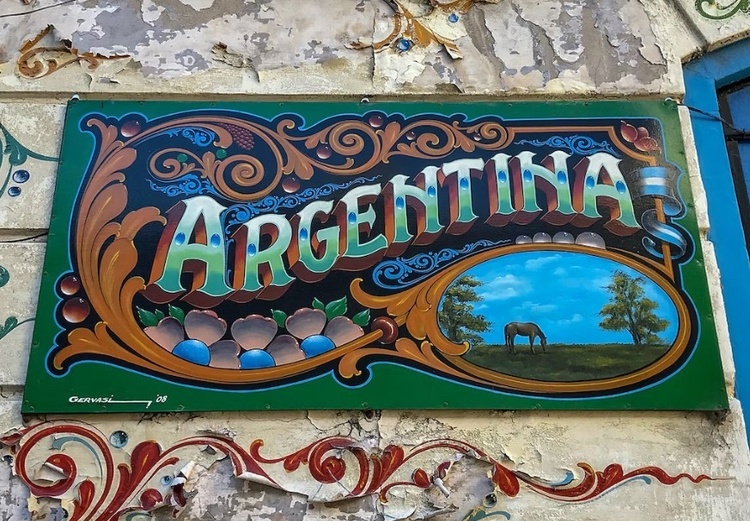
The return to democracy ushered in a period of effervescence and pluralism. The current scene is extraordinarily diverse, lacking a hegemonic style. Powerful figurative painters like Guillermo Kuitca (with his melancholic maps and architectural plans) coexist with street art and activism collectives, photographers exploring identity and memory, and artists working with new technologies and immersive installations. Street art, especially in the Palermo and San Telmo neighborhoods of Buenos Aires, has become a hallmark of the city, with murals of epic proportions commenting on social reality.
In conclusion, Argentine visual arts are a constantly flowing river. They have navigated from the search for a national iconography to pure abstraction, then embraced social critique and freer experimentation. Today, their greatest strength lies in their ability to blend the local with the global, the traditional with the technological, always maintaining a critical spirit and creative restlessness that position them as one of the most dynamic and relevant in Latin America.
Latamarte
Latest
Article
Article
- December 11, 2025
Visual Arts in Argentina: A River of Identity and Transformation

Daily Artwork
- December 11, 2025
I'm lost ..
Publications
- December 11, 2025
Drawing Birds Step By Step

Artist
- December 11, 2025
Alfredo Santamaría - Chile

Publications
- December 10, 2025
Creatures | Book of Paintings Le Yamaura
Article
- December 10, 2025
The Power of Graffiti in Mexico: Identity, Resistance, and the City
Article
- December 10, 2025
Pioneering Women of Latin American Art: From Frida Kahlo to Lygia Clark
News
- December 10, 2025
Pinta Miami 2025 Reaffirms the Strength of the Latin American Art Market
- December 11, 2025
The Visual Arts in Mexico: Between Myth…
- December 11, 2025
Visual Arts in Argentina: A River of Id…
- December 10, 2025
The Power of Graffiti in Mexico: Identi…

- December 10, 2025
Pioneering Women of Latin American Art:…
- December 09, 2025
Mexican Muralism and Its Continental Im…

- December 08, 2025
Indigenous and Afro-descendant Art in t…

- December 08, 2025
Current Trends in Latin American Art at…
- December 07, 2025
The Role of Conceptual Art in Brazil, C…

- December 06, 2025
New Media: Video Art and Digital Art in…

- December 04, 2025
NFTs and Emerging Latin American Artists

- December 03, 2025
Reinterpreting the Work of Fernando Bot…
- December 03, 2025
Alejandro Obregón and the Consolidation…
- December 02, 2025
Hélio Oiticica and the Legacy of Brazil…
- December 02, 2025
The Relevance of Tarsila do Amaral in B…

- December 01, 2025
How Art Auctions Work in Latin America
- December 01, 2025
The Growth of Young Collectors in the R…
- November 30, 2025
Record-Breaking Latin American Works at…

- November 30, 2025
Emerging Galleries Transforming the Lat…
- November 29, 2025
Review of Recent Exhibitions at Latin A…

- November 29, 2025
Analysis of a Botero / Kahlo / Lam / Cl…
- August 29, 2023
The history of Bolivian art
- February 19, 2024
Analysis and meaning of Van Gogh's Star…
- January 28, 2024
Culture and Art in Argentina

- September 25, 2023
What is the importance of art in human …

- September 23, 2023
What is paint?

- August 23, 2023
The 11 types of art and their meanings
- August 10, 2023
14 questions and answers about the art …

- September 23, 2023
Painting characteristics
- August 30, 2023
First artistic manifestations
- January 12, 2024
10 most beautiful statues and sculpture…

- March 26, 2024
The importance of technology in art1
- September 23, 2023
History of painting

- July 13, 2024
The impact of artificial intelligence o…
- March 26, 2024
Cultural identity and its impact on art…
- August 16, 2023
The 15 greatest painters in art history

- April 02, 2024
History visual arts in Brazil

- April 06, 2024
History of visual arts in Ecuador
- October 18, 2023
History of sculpture

- November 21, 2024
The Role of Visual Arts in Society

- August 24, 2023
The most famous image of Ernesto "Che" …
- February 19, 2024
Analysis and meaning of Van Gogh's Star…

- August 13, 2023
9 Latino painters and their great contr…
- August 23, 2023
The 11 types of art and their meanings
- August 10, 2023
14 questions and answers about the art …
- August 27, 2023
15 main works of Van Gogh
- August 29, 2023
The history of Bolivian art
- January 28, 2024
Culture and Art in Argentina
- November 06, 2023
5 Latin American artists and their works
- September 23, 2023
Painting characteristics
- September 23, 2023
What is paint?
- September 25, 2023
What is the importance of art in human …
- March 26, 2024
Cultural identity and its impact on art…
- August 30, 2023
First artistic manifestations
- December 18, 2023
10 iconic works by Oscar Niemeyer, geni…

- January 20, 2024
What is the relationship between art an…
- January 12, 2024
10 most beautiful statues and sculpture…
- August 24, 2023
The most famous image of Ernesto "Che" …
- October 30, 2023
Characteristics of Contemporary Art
- May 26, 2024
Técnicas de artes visuais
- August 22, 2023
What are Plastic Arts?