Exclusive Interview with Quinho for LATAMARTE
"Caricature is a window through which we can stand against imperialism."
By LATAM ARTE
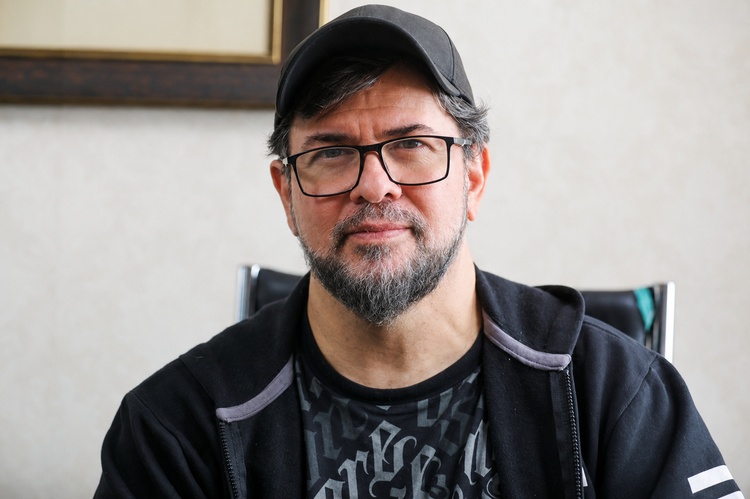
Marcos de Souza, internationally known by his artistic name Quinho, is one of the leading figures of editorial and political cartooning in Brazil and Latin America. With nearly three decades of professional experience, he has established himself as a respected voice in international cartoon competitions, earning numerous awards and recognition across the globe.
Born in Belo Horizonte, in the Brazilian state of Minas Gerais, Quinho has devoted his career to editorial cartoons, political satire, and visual commentary. Among his most recent achievements are the First Prize at the Third International Online Terror Cartoon Contest and the simultaneous Grand Prize and First Prize at the 52nd Piracicaba International Humor Exhibition, one of the world's oldest and most prestigious cartoon festivals.
He also served as an international juror at the 12th Tehran International Cartoon Biennial, marking his second visit to Iran.
During his stay in Tehran, LATAM ARTE had the opportunity to speak with Quinho about the social responsibility of cartoonists, freedom of expression, Palestine, digital censorship, and the future of political cartooning.
LATAM ARTE:
You have been working professionally as a cartoonist for nearly thirty years. What has kept your passion alive throughout all these years?
Quinho:
For me, caricature is much more than an artistic discipline. It is a way of thinking and communicating with society. Every drawing has the potential to raise questions, encourage reflection, and reveal realities that often remain invisible.
That sense of social responsibility is what continues to motivate me after all these years. As long as there are important stories to tell, I feel there is a reason to keep drawing.
LATAM ARTE:
Many of your works focus on Palestine, Gaza, and criticism of global powers. Why are these subjects so important to you?
Quinho:
An artist cannot remain indifferent to human suffering.
The Palestinian issue is not only a political matter; it is fundamentally a humanitarian one. Wherever injustice exists, art has a responsibility to speak. I believe cartoons can give visibility to people whose voices are often ignored.
Whenever powerful forces attempt to impose a single narrative on the world, artists should offer another perspective.
LATAM ARTE:
You once described caricature as "a window." What did you mean by that?
Quinho:
Caricature opens a window into realities that are often hidden.
Sometimes a single image can communicate more effectively than hundreds of written pages. When that window is opened correctly, it allows people to see the world from a different perspective.
That is why I believe caricature is one of the most powerful artistic tools for confronting imperialism, media manipulation, and political domination.
LATAM ARTE:
You received the First Prize at the International Online Terror Cartoon Competition. How did the idea behind your winning work emerge?
Quinho:
I wanted to show how major media platforms and social networks can become instruments for spreading misinformation.
In the cartoon, Mark Zuckerberg and Elon Musk appear alongside Pinocchio, the universal symbol of lies. Through this image, I tried to criticize systems in which truth is often sacrificed to political and economic interests.
LATAM ARTE:
The title "Online Terror" has become increasingly meaningful for many artists. Have you personally experienced digital censorship?
Quinho:
Absolutely.
My Facebook page was removed because I published anti-war and anti-Zionist cartoons.
That experience made me realize that "Online Terror" is not simply the title of a competition. It is a reality experienced by many independent artists around the world.
When your work can no longer reach the public because of digital censorship, part of your voice has effectively been silenced.
LATAM ARTE:
You also served as a juror at the 12th Tehran International Cartoon Biennial. How would you evaluate the exhibition?
Quinho:
The overall quality of the works was excellent.
Artists from many different countries presented highly creative ideas. The theme, "Hurry," offered enormous opportunities for innovation.
As a juror, originality was my primary criterion. Technical skill is important, but what truly distinguishes a great cartoon is a fresh and original idea.
LATAM ARTE:
How do you evaluate the current state of Iranian cartooning?
Quinho:
Iran has exceptionally talented cartoonists.
Both times I visited the country, I had the opportunity to meet artists from different generations, and I was genuinely impressed by their creativity and artistic level.
I believe Iranian cartooning has become one of the most influential movements in contemporary international caricature.
LATAM ARTE:
What makes Iran's international cartoon competitions unique?
Quinho:
Iran has succeeded in organizing international events that address subjects which, in many parts of the world, cannot be discussed freely.
These competitions provide artists with an opportunity to express ideas about important humanitarian, social, and political issues.
That openness makes them unique within the international cartoon community.
LATAM ARTE:
Finally, what advice would you give to young cartoonists around the world?
Quinho:
Read constantly.
Study history.
Observe the world carefully.
Never be afraid of experimenting, but avoid imitation.
Technique can be learned, but what truly makes an artist unforgettable is an independent vision, intellectual honesty, and the courage to express the truth through art.

Quinho Ravelli
By LatAm ARTE
He was born in Brazil. Illustrator, cartoonist at “Mineiro de Manhuaçu”. He is also a cartoonist and illustrator for the newspap ...
Latest

Publications
- September 27, 2026
Inspirational Photography
Daily Artwork
- September 27, 2026
cnn
Daily Artwork
- September 27, 2026
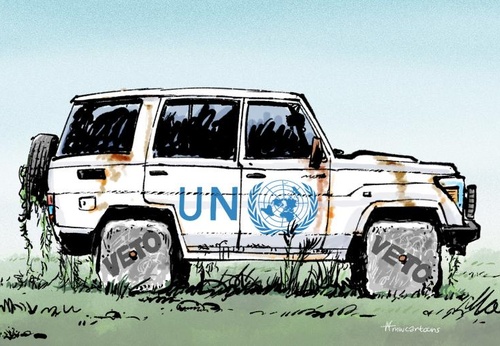
The UN, doomed to fail
Publications
Publications
- September 26, 2026
STUDIO GLASS | IN THE METROPOLITAN MUSEUM OF ART
Publications
- September 26, 2026
The Classic Car Book
Gallery
- September 26, 2026
Cartoon Gallery by Alen Lauzan – Cuba
Article
- September 26, 2026
Bolivia: Art as a Weave of Ancestral and Contemporary Forms of Resistance
Article
- September 26, 2026
Brazil: From Anthropophagism to the Contemporary Explosion
- August 26, 2026
Interview with the Palestinian Artist W…

- August 21, 2026
Interview with Yemeni Cartoonist Kamal …

- June 29, 2026
Exclusive Interview with Quinho for LAT…

- August 15, 2025
Interview with Kamal Sharaf
- June 05, 2025
When the Wall Breathes: Interview with …

- May 20, 2025
Imaginary Interview with David Alfaro S…

- May 11, 2025
Interview with Massoud Shojai Tabatabai
- March 25, 2025
Imaginary Interview with Sergio Aragonés

- March 24, 2025
Imaginary Interview with Ángel Boligán
- March 07, 2025
Imaginary Interview with Cau Gomez – Th…
- February 15, 2025
Imaginary Interview with Thomas Fluharty

- December 06, 2024
Interview with Pablo Picasso about "Dov…

- November 01, 2024
Imaginari Interview with Master Zirlado

- October 21, 2024
An Imaginary Interview with Frida Kahlo
- October 10, 2024
Interview with Diego Rivera: A Master o…

- September 14, 2024
Governments are afraid of the visual ar…
- August 23, 2024
A Hypothetical Interview with Claude Mo…
- July 27, 2024
An Imaginary Interview with Auguste Rod…

- June 20, 2024
Art and the deepest part of the human s…
- June 16, 2024
A Candid Conversation with Fernando Bot…
- March 07, 2024
An imaginary interview with Van Gogh ab…
- May 11, 2025
Interview with Massoud Shojai Tabatabai
- August 15, 2025
Interview with Kamal Sharaf
- February 11, 2024
imaginary interview with van gogh,befor…
- October 21, 2024
An Imaginary Interview with Frida Kahlo
- March 24, 2025
Imaginary Interview with Ángel Boligán

- February 02, 2024
Interview with a Ghost: Banksy Speaks
- October 10, 2024
Interview with Diego Rivera: A Master o…
- June 29, 2026
Exclusive Interview with Quinho for LAT…
- May 20, 2025
Imaginary Interview with David Alfaro S…

- July 31, 2023
Interview with Professor John A. Lent

- February 15, 2024
imaginary interview with Honoré Daumier

- February 08, 2024
interview with pablo picasso, imaginary
- August 23, 2024
A Hypothetical Interview with Claude Mo…
- February 01, 2024
interview with Ralph Steadman , great a…
- February 15, 2025
Imaginary Interview with Thomas Fluharty
- December 06, 2024
Interview with Pablo Picasso about "Dov…
- March 31, 2024
An Interview with Edgar Degas: Capturin…
- June 05, 2025
When the Wall Breathes: Interview with …
- August 21, 2026
Interview with Yemeni Cartoonist Kamal …
- October 21, 2024
An Imaginary Interview with Frida Kahlo
- February 08, 2024
interview with pablo picasso, imaginary
- March 07, 2024
An imaginary interview with Van Gogh ab…

- February 10, 2024
interview with mordillo ,master of smil…
- February 14, 2024
imaginary interview with Leonardo da Vi…
- December 06, 2024
Interview with Pablo Picasso about "Dov…
- October 10, 2024
Interview with Diego Rivera: A Master o…

- March 02, 2024
An imaginary interview with Salvador Da…
- February 02, 2024
Interview with a Ghost: Banksy Speaks

- May 18, 2024
An Interview with Michelangelo
- February 01, 2024
interview with Ralph Steadman , great a…
- February 11, 2024
imaginary interview with van gogh,befor…

- July 30, 2023
“Cartoons give us another reality of cu…
- August 23, 2024
A Hypothetical Interview with Claude Mo…
- June 12, 2024
Eduardo Costantini revolutionized Latin…
- November 01, 2024
Imaginari Interview with Master Zirlado
- June 05, 2025
When the Wall Breathes: Interview with …

- April 26, 2024
An Imaginary Interview with Caravaggio …
- June 16, 2024
A Candid Conversation with Fernando Bot…
- July 30, 2023
“My name is Paulo, but you can call me …