Botero Returns to New York to Revisit the Years That Defined His Artistic Language
Sotheby’s brings together works by Fernando Botero that trace his pivotal New York period between 1960 and 1973.
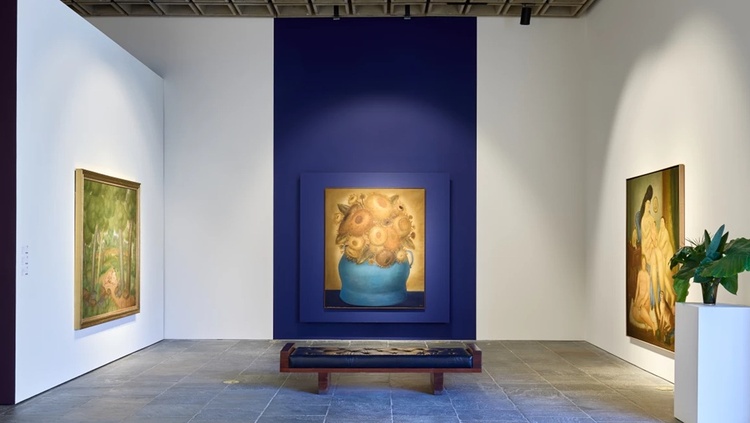
New York was much more than a backdrop for Fernando Botero. The city became a territory of transformation from which the Colombian artist developed some of the fundamental elements of his artistic language. Now, Sotheby’s revisits that period in Botero in New York, an exhibition on view from July 22 to September 7, organized in collaboration with The Botero Foundation.
The exhibition focuses on the years between 1960 and 1973, a defining period in Botero’s career and in the consolidation of figures with monumental volumes, bold forms, and compressed spaces that would become his unmistakable signature. Through works from the Botero Foundation and a selection available for purchase, the exhibition allows us to observe how the artist progressively developed his own unique vision during a time dominated by abstraction and the profound transformations of American art.
Botero developed his approach in a deliberate dialogue of opposition with the dominant trends of the New York art scene. While many of his contemporaries explored abstraction, gesture, and the dissolution of the figure, the Colombian artist maintained a constant connection with Western tradition and the history of painting. His work, however, was not untouched by the new ideas circulating in New York, from the formal investigations of the so-called New York School to the early developments of Pop Art. In this context, his voluminous figures acquire a singular dimension. Monumental, silent, and imbued with a particular blend of solemnity and humor, they stand as an alternative to the existential distortions of Francis Bacon or the gestural energy of Willem de Kooning. The distortion in Botero's work doesn't seek to express anguish or liberate the painterly gesture, but rather to construct a visual universe governed by its own rules of proportion, balance, and density.
The exhibition also allows us to trace the evolution of his painting during those years. From an early stage marked by a more expressive brushstroke, Botero progressed toward greater formal clarity, flatter surfaces, and a geometric conception of proportions. Volume ceased to be merely a physical characteristic of his figures, becoming a structural principle capable of organizing the entire image.
His relationship with cultural memory is equally essential. Botero took images, figures, and motifs from art history and popular culture, reinterpreting them from a profoundly personal perspective. Parallel to the rise of Pop Art in the United States and Latin America, his painting reflected on the circulation of images and the way in which certain figures remain in the collective memory. "Botero in New York" also has a special character due to its location. The exhibition occupies the historic Breuer Building and is the first exhibition dedicated to a single artist to be presented in this iconic space. The choice of New York thus revives a fundamental connection in Botero's career: that of a Latin American artist who found in one of the world's art capitals a stage for confrontation, learning, and transformation.
In the heart of the New York summer, when the city once again becomes a hub of intense cultural activity and attracts visitors, artists, and collectors from around the globe, the exhibition invites us to revisit one of the essential chapters in Botero's trajectory. It offers an opportunity to contemplate how, between tradition and modernity, figuration and geometry, the artist constructed in New York a language that would ultimately become one of the most recognizable images of contemporary Latin American art.
Latest

Gallery
- October 06, 2026
Gallery of Cartoons by Marcelo Chamorro from Ecuador
Artist
- October 06, 2026
Bruno Struzani
Article
Daily Artwork
- October 06, 2026
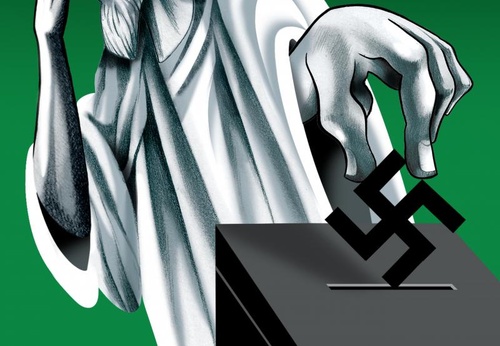
Brazil elections
Daily Artwork
- October 06, 2026
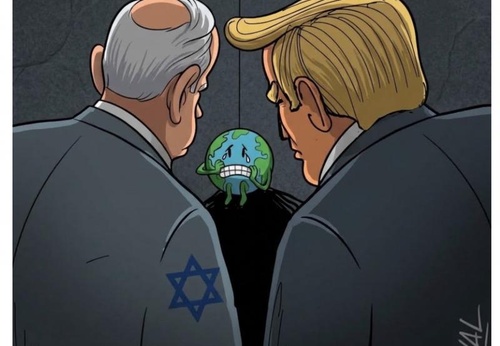
Harassment Trump y Netanyahu
Publications
- October 06, 2026
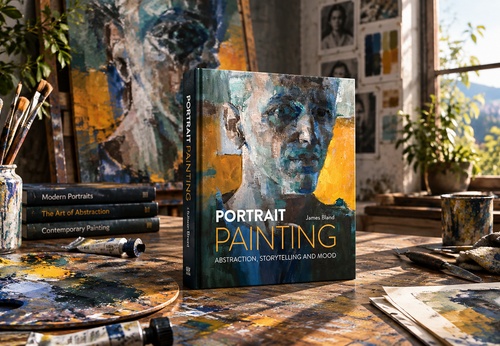
Portrait Painting: Abstraction, Storytelling and Mood by James Bland
Article
- October 05, 2026
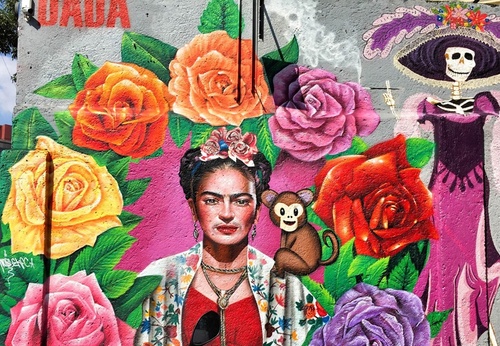
Urban Art in Latin America: Walls That Tell Stories
Gallery
- October 05, 2026
Gallery Of Cartoon By Sinan KILIC - Türkiye
Daily Artwork
- October 04, 2026
MALBA in Buenos Aires Celebrates 25 Yea…
- August 26, 2026
The Passing of Sliman Mansour: An Artis…
- August 13, 2026
Botero Returns to New York to Revisit t…
- August 11, 2026
"Malba-Costantini Collection: Latin Ame…
- August 10, 2026
The Most Important Exhibition on the Me…

- August 06, 2026
Cau Gomez Launches Official Website
- July 04, 2026
Football and Art at Museo Jumex
- June 29, 2026
Gazan Art at the Palestinian Museum: "T…
- June 28, 2026
Works from the Venice Biennale at the E…
- June 27, 2026
A Frida Kahlo Retrospective Arrives at …

- June 11, 2026
Two Argentinians Selected for Internati…

- June 05, 2026
“Noise” Wins Award and Expands Internat…

- June 03, 2026
Julio Le Parc, artist of light and move…
- May 31, 2026
Latin American Art Arrives at the Museu…
- May 26, 2026
MPPM AT THE 5TH EDITION OF ART FOR PALE…
- May 25, 2026
Pro-Gaza Monument Gains Prominence in t…

- May 25, 2026
Botero Sold His First Painting for Two …
- May 24, 2026
MALBA Celebrates 25 Years

- May 23, 2026
Andrea Giunta presents her book “Lesson…
- May 21, 2026
Latin American Art Exhibition and Aucti…

- October 08, 2023
Illustrations reflect the brutal Israel…

- December 25, 2023
The jury statement of the Iran-Brazil F…

- July 29, 2023
History of Caricature in Brazil
- June 05, 2026
“Noise” Wins Award and Expands Internat…

- March 21, 2024
The history of art in Palestine
- September 01, 2023
Neural Filters in new photoshop 2023

- April 20, 2024
Poignant Image of Grief Wins Mohammed S…

- May 22, 2025
Brady Izquierdo’s Personal Exhibition O…
- February 18, 2024
7 Ways to Understand What Visual Arts A…

- October 21, 2023
Erick Meyenberg and Tania Ragasol at th…
- June 29, 2024
Exhibition at Centro MariAntonia contra…
- May 15, 2024
Eleven murals for Gaza painted across t…

- May 25, 2025
Bordalo II to hold exhibition in Paris …
- June 03, 2026
Julio Le Parc, artist of light and move…
- March 14, 2024
museum of statue of van gogh
- August 09, 2023
Venezuela mural expresses solidarity wi…
- March 15, 2024
museum of sculpture of Salvador Dali
- May 20, 2024
Latin American Festival of Performing A…
- March 30, 2024
illustration websites in Latin America

- October 30, 2023
Palestinian turns images of the Gaza co…
- May 15, 2024
Eleven murals for Gaza painted across t…
- February 18, 2024
7 Ways to Understand What Visual Arts A…

- January 02, 2025
13 commemorations that will mark the cu…

- February 03, 2024
THE HISTORY OF NAIF ART
- October 17, 2023
The influence of Latin American artists…
- July 02, 2024
One of the largest urban art galleries …

- November 17, 2023
Fernando Botero's work is booming after…
- July 29, 2023
Piracicaba International Humor Exhibiti…
- October 08, 2023
Illustrations reflect the brutal Israel…
- December 25, 2023
The jury statement of the Iran-Brazil F…
- November 06, 2023
Heba Zagout: Palestinian artist murdere…

- December 10, 2023
Sliman Mansour and Palestinian art on t…
- March 14, 2024
museum of statue of van gogh
- March 21, 2024
The history of art in Palestine
- February 01, 2025
A maior exposição de Botero em Barcelona

- February 08, 2024
Art Week 2024 in CDMX

- July 20, 2024
First International Mail Art Biennial 2…
- April 20, 2024
Poignant Image of Grief Wins Mohammed S…
- October 30, 2023
Palestinian turns images of the Gaza co…
- September 01, 2023
Neural Filters in new photoshop 2023