Beyond Exoticism: Latin American Art in the Global Market
"Latin American art does not need to be discovered."
"Latin American art transcends labels and conquers global art fairs such as Frieze and Paraíso. A reflection on collecting and the market." "For a few weeks each year, cities such as London, Paris, Miami, Bogotá, New York, and Hong Kong seem to become the center of the art universe. These so-called 'art weeks' bring together fairs, exhibitions, auctions, openings, and gatherings that draw artists, gallerists, curators, collectors, and enthusiasts from all over the globe.
Of course, art is present in these cities year-round. What makes these weeks extraordinary is the concentration of an international offering that, in just a few days, allows one to traverse diverse geographies, generations, artistic languages, and price points—elements that would rarely converge in any other context.
But do we really need so many fairs? *The Economist* recently posed this question, pointing to one of the market’s major contradictions: the fear of missing out—or 'FOMO'—which keeps gallerists and collectors navigating an increasingly saturated calendar.
While we share this skepticism, we also believe that these weeks offer something irreplaceable: the opportunity to build relationships, discover new work, and spark conversations that transcend mere commercial transactions.
The most recent edition of Frieze Week, held in London this past October, offered a reflection that is particularly relevant to us: Latin American art can no longer be presented as a 'discovery' by the international market.
For decades, much of its circulation outside the region was shaped by categories that insisted on interpreting the work solely through the lenses of colonization, ethnic identity, marginalization, or exoticism.
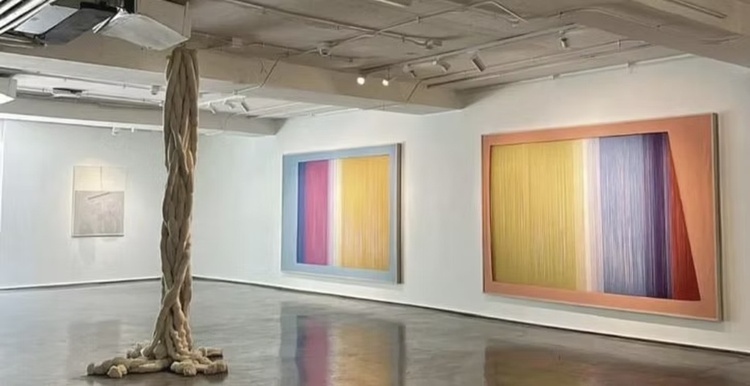
Without dismissing the importance of these discussions within our history, reducing Latin American artistic production to such categories ignores the full breadth of what is being created. Our artists engage with abstraction, technology, memory, materiality, politics, and the universal possibilities of contemporary art. Their roots do not limit their artistic language; they enrich it.
Latest
Article
- November 10, 2026
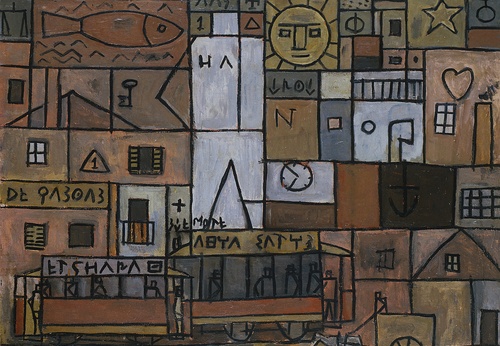
Our North is the South: Universal Constructivism and Uruguayan Art
Article
- November 10, 2026
Magical Realism Beyond the Page: Latin American Painting
News
- November 10, 2026
Beyond Exoticism: Latin American Art in the Global Market
Publications
- November 10, 2026
Outdoor Photography | 2022, Issue 3
Artist
- November 10, 2026
Fran Pulido
Gallery
- November 10, 2026
Gallery Of Illustration By Fran Pulido - Spanish
Publications
- November 10, 2026
PALESTINE | THE ART OF RESISTANCE | NAJI AL-ALI
Publications
- November 09, 2026
Outdoor Photography | 2023, Issue 4
News
- November 10, 2026
Beyond Exoticism: Latin American Art in…
- November 09, 2026
Arnaldo Coen, a key figure in artistic …

- November 08, 2026
MOLAA Celebrates 30 Years of Latin Amer…
- November 08, 2026
The Art Market in Madrid
- November 08, 2026
iPad Users Finally Get a Free Alternati…
- November 08, 2026
Quixel Megascans Becomes Free for Unlim…

- November 05, 2026
Newsweek: Politics – A Troubling Vision…

- November 05, 2026
he New Yorker Celebrates the Democrats’…

- October 31, 2026
35th Edition of arteba at La Rural
- October 31, 2026
The Art of Picasso, Klee, and Matisse A…
- October 29, 2026
Malba Announces the Acquisition of the …
- October 28, 2026
Art Basel Miami Beach 2026 Revamp
- October 28, 2026
Excitement Surrounds Frida Kahlo’s Work…

- October 27, 2026
Eduardo Costantini to be honored in New…
- October 26, 2026
Latin American Art Takes Center Stage a…

- October 25, 2026
Julio Cortázar Museum brings together w…
- October 04, 2026
MALBA in Buenos Aires Celebrates 25 Yea…
- August 26, 2026
The Passing of Sliman Mansour: An Artis…
- August 13, 2026
Botero Returns to New York to Revisit t…
- August 11, 2026
"Malba-Costantini Collection: Latin Ame…

- October 08, 2023
Illustrations reflect the brutal Israel…
- December 25, 2023
The jury statement of the Iran-Brazil F…

- June 05, 2026
“Noise” Wins Award and Expands Internat…
- March 21, 2024
The history of art in Palestine

- July 29, 2023
History of Caricature in Brazil
- September 01, 2023
Neural Filters in new photoshop 2023
- May 22, 2025
Brady Izquierdo’s Personal Exhibition O…

- April 20, 2024
Poignant Image of Grief Wins Mohammed S…

- October 21, 2023
Erick Meyenberg and Tania Ragasol at th…
- June 29, 2024
Exhibition at Centro MariAntonia contra…

- May 15, 2024
Eleven murals for Gaza painted across t…
- February 18, 2024
7 Ways to Understand What Visual Arts A…
- March 30, 2024
illustration websites in Latin America
- May 20, 2024
Latin American Festival of Performing A…

- March 14, 2024
museum of statue of van gogh
- May 25, 2025
Bordalo II to hold exhibition in Paris …
- August 09, 2023
Venezuela mural expresses solidarity wi…
- March 15, 2024
museum of sculpture of Salvador Dali

- June 03, 2026
Julio Le Parc, artist of light and move…

- October 30, 2023
Palestinian turns images of the Gaza co…
- May 15, 2024
Eleven murals for Gaza painted across t…
- February 18, 2024
7 Ways to Understand What Visual Arts A…
- February 03, 2024
THE HISTORY OF NAIF ART

- January 02, 2025
13 commemorations that will mark the cu…

- July 02, 2024
One of the largest urban art galleries …
- October 08, 2023
Illustrations reflect the brutal Israel…
- October 17, 2023
The influence of Latin American artists…

- November 17, 2023
Fernando Botero's work is booming after…
- July 29, 2023
Piracicaba International Humor Exhibiti…
- December 25, 2023
The jury statement of the Iran-Brazil F…
- November 06, 2023
Heba Zagout: Palestinian artist murdere…
- December 10, 2023
Sliman Mansour and Palestinian art on t…
- March 14, 2024
museum of statue of van gogh
- March 21, 2024
The history of art in Palestine
- February 01, 2025
A maior exposição de Botero em Barcelona

- February 08, 2024
Art Week 2024 in CDMX
- April 20, 2024
Poignant Image of Grief Wins Mohammed S…
- July 20, 2024
First International Mail Art Biennial 2…
- October 30, 2023
Palestinian turns images of the Gaza co…
- September 01, 2023
Neural Filters in new photoshop 2023