Malba Announces the Acquisition of the Work *Paraíso* (1984) by Diana Aisenberg
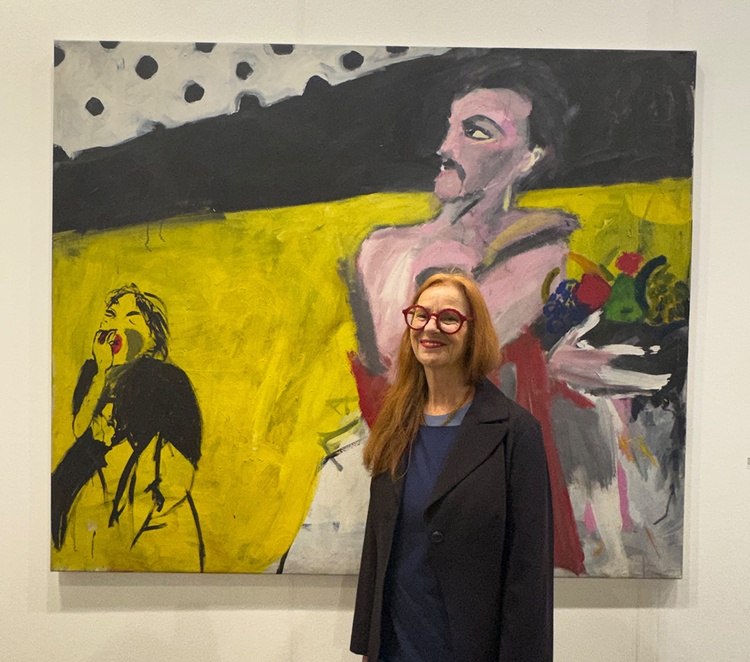
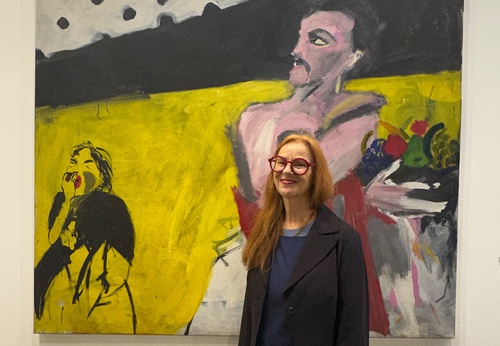
In the year of its 25th anniversary, and within the framework of the 35th edition of the contemporary art fair *arteBA*, Malba announces the addition of the painting *Paraíso* (1984)—by Argentine artist Diana Aisenberg—to its collection, made possible by the museum’s Acquisitions Committee.
Buenos Aires, October 28, 2026 — In the year of its 25th anniversary, and within the framework of the 35th edition of the contemporary art fair *arteBA*, Malba announces the addition of the painting *Paraíso* (1984)—by Argentine artist Diana Aisenberg—to its collection, made possible by the museum’s Acquisitions Committee. Diana Aisenberg (Buenos Aires, 1958) is a visual artist, educator, and researcher who holds a central place in the historiography of contemporary Argentine art. Her body of work encompasses painting, drawing, performance, and installation, alongside collaborative projects deeply intertwined with extensive pedagogical work—a pioneering practice that links artistic creation, teaching, and the collective construction of knowledge, and which has contributed to the development of generations of artists from the 1980s to the present day.
*Paraíso* (1984) was featured in the artist’s first solo exhibition, *Mujeres, niñas, reinas* (“Women, Girls, Queens”), held at the Galería Adriana Indik—a space that hosted numerous experimental projects by a new generation of artists during the years of Argentina’s return to democracy. This exhibition served as an important introduction for Aisenberg, who had received her training in Israel—where she lived between 1976 and 1982—and, upon arriving in Buenos Aires, established herself within the local scene through active participation in competitions and group exhibitions. These events brought her into contact with artists and writers such as Guillermo Kuitca, Luis Frangella, Gustavo Marrone, Elba Bairon, Emeterio Cerro, Arturo Carrera, and Rosario Bléfari, among many others who shaped the prolific creative output of the 1980s.
The exhibition *Mujeres, niñas, reinas* (Women, Girls, Queens) combined painting with performance: the acrylic works were accompanied by what the artist called “live acts”—performances inspired by the paintings, enacted by a group of actors following a choreographic script. This show highlighted Aisenberg’s interest in the integration of disciplines, the concept of “expanded theater,” and a process-oriented, collective approach to work.
“Diana Aisenberg’s body of work is significant for the Malba collection for many reasons. Not only does *Paraíso* (Paradise) allow us to reconstruct the Argentine art scene of the 1980s with greater plurality, but Diana is also a key figure in the development of many young artists. This creates a very coherent narrative thread within the story of our art,” explains María Amalia García, chief curator at Malba. For her part, Elena Nofal, the museum’s Director of Development, notes: “In the year that Malba celebrates its 25th anniversary, we are proud to continue our support for arteBA—a fair with which the museum has maintained an enduring connection since 2004. This commitment was strengthened in 2012 with the creation of the Acquisitions Committee, which has since contributed—without interruption—to the growth of our collection of Latin American art. Thanks to the generosity and dedication of its members, we have added this work by Diana Aisenberg—a pivotal figure in the local art scene—to our collection; it will very soon be on view for the public to enjoy at the museum.”
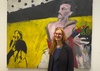
*Paraíso* [Paradise] explores the performative through its figures—characterized by elusive features and period-style garments inspired by the history of Western art—set against an abstract background that heightens the fictional nature of the scene. The work reflects the interests of an era marked by intense experimental fervor, while anticipating many of the key elements that have defined the artist’s painting practice ever since: her works are expressive, convey specific emotions, and are gestural, revealing the visible traces of the brushstroke.
Furthermore, the piece reflects a recurring mystical quality in Aisenberg’s work—rich with references to classical art and biblical narratives—which imbues her subjects (people, animals, flowers, food, and basic forms) with a sacred character, and her creative processes with a ritualistic dimension. The work also navigates the interplay between figuration and abstraction, painting and literature, and symbolism and an intensified, heightened reality.
*Paraíso* belongs to a crucial transitional period in Argentina, spanning the end of the civic-military dictatorship and the restoration of democracy. A propitious moment for the emergence of alternative spaces, the formation of artist groups, and an intense period of experimentation that spanned painting, theater, music, and performance. As part of the MALBA collection, this work—the first by the artist to be added to our holdings—allows for the reconstruction of that landscape, in dialogue with pieces by artists such as Guillermo Kuitca, Marcia Schvartz, Santiago García Sáenz, and Pablo Suárez, among others.
Latest
Article
News
Publications
- October 29, 2026
Creative Nature Photography: Essential Tips and Techniques

Publications
- October 29, 2026
Watercolor Painting for Dummies
Daily Artwork
- October 29, 2026
Train crash
Publications
Publications

Publications
- October 28, 2026
Green Building: Guidebook for Sustainable Architecture
Gallery
- October 28, 2026
Revolution in Frames: Cuba by Carl Oelerich (USA)
- October 29, 2026
Malba Announces the Acquisition of the …
- October 28, 2026
Art Basel Miami Beach 2026 Revamp
- October 28, 2026
Excitement Surrounds Frida Kahlo’s Work…

- October 27, 2026
Eduardo Costantini to be honored in New…
- October 26, 2026
Latin American Art Takes Center Stage a…

- October 25, 2026
Julio Cortázar Museum brings together w…
- October 04, 2026
MALBA in Buenos Aires Celebrates 25 Yea…
- August 26, 2026
The Passing of Sliman Mansour: An Artis…
- August 13, 2026
Botero Returns to New York to Revisit t…
- August 11, 2026
"Malba-Costantini Collection: Latin Ame…
- August 10, 2026
The Most Important Exhibition on the Me…

- August 06, 2026
Cau Gomez Launches Official Website
- July 04, 2026
Football and Art at Museo Jumex
- June 29, 2026
Gazan Art at the Palestinian Museum: "T…
- June 28, 2026
Works from the Venice Biennale at the E…
- June 27, 2026
A Frida Kahlo Retrospective Arrives at …

- June 11, 2026
Two Argentinians Selected for Internati…

- June 05, 2026
“Noise” Wins Award and Expands Internat…
- June 03, 2026
Julio Le Parc, artist of light and move…
- May 31, 2026
Latin American Art Arrives at the Museu…

- October 08, 2023
Illustrations reflect the brutal Israel…

- December 25, 2023
The jury statement of the Iran-Brazil F…

- July 29, 2023
History of Caricature in Brazil
- March 21, 2024
The history of art in Palestine
- June 05, 2026
“Noise” Wins Award and Expands Internat…
- April 20, 2024
Poignant Image of Grief Wins Mohammed S…

- May 22, 2025
Brady Izquierdo’s Personal Exhibition O…
- September 01, 2023
Neural Filters in new photoshop 2023
- June 29, 2024
Exhibition at Centro MariAntonia contra…

- May 15, 2024
Eleven murals for Gaza painted across t…
- February 18, 2024
7 Ways to Understand What Visual Arts A…

- October 21, 2023
Erick Meyenberg and Tania Ragasol at th…
- March 30, 2024
illustration websites in Latin America
- March 14, 2024
museum of statue of van gogh
- June 03, 2026
Julio Le Parc, artist of light and move…

- May 25, 2025
Bordalo II to hold exhibition in Paris …
- August 09, 2023
Venezuela mural expresses solidarity wi…
- March 15, 2024
museum of sculpture of Salvador Dali
- May 20, 2024
Latin American Festival of Performing A…

- April 18, 2024
Israel Pavilion at Venice Biennale clos…
- May 15, 2024
Eleven murals for Gaza painted across t…
- February 18, 2024
7 Ways to Understand What Visual Arts A…

- January 02, 2025
13 commemorations that will mark the cu…

- February 03, 2024
THE HISTORY OF NAIF ART
- October 17, 2023
The influence of Latin American artists…

- July 02, 2024
One of the largest urban art galleries …

- November 17, 2023
Fernando Botero's work is booming after…
- July 29, 2023
Piracicaba International Humor Exhibiti…
- October 08, 2023
Illustrations reflect the brutal Israel…
- December 25, 2023
The jury statement of the Iran-Brazil F…
- November 06, 2023
Heba Zagout: Palestinian artist murdere…
- December 10, 2023
Sliman Mansour and Palestinian art on t…
- March 14, 2024
museum of statue of van gogh
- March 21, 2024
The history of art in Palestine
- February 01, 2025
A maior exposição de Botero em Barcelona
- February 08, 2024
Art Week 2024 in CDMX
- April 20, 2024
Poignant Image of Grief Wins Mohammed S…
- July 20, 2024
First International Mail Art Biennial 2…

- October 30, 2023
Palestinian turns images of the Gaza co…
- September 01, 2023
Neural Filters in new photoshop 2023