Artificial Intelligence and the Creation of Art Images: From a New Tool to a Major Challenge for Art
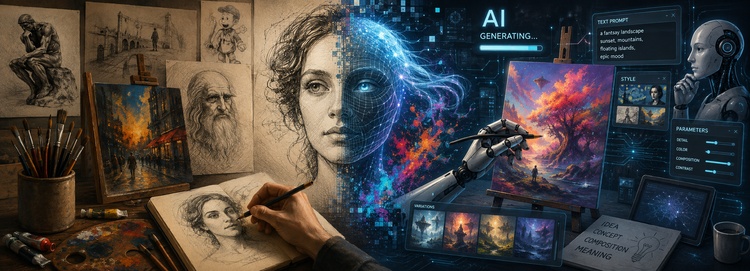
e has rapidly transformed the way images are produced. Today, an artist can describe an idea and obtain, within seconds, an image that previously might have required hours of drawing, painting, photography, or technical production. AI image generators have changed the relationship between idea, design, and execution, opening new possibilities for experimenting with visual styles, compositions, lighting, perspectives, and imaginary worlds.
But the most important question is no longer whether AI can create images. It clearly can. The deeper question is what happens to the role of the artist, the meaning of creativity, and the value of an artwork when a machine becomes part of the creative process.
UNESCO describes generative AI as a transformative force affecting how culture is produced, distributed, and accessed, while also raising serious questions about artists’ rights, remuneration, cultural diversity, and intellectual property.
AI: Tool or Artist?
Whether an AI-generated image should be considered an artwork depends largely on the role of the human creator. If a person simply enters a short prompt and publishes the first result, human creative involvement may be limited. But when an artist develops the concept, chooses the composition, controls characters, lighting, perspective and narrative, selects among outputs, and makes substantial revisions, AI functions much more like a creative tool.
The U.S. Copyright Office stated in 2025 that merely providing prompts is not, by itself, sufficient to establish copyright, while human creative choices, arrangement, and modification can contribute to copyrightable expression.
Perhaps, therefore, the better question is not “Is AI an artist?” but:
Who is the artist in the age of artificial intelligence?
Speed, Possibility and Risk
One of AI’s greatest advantages is speed. Artists can test dozens of visual concepts, compositions, camera angles, lighting conditions, and narrative possibilities in a very short time.
Yet faster image production does not automatically mean better art.
AI can produce an image, but it cannot guarantee a strong idea, personal vision, or meaningful artistic position.
There is also a paradox: AI can generate enormous visual diversity while potentially encouraging a common and predictable aesthetic. UNESCO has warned that generative AI can produce standardized and predictable outputs, making human intention, originality, and artistic depth increasingly important.
Copyright, Style and the Future of Artists
One of the most controversial issues concerns the use of artists’ works to train AI systems and the ability of these systems to reproduce recognizable visual characteristics. Questions of consent, transparency, compensation, and cultural diversity have therefore become central to the debate. UNESCO has specifically called for informed consent, fair remuneration, transparency, and protection of cultural diversity.
For political cartoonists and illustrators, AI can be extremely useful for brainstorming, visual experimentation, backgrounds, compositions, and developing preliminary ideas. But the heart of a political cartoon remains the idea.
AI can create an unusual politician, a distorted face, or a dramatic scene. It cannot automatically determine what that image should say about power, politics, injustice, or society.
The Future: Human versus Machine?
The future of art may be less about a war between humans and machines and more about collaboration between human creativity and machine capability.
AI can provide speed, variation, and experimentation. The human artist provides meaning, experience, emotion, responsibility, and judgment.
The artist of the future may therefore not be the person who avoids AI, nor the person who simply generates images with it, but the person who knows what to say and knows how to use technology to say it.
Ultimately, an artwork is not defined by the number of details it contains.
What turns an image into art is not necessarily its complexity, but the human vision behind it.
Latamarte
Latest
Article
- October 16, 2026
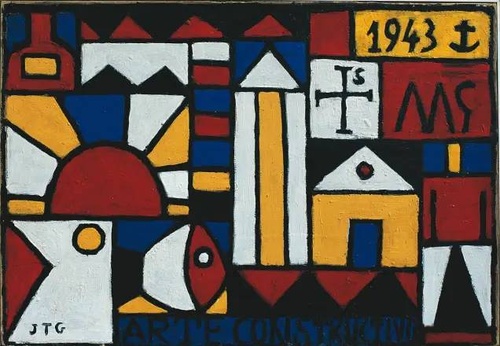
Uruguay: Torres García, Constructivism, and the School of the South
Article
- October 16, 2026
Venezuela: Kinetic Art, Modernity, and Art in Times of Crisis
Daily Artwork
- October 16, 2026
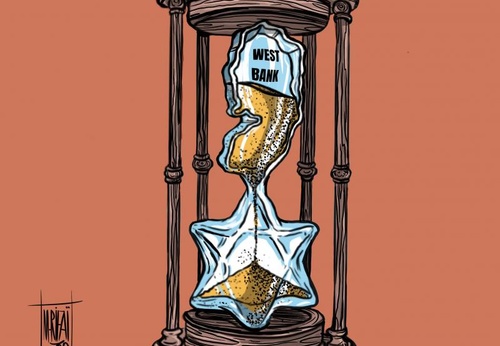
West bank
Daily Artwork
- October 16, 2026
Renewable energy
Publications
- October 16, 2026
DK | WEAPON: A VISUAL HISTORY OF ARMS AND ARMOR
Publications
- October 15, 2026
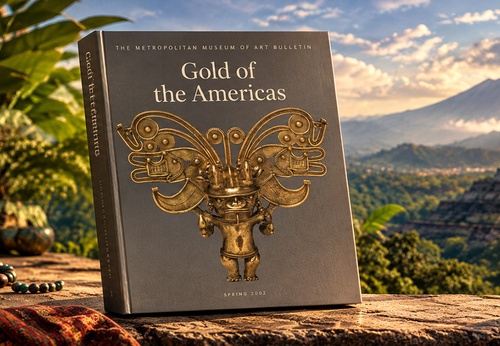
Gold of the Americas
Daily Artwork
- October 15, 2026
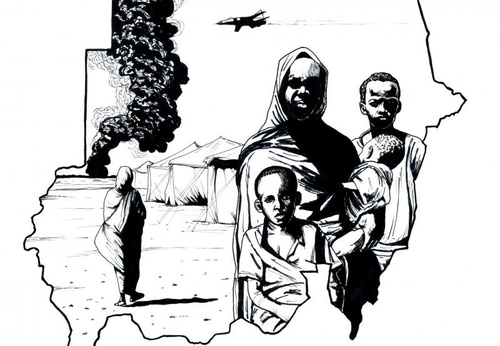
Sudan
Gallery
- October 15, 2026
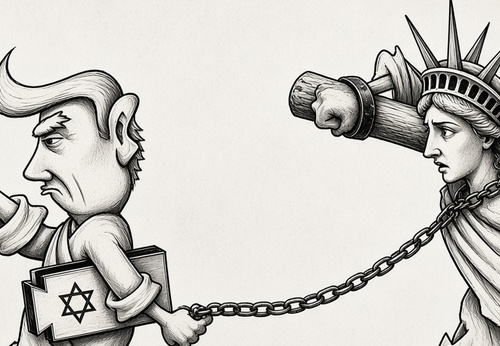
Gallery Of Humor Drawing By Aziz Bouzekri - Morocco
Publications
- October 15, 2026
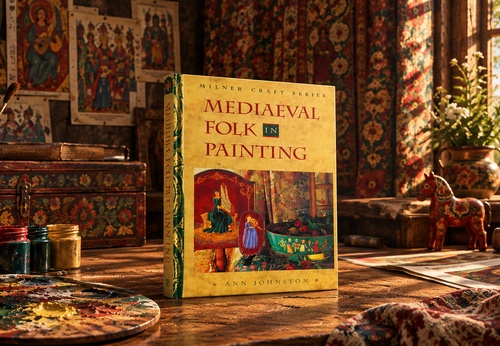
Mediaeval Folk in Painting (Milner Craft Series) by Ann Johnston
- October 16, 2026
Uruguay: Torres García, Constructivism,…
- October 16, 2026
Venezuela: Kinetic Art, Modernity, and …

- October 12, 2026
Artificial Intelligence in the Art Worl…
- October 12, 2026
Art and Artificial Intelligence: A New …
- October 11, 2026
The Future of Artists in the Age of Art…
- October 11, 2026
Artificial intelligence and art: creati…
- October 08, 2026
Peru: Indigenism, Photography, and the …
- October 08, 2026
Mexico: Surrealism and the Power of Wom…
- October 07, 2026
Art and Artificial Intelligence: A New …
- October 07, 2026
Urban Art: How Art Transforms Cities
- October 06, 2026
Cuba: Revolution, Diaspora, and the Aes…
- October 05, 2026
Urban Art in Latin America: Walls That …
- October 04, 2026
Argentina: Kinetic Art and Spectator Pa…
- September 30, 2026
Cuba: Revolution, Diaspora, and the Aes…

- September 30, 2026
Costa Rica: Art, Nature, and the Constr…
- September 29, 2026
Colombia: Violence, Color, and the Sear…
- September 29, 2026
Chile: Art, Utopia, and Resistance in t…
- September 26, 2026
Bolivia: Art as a Weave of Ancestral an…
- September 26, 2026
Brazil: From Anthropophagism to the Con…
- September 22, 2026
Argentina: Between Cosmopolitan Avant-G…
- August 29, 2023
The history of Bolivian art
- February 19, 2024
Analysis and meaning of Van Gogh's Star…
- January 28, 2024
Culture and Art in Argentina

- September 25, 2023
What is the importance of art in human …

- September 23, 2023
What is paint?

- August 23, 2023
The 11 types of art and their meanings
- August 10, 2023
14 questions and answers about the art …

- September 23, 2023
Painting characteristics
- August 30, 2023
First artistic manifestations
- January 12, 2024
10 most beautiful statues and sculpture…
- October 18, 2023
History of sculpture
- September 23, 2023
History of painting

- April 06, 2024
History of visual arts in Ecuador
- November 21, 2024
History of Visual Arts
- March 26, 2024
The importance of technology in art1
- March 26, 2024
Cultural identity and its impact on art…

- July 13, 2024
The impact of artificial intelligence o…
- August 27, 2023
The history of art Mexico
- April 07, 2024
Graffiti in Latin American culture
- December 20, 2024
What is art? Definition, concept and ar…
- February 19, 2024
Analysis and meaning of Van Gogh's Star…
- August 13, 2023
9 Latino painters and their great contr…
- August 23, 2023
The 11 types of art and their meanings
- August 27, 2023
15 main works of Van Gogh
- August 10, 2023
14 questions and answers about the art …
- August 29, 2023
The history of Bolivian art
- January 28, 2024
Culture and Art in Argentina
- November 06, 2023
5 Latin American artists and their works
- September 23, 2023
Painting characteristics
- September 23, 2023
What is paint?
- September 25, 2023
What is the importance of art in human …
- August 30, 2023
First artistic manifestations
- March 26, 2024
Cultural identity and its impact on art…
- December 18, 2023
10 iconic works by Oscar Niemeyer, geni…
- January 26, 2025
10 of the best Bolivian painters

- August 24, 2023
The most famous image of Ernesto "Che" …
- January 12, 2024
10 most beautiful statues and sculpture…
- January 20, 2024
What is the relationship between art an…
- May 26, 2024
Técnicas de artes visuais

- October 30, 2023
Characteristics of Contemporary Art