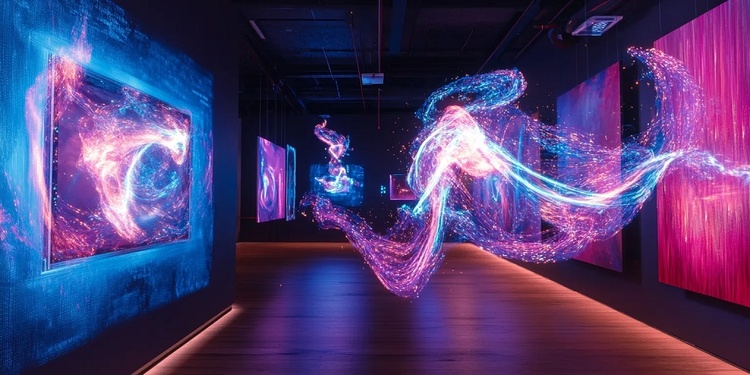
Can Artificial Intelligence Produce Art?
Is AI capable of making art? This is one of the most interesting questions of today.
In recent days, a virtual trend has emerged of converting personal and historical photos into drawings in the style of Studio Ghibli Japanese animation, a style renowned for the quality of its stories and whose main figure is the artist Hayao Miyazaki. However, this trend has generated numerous discussions about the future of artists, AI, art in general, and a series of related topics. But honestly, I haven't seen almost any intelligent commentary on the subject.
In fact, on the contrary, I have the impression that because contemporary man doesn't know what art is, what an artist is, what man is, what a machine is, as well as not knowing a number of other things, he has enormous difficulty in correctly dealing with this issue of "art" made by Artificial Intelligence. That's why, incidentally, perhaps only philosophers, like Aleksandr Dugin, have offered interesting interpretations of the phenomenon.
Let's begin by breaking down the issue into several layers:
The first directly concerns the possibility of AI producing art. It seems to me that the fundamental problem here is that most people simply don't know what a work of art is. That if a machine produces a "beautiful drawing," then it is "making art," right? In fact, art only makes sense in relation to the artist. And here, without intending to make a lengthy discussion of the "meaning of a work of art," it suffices to make a fairly direct point that a work of art is the result of an artist's effort to grasp an aspect of truth and unveil it, to uncover it, to bring it out of concealment. The artist reveals a piece of truth through the work of art.
But he doesn't do it like a carpenter producing a chair, or a weaver producing a shirt, or a potter producing a vase. The craftsman or artisan produces finished objects for human use. But the artwork doesn't "end" with the completion of the painting, with the last note included in the score, or with the last strike of the chisel on the marble, because the artwork is something that, when unveiled, continues to grow and flourish like a plant. The artist's relationship with the artwork is like that of a gardener with seeds hidden beneath the earth. Art is "shepherded" by the artist, and it flourishes in the eyes of the historically rooted community, because, as Ezra Pound said, "the artist is the antenna of the race."
A Bernini sculpture is fundamentally distinguished from a chair precisely because of this historical dimension that is pertinent to art, but not to artisanal production. The revelation of a glimpse of truth is not made for a masturbatory artist, but always for a people who contemplate the artwork and are able to grasp the truth through the mediation of the artwork and even grasp meanings and nuances that neither the artist sees nor even intended. And that's why art is alive, like a plant, and continues to bear fruit and flourish even after the artist is dead.
Could AI provide this kind of experience? We can immediately say no. Artificial Intelligence is an object among objects. It's a well-made object, but nothing more than an object. It is as incapable of grasping any aspect of truth as it is of situating itself historically within a people as part of an entrenched community. No one will be debating, 500 years later, the nuances, intentions, mysteries, and hidden symbolism of a painting produced by ChatGPT. No one will be debating whether ChatGPT, as an author of texts, reveals Catholic, pagan, or Gnostic influences (as, for example, we find ourselves debating about Tolkien). There is nothing being revealed there, nothing that can "flourish." It is like an automated factory, capable of producing finished things from pre-programmed algorithms and databases and nothing more. Even if you give the order “Create a painting in the style of Da Vinci, but depicting a modern woman,” the result will be merely derivative, superficial, and not a work of art. It will be amusing entertainment…that will be forgotten in a matter of days (certainly there are beautiful images produced by AI, but is there any that is memorable, that has made a deep impression on anyone? I haven't seen any yet, and I've been working with AI for years now).
AI is incapable of creating. Creation does not occur through the shuffling of numerical factors. This is a closed path, perpetually closed, for AI. It can never create because it can never be human.
In this sense, Dugin is right when he points out that AI does not possess Dasein – and here is the thread for the next reflection – but is hardly distinguishable from the man who lives inauthentically (and who, therefore, has closed himself off from the existential fullness of Dasein), in pure everyday life, almost like a machine.
I have the impression that for most people, replacing real artists with AI wouldn't make a difference (there are people who already want to see "AI-made" films) because most people simply aren't truly capable of contemplating a work of art – they've already become "NPCs," they're part of the Man-Machine automatons reproducing daily routines that are hardly distinguishable from AI (except for the potential to one day awaken). The flesh-and-blood automaton (a golem, therefore?) doesn't really see the difference between a cinematic work of art and the latest garbage serially vomited up by Hollywood. To avoid placing it in the inaccessible realm of "boring films," most wouldn't see much difference between Sergio Leone's Once Upon a Time in the West and Wild Wild West.
Thus, the normalization of AI acceptance is understandable. Most people already consume "art" mass-produced by computers and flesh-and-blood automatons to a lower common denominator. This is the “art” produced by the Western music industry, this is the “art” produced by the major film studios. This is the norm, this is the dominant “art” to which we have been fully accustomed for at least 50 years. There is nothing there to contemplate, nor a contemplator, since the people no longer exist as such; they have been replaced by the masses.
Now, in what context does all this affect the artist? On the one hand, they say that only commercial artists will be threatened. On the other hand, they say that all artists (or most) will be replaced and that the future of art is Artificial Intelligence. The reality seems more mixed to me. If there is no longer a worthy contemplator, then no one can distinguish what is a true artist from what is a flesh-and-blood automaton producing images and sounds. So both Anitta's composers and true artists will, to some extent, be affected by AI.
A studio for which certain types of art are a means and not an end (think of the role of concept art in a video game studio) can simply dispense with artists and outsource the function to AI. Some will even risk outsourcing elements of the final product to AI, hoping that no one notices. One report claims that movie scripts are already being produced by AI. Well, they are as bad (or slightly worse) than those of commercial films from the 90s. It is important to remember, however, that true artists don't live by "masterpieces" alone. Every artist also produces commercially (and when they are really good, that doesn't make them any less of a work of art). Da Vinci worked for the Italian aristocracy. Avant-garde comic book artists also work for Marvel and DC. The narrowing of the professional artist's path will inevitably impact the ability of artists to produce disinterested works of art.
Finally, I will address what seems most disturbing to me in the whole issue: the enthusiasm for AI and the propagators of its "inevitability".
Source
Latest
Article
- February 25, 2026
Cândido Portinari: The Social Face of Brazil
Article
- February 25, 2026
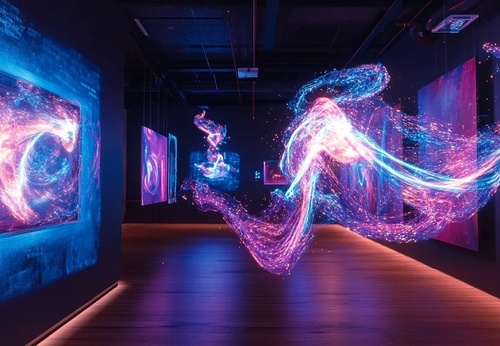
Can Artificial Intelligence Produce Art?
Daily Artwork
- February 25, 2026
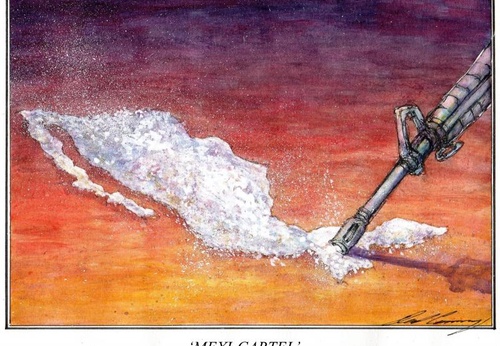
' MEXI-CARTEL ' Violent drug cartels wreak havoc in Mexico.
Publications
- February 25, 2026
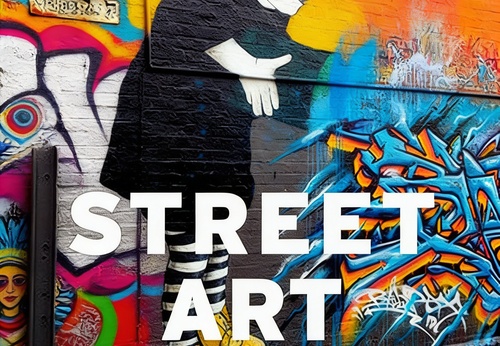
Street Art World by Alison Young
Publications
- February 24, 2026
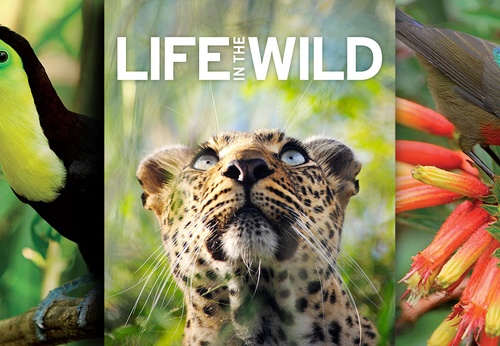
DK | LIFE IN THE WILD
News
- February 24, 2026
Oscar Olivares Sets Record with Giant Recycled Bottle Cap Mural

Article
- February 24, 2026
The Architecture of Brasília
Article
- February 24, 2026
Fernando Botero: Volume as Aesthetic Expression
Daily Artwork
- February 24, 2026
4th Anniversary of War in Ukraine
- February 25, 2026
Cândido Portinari: The Social Face of B…

- February 25, 2026
Can Artificial Intelligence Produce Art?

- February 24, 2026
The Architecture of Brasília
- February 24, 2026
Fernando Botero: Volume as Aesthetic Ex…
- February 23, 2026
Decolonial Perspectives: Contemporary A…
- February 23, 2026
Brushes of Resistance: Colonial Artists…
- February 22, 2026
Graphic Art as Political and Social Exp…
- February 22, 2026
Graphic Art as a Builder of Collective …
- February 21, 2026
The Importance of Modern Art in Society

- February 21, 2026
The Birth of Modern Art
- February 19, 2026
Remedios Varo: Alchemical Surrealism in…
- February 19, 2026
Spatialism and Light in the Work of Luc…

- February 18, 2026
Frida Kahlo: The Aesthetics of Pain and…

- February 18, 2026
Tarsila do Amaral's Anthropophagy and B…
- February 17, 2026
Art in the Street: Expression, Resistan…
- February 17, 2026
Most famous male cartoonists in Latin A…
- February 16, 2026
The Art of Caricature: Expression, Humo…
- February 16, 2026
The Art of Caricature in Latin America
- February 15, 2026
Joaquín Torres-García and Constructive …
- February 15, 2026
Mexican Muralism: A Dialogue Between Ar…
- August 29, 2023
The history of Bolivian art
- February 19, 2024
Analysis and meaning of Van Gogh's Star…
- January 28, 2024
Culture and Art in Argentina

- September 25, 2023
What is the importance of art in human …

- September 23, 2023
What is paint?

- August 23, 2023
The 11 types of art and their meanings
- August 10, 2023
14 questions and answers about the art …

- September 23, 2023
Painting characteristics
- August 30, 2023
First artistic manifestations
- January 12, 2024
10 most beautiful statues and sculpture…
- September 23, 2023
History of painting
- March 26, 2024
The importance of technology in art1
- July 13, 2024
The impact of artificial intelligence o…
- October 18, 2023
History of sculpture
- March 26, 2024
Cultural identity and its impact on art…
- April 07, 2024
Graffiti in Latin American culture

- December 20, 2024
What is art? Definition, concept and ar…
- August 16, 2023
The 15 greatest painters in art history

- April 06, 2024
History of visual arts in Ecuador
- April 02, 2024
History visual arts in Brazil
- February 19, 2024
Analysis and meaning of Van Gogh's Star…

- August 13, 2023
9 Latino painters and their great contr…
- August 23, 2023
The 11 types of art and their meanings
- August 27, 2023
15 main works of Van Gogh
- August 10, 2023
14 questions and answers about the art …
- August 29, 2023
The history of Bolivian art
- January 28, 2024
Culture and Art in Argentina
- November 06, 2023
5 Latin American artists and their works
- September 23, 2023
Painting characteristics
- September 23, 2023
What is paint?
- September 25, 2023
What is the importance of art in human …
- March 26, 2024
Cultural identity and its impact on art…
- August 30, 2023
First artistic manifestations

- December 18, 2023
10 iconic works by Oscar Niemeyer, geni…
- January 12, 2024
10 most beautiful statues and sculpture…
- January 20, 2024
What is the relationship between art an…

- August 24, 2023
The most famous image of Ernesto "Che" …
- October 30, 2023
Characteristics of Contemporary Art
- August 22, 2023
What are Plastic Arts?
- May 26, 2024
Técnicas de artes visuais