Sliman Mansour: The Artist Who Gave Palestine a Visual Memory
In memory of one of the defining figures of contemporary Palestinian art
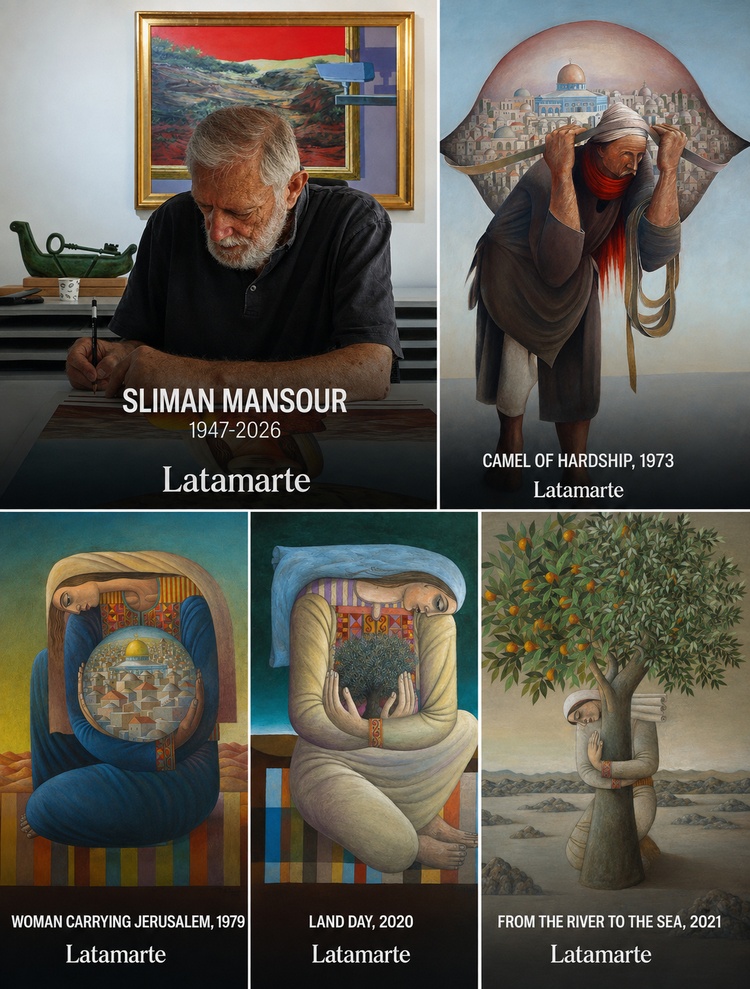
On August 24, 2026, Palestinian and Arab art lost one of its most important and influential figures. Sliman Mansour, the renowned Palestinian painter, sculptor and writer, died in Jerusalem at the age of 79. For more than five decades, his art gave visual form to the land, memory, identity, displacement, suffering, hope and steadfastness of the Palestinian people.
Born in Birzeit in 1947, Mansour studied fine arts at the Bezalel Academy of Art and Design in Jerusalem, graduating in 1970. From the beginning of his career, he sought to develop an artistic language rooted in Palestinian life rather than in imported artistic models. His paintings frequently featured olive and orange trees, rural landscapes, traditional Palestinian dress, women, and the city of Jerusalem.
These elements gradually became more than subjects. They became symbols of Palestinian identity and collective memory.
“Camel of Hardships”: An Image That Became an Icon
Mansour's most famous work, Jamal al-Mahamel, commonly known in English as Camel of Hardships or Camel of Burdens, was painted in 1973.
The painting depicts an elderly Palestinian man carrying Jerusalem on his back. The image is remarkably simple, yet extraordinarily powerful. The burden carried by the man is not merely physical: Jerusalem becomes the weight of an entire homeland, its history and its collective memory.
The painting came to embody the Palestinian concept of sumud, meaning steadfastness, endurance and the determination to remain connected to one's homeland.
Over the years, Camel of Hardships was reproduced in posters, cards and other forms and became one of the most recognisable images of Palestinian art.
When the Land Became the Material
Another important chapter in Mansour's career emerged during the First Intifada.
In 1987, Mansour joined Vera Tamari, Nabil Anani and Tayseer Barakat in the New Visions collective. The artists sought to challenge dependence on imported art materials and turned instead toward materials found in the Palestinian environment, including earth, mud, wood and other natural substances.
For Mansour, this was more than a technical choice. The material itself became part of the meaning.
Palestinian earth was no longer simply represented in the artwork; it could literally become part of it. Through this approach, the relationship between art, land and identity became physical as well as symbolic.
Art as Memory
Mansour's visual language was built around recurring symbols.
The olive tree represented land, history and rootedness. The orange tree evoked the Palestinian landscape and memories of a homeland before displacement. Traditional embroidered clothing carried cultural memory, while Palestinian women and rural figures embodied continuity and belonging.
And above all, Jerusalem occupied a central place in his imagination.
For this reason, Mansour's work cannot be understood simply as political painting. His art transformed political experience into a broader language of memory, belonging, loss and hope.
He helped create a visual vocabulary through which Palestinians could recognise their own history and identity.
More Than a Painter
Mansour's contribution extended far beyond his own paintings.
He was one of the important figures in the development of the modern Palestinian art movement and played a significant role in building artistic institutions and educating younger generations.
His work was exhibited widely in Palestine and internationally, and his influence extended across the Arab world and beyond.
Among his recognitions was the UNESCO-Sharjah Prize for Arab Culture, awarded to him in 2019 for his contribution to Arab culture and for helping bring Palestinian cultural identity to international attention.
An Artist Who Carried a Homeland
Sliman Mansour cannot be remembered through a single painting, even though Camel of Hardships has become an iconic image.
His greater achievement was to demonstrate, throughout more than five decades, that art can become a form of collective memory.
He painted the land, but his work was ultimately about human beings: about belonging, displacement, loss, hope and endurance.
In his paintings, Palestine was not simply a political subject. It was a home, an olive tree, an orange tree, a village woman, Jerusalem, a piece of earth and a memory that refused to disappear.
With his death, Palestinian contemporary art has lost one of its most important pioneers.
But the visual language he created will remain.
Sliman Mansour is gone, but the Palestine he carried onto his canvases will continue to live in the memory of art.

Sliman Mansour
By LatAm ARTE
Sliman Mansour is one of the most distinguished and renowned artists in Palestine. His style embodies steadfastness in the face o ...
Latest
Article
- October 16, 2026
Uruguay: Torres García, Constructivism, and the School of the South
Article
- October 16, 2026
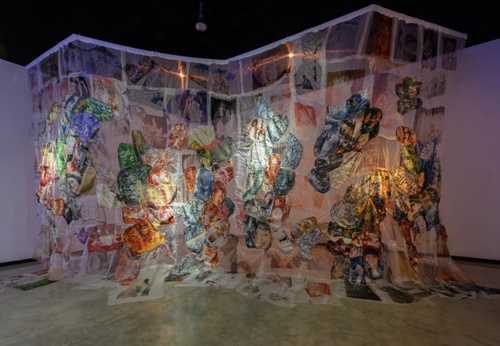
Venezuela: Kinetic Art, Modernity, and Art in Times of Crisis
Daily Artwork
- October 16, 2026
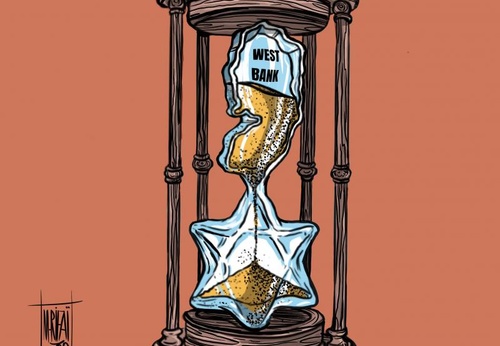
West bank
Daily Artwork
- October 16, 2026
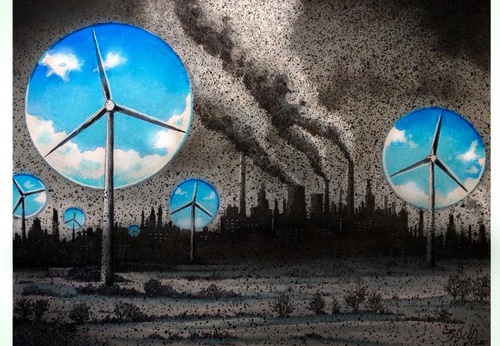
Renewable energy
Publications
- October 16, 2026
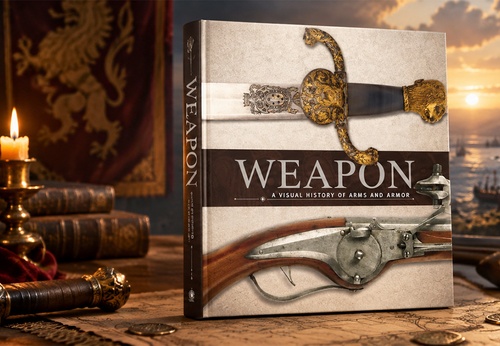
DK | WEAPON: A VISUAL HISTORY OF ARMS AND ARMOR
Publications
- October 15, 2026
Gold of the Americas
Daily Artwork
- October 15, 2026
Sudan
Gallery
- October 15, 2026
Gallery Of Humor Drawing By Aziz Bouzekri - Morocco
Publications
- October 15, 2026
Mediaeval Folk in Painting (Milner Craft Series) by Ann Johnston
- October 16, 2026
Uruguay: Torres García, Constructivism,…
- October 16, 2026
Venezuela: Kinetic Art, Modernity, and …

- October 12, 2026
Artificial Intelligence in the Art Worl…

- October 12, 2026
Art and Artificial Intelligence: A New …

- October 11, 2026
The Future of Artists in the Age of Art…

- October 11, 2026
Artificial intelligence and art: creati…
- October 08, 2026
Peru: Indigenism, Photography, and the …
- October 08, 2026
Mexico: Surrealism and the Power of Wom…

- October 07, 2026
Art and Artificial Intelligence: A New …
- October 07, 2026
Urban Art: How Art Transforms Cities
- October 06, 2026
Cuba: Revolution, Diaspora, and the Aes…
- October 05, 2026
Urban Art in Latin America: Walls That …
- October 04, 2026
Argentina: Kinetic Art and Spectator Pa…
- September 30, 2026
Cuba: Revolution, Diaspora, and the Aes…
- September 30, 2026
Costa Rica: Art, Nature, and the Constr…

- September 29, 2026
Colombia: Violence, Color, and the Sear…
- September 29, 2026
Chile: Art, Utopia, and Resistance in t…
- September 26, 2026
Bolivia: Art as a Weave of Ancestral an…
- September 26, 2026
Brazil: From Anthropophagism to the Con…
- September 22, 2026
Argentina: Between Cosmopolitan Avant-G…
- August 29, 2023
The history of Bolivian art
- February 19, 2024
Analysis and meaning of Van Gogh's Star…
- January 28, 2024
Culture and Art in Argentina

- September 25, 2023
What is the importance of art in human …

- September 23, 2023
What is paint?

- August 23, 2023
The 11 types of art and their meanings
- August 10, 2023
14 questions and answers about the art …

- September 23, 2023
Painting characteristics
- August 30, 2023
First artistic manifestations
- January 12, 2024
10 most beautiful statues and sculpture…
- October 18, 2023
History of sculpture
- September 23, 2023
History of painting
- April 06, 2024
History of visual arts in Ecuador
- November 21, 2024
History of Visual Arts

- March 26, 2024
The importance of technology in art1
- March 26, 2024
Cultural identity and its impact on art…
- July 13, 2024
The impact of artificial intelligence o…
- August 27, 2023
The history of art Mexico
- April 07, 2024
Graffiti in Latin American culture

- December 20, 2024
What is art? Definition, concept and ar…
- February 19, 2024
Analysis and meaning of Van Gogh's Star…

- August 13, 2023
9 Latino painters and their great contr…
- August 23, 2023
The 11 types of art and their meanings
- August 27, 2023
15 main works of Van Gogh
- August 10, 2023
14 questions and answers about the art …
- August 29, 2023
The history of Bolivian art
- January 28, 2024
Culture and Art in Argentina
- November 06, 2023
5 Latin American artists and their works
- September 23, 2023
Painting characteristics
- September 23, 2023
What is paint?
- September 25, 2023
What is the importance of art in human …
- August 30, 2023
First artistic manifestations
- March 26, 2024
Cultural identity and its impact on art…
- December 18, 2023
10 iconic works by Oscar Niemeyer, geni…

- January 26, 2025
10 of the best Bolivian painters

- August 24, 2023
The most famous image of Ernesto "Che" …
- January 12, 2024
10 most beautiful statues and sculpture…
- January 20, 2024
What is the relationship between art an…
- May 26, 2024
Técnicas de artes visuais
- October 30, 2023
Characteristics of Contemporary Art