Political Cartooning in Brazil: When the Line Becomes a Language of Protest
Political cartooning in Brazil is much more than a visual joke about politicians. In the country, Charge—the Brazilian term commonly used for press and political cartoons—has, over the decades, become an important tool for criticizing power, documenting social events, and defending freedom of expression. A Brazilian cartoonist can sometimes express, in a single image, what a journalist might need several paragraphs to explain, using only a few lines and a visual metaphor.
In Brazil’s political culture, a cartoonist is not merely an illustrator of the news; he or she can be an interpreter, critic, and even a historical witness. Research on Brazilian political cartooning also emphasizes this characteristic, viewing cartoons as a condensed historical record of political and social reality.
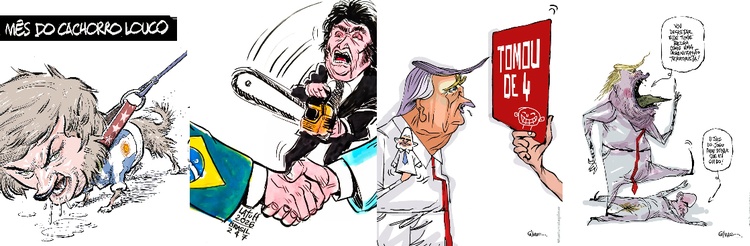
Among the contemporary generation of these artists, names such as Quinho Ravelli, Gilmar Machado, and Carlos Latuff hold a special place. Each, through a distinct visual language and worldview, has portrayed Brazilian politics as well as major issues affecting the wider world.
Quinho: Sharp Humor with a Human Face
Quinho Ravelli, the artistic name of Marcos de Souza, is one of the best-known figures in Brazilian political cartooning. Born in 1969 in Manhuaçu, he has worked for publications such as Estado de Minas and O Pasquim 21, and for many years collaborated with the Diários Associados group. Political criticism and caricatures of political figures have been central to his work, and in 2004 he received the Troféu HQ Mix award for Best Brazilian Cartoonist.
Quinho’s importance lies not only in his ability to capture a person’s likeness. He uses physical exaggeration to transform political figures into visual symbols. In his work, a politician’s nose, belly, hair, smile, or expression can become the central element of the political meaning of the image.
Quinho belongs to a generation of artists who demonstrate that political caricature does not necessarily have to be harsh or bitter. Sometimes a small exaggeration of a face, combined with a humorous situation, can challenge political power more effectively than an openly aggressive image.
Gilmar: Cartooning as a Record of Contemporary History
Gilmar Machado Barbosa (Gilmar Machado), known as “Cartunista das Cavernas” (“The Caveman Cartoonist”), is an important figure in the contemporary generation of Brazilian political cartoonists. He has worked in the press for many years and has received awards including the Troféu HQ Mix and the Prêmio Vladimir Herzog de Anistia e Direitos Humanos.
In recent years, Gilmar has devoted much of his work to documenting Brazil’s political transformations. His book series Brasil em Charges represents an effort to turn the daily newspaper cartoon into a historical archive, recording political and social events from different periods through the eyes of an artist. He has emphasized that political cartooning is not merely a “joke,” but possesses critical, artistic, literary, historical, and journalistic value.
One of the visual characteristics of Gilmar’s work is his use of sharp, nervous, angular lines, which often give political figures an uneasy and sometimes threatening presence. His subjects largely revolve around power, democracy, current politics, conservatism, and social change in Brazil.
Here, the cartoon moves beyond being a daily product of the press and becomes the visual memory of a political era.
Carlos Latuff: When Cartooning Crosses Brazil’s Borders
Among Brazilian cartoonists, Carlos Latuff has perhaps crossed national boundaries more than any other.
Born in Rio de Janeiro in 1968, Latuff published his first cartoon in 1990 in a bulletin produced by dockworkers’ unions. His work later expanded into the trade-union press, social movements, and national and international media. His collection at the Museum of the Republic of Brazil contains more than two thousand works and visual documents.
A major turning point in Latuff’s artistic life was his encounter with Mexico’s Zapatista movement. He later distributed his work freely through the internet for use by social movements and came to see cartooning as something capable of entering directly into the arena of political struggle.
This is where the concept of “cartooning as activism” becomes central to his work.
Latuff no longer focused exclusively on Brazilian politics. Palestine, war, imperialism, Iraq, Afghanistan, the Arab Spring, police violence, and human rights became major themes in his work. The Museum of the Republic also highlights subjects such as human rights, political activism, violence, war, and power in its presentation of his collection.
This approach has led to Latuff’s cartoons being used in different parts of the world, sometimes even in street demonstrations. During the Egyptian protests in 2011, some of his drawings were seen in the hands of demonstrators.
Latuff can therefore be regarded as an example of a “global cartoonist”—an artist whose creative identity is not confined to the country where he was born.
Latamarte

Carlos Latuff
By LatAm ARTE
Carlos Latuff (born 30 November 1968) is a Brazilian political cartoonist.His work deals with themes such as anti-Western sentime ...

Quinho Ravelli
By LatAm ARTE
He was born in Brazil. Illustrator, cartoonist at “Mineiro de Manhuaçu”. He is also a cartoonist and illustrator for the newspap ...

Gilmar
By LatAm ARTE
Gilmar is a cartoonist, publishes his drawings in newspapers, magazines and books. He is the author of ten comic strip/comics boo ...
Latest
Article
- October 16, 2026
Uruguay: Torres García, Constructivism, and the School of the South
Article
- October 16, 2026
Venezuela: Kinetic Art, Modernity, and Art in Times of Crisis
Daily Artwork
- October 16, 2026
West bank
Daily Artwork
- October 16, 2026
Renewable energy
Publications
- October 16, 2026
DK | WEAPON: A VISUAL HISTORY OF ARMS AND ARMOR
Publications
- October 15, 2026
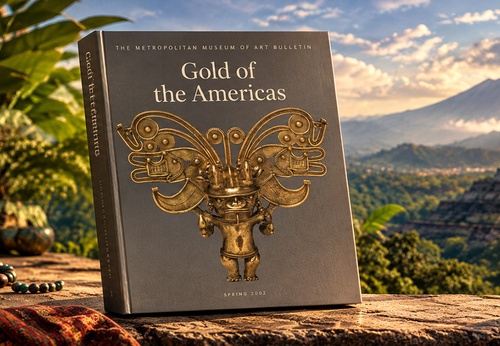
Gold of the Americas
Daily Artwork
- October 15, 2026
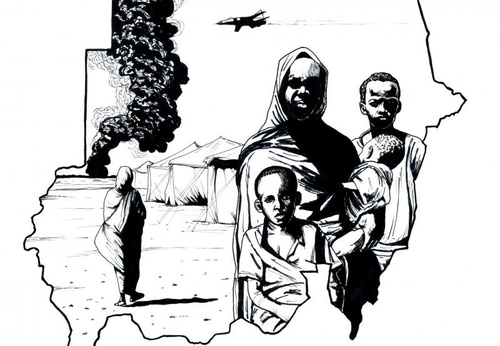
Sudan
Gallery
- October 15, 2026
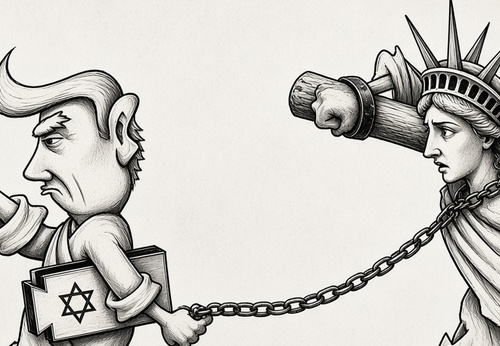
Gallery Of Humor Drawing By Aziz Bouzekri - Morocco
Publications
- October 15, 2026
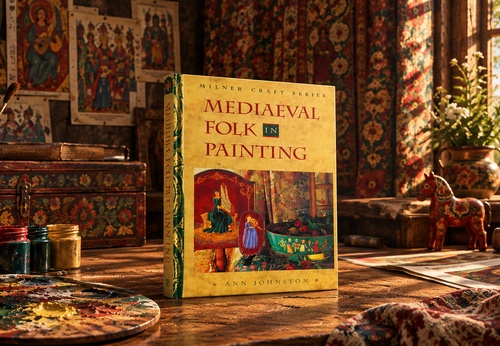
Mediaeval Folk in Painting (Milner Craft Series) by Ann Johnston
- October 16, 2026
Uruguay: Torres García, Constructivism,…
- October 16, 2026
Venezuela: Kinetic Art, Modernity, and …

- October 12, 2026
Artificial Intelligence in the Art Worl…

- October 12, 2026
Art and Artificial Intelligence: A New …

- October 11, 2026
The Future of Artists in the Age of Art…

- October 11, 2026
Artificial intelligence and art: creati…
- October 08, 2026
Peru: Indigenism, Photography, and the …
- October 08, 2026
Mexico: Surrealism and the Power of Wom…

- October 07, 2026
Art and Artificial Intelligence: A New …
- October 07, 2026
Urban Art: How Art Transforms Cities

- October 06, 2026
Cuba: Revolution, Diaspora, and the Aes…

- October 05, 2026
Urban Art in Latin America: Walls That …

- October 04, 2026
Argentina: Kinetic Art and Spectator Pa…
- September 30, 2026
Cuba: Revolution, Diaspora, and the Aes…

- September 30, 2026
Costa Rica: Art, Nature, and the Constr…

- September 29, 2026
Colombia: Violence, Color, and the Sear…
- September 29, 2026
Chile: Art, Utopia, and Resistance in t…
- September 26, 2026
Bolivia: Art as a Weave of Ancestral an…
- September 26, 2026
Brazil: From Anthropophagism to the Con…
- September 22, 2026
Argentina: Between Cosmopolitan Avant-G…
- August 29, 2023
The history of Bolivian art

- February 19, 2024
Analysis and meaning of Van Gogh's Star…
- January 28, 2024
Culture and Art in Argentina

- September 25, 2023
What is the importance of art in human …

- September 23, 2023
What is paint?

- August 23, 2023
The 11 types of art and their meanings
- August 10, 2023
14 questions and answers about the art …

- September 23, 2023
Painting characteristics
- August 30, 2023
First artistic manifestations

- January 12, 2024
10 most beautiful statues and sculpture…
- October 18, 2023
History of sculpture
- September 23, 2023
History of painting

- April 06, 2024
History of visual arts in Ecuador
- November 21, 2024
History of Visual Arts

- March 26, 2024
The importance of technology in art1
- March 26, 2024
Cultural identity and its impact on art…

- July 13, 2024
The impact of artificial intelligence o…
- August 27, 2023
The history of art Mexico
- April 07, 2024
Graffiti in Latin American culture

- December 20, 2024
What is art? Definition, concept and ar…
- February 19, 2024
Analysis and meaning of Van Gogh's Star…

- August 13, 2023
9 Latino painters and their great contr…
- August 23, 2023
The 11 types of art and their meanings
- August 27, 2023
15 main works of Van Gogh
- August 10, 2023
14 questions and answers about the art …
- August 29, 2023
The history of Bolivian art
- January 28, 2024
Culture and Art in Argentina
- November 06, 2023
5 Latin American artists and their works
- September 23, 2023
Painting characteristics
- September 23, 2023
What is paint?
- September 25, 2023
What is the importance of art in human …
- August 30, 2023
First artistic manifestations
- March 26, 2024
Cultural identity and its impact on art…
- December 18, 2023
10 iconic works by Oscar Niemeyer, geni…

- January 26, 2025
10 of the best Bolivian painters

- August 24, 2023
The most famous image of Ernesto "Che" …
- January 12, 2024
10 most beautiful statues and sculpture…

- January 20, 2024
What is the relationship between art an…
- May 26, 2024
Técnicas de artes visuais

- October 30, 2023
Characteristics of Contemporary Art