
The Argentine museum celebrates 25 years by acquiring 1,000 works of Latin American
MALBA: The Argentine museum celebrates 25 years by acquiring 1,000 works of Latin American art
Looking back over the 25-year history of the Museum of Latin American Art of Buenos Aires (MALBA), and even before, when Argentine businessman Eduardo Costantini began building his art collection in 1982, a succession of milestones emerges, each related to the acquisition of a masterpiece of Latin American art.
In the galleries of the Argentine museum, which will celebrate its 25th anniversary in September 2026, great paintings and sculptures are displayed, distinguished by their artist, the era in which they were created, their significance for a country, their innovative elements, or their meanings.
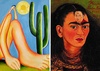
In 1995, for example, the collection acquired two paintings by great Latin American women artists: “Abaporu,” by the Brazilian Tarsila do Amaral, the most important figure of modernism in her country; and “Self-Portrait with Monkey and Parrot,” by Frida Kahlo, for which the Argentine businessman and collector paid $3.2 million at the time. This figure is ten times smaller than the $34.9 million he himself paid in 2021 for the Mexican artist's self-portrait, “Diego and I,” which is now another of the MALBA's major landmark works.
These iconic pieces make it possible to conceive dialogues in the MALBA galleries that would be impossible elsewhere, for example, around the festive Latin American culture that, in the early decades of the 20th century, was represented almost simultaneously by Diego Rivera with his “Dance of Tehuantepec” and Cândido Portinari with “Festa de São João” in Brazil; or the approaches to identity proposed from different latitudes in the late 1920s by the Colombian Rómulo Rozo with “Bachué” and Tarsila do Amaral with “Abaporu”; or the return to inner worlds, as seen in the self-portraits of Frida Kahlo and the Spanish artist based in Mexico, Remedios Varo, with “Harmony.”
Read More
Latest

Article
- January 27, 2026
The Evolution of Art: From Classical to Digital

Article
- January 27, 2026
What are Visual Arts and Why Do They Matter Today?

Gallery
- January 27, 2026
Selected Illustration Gallery of Venezuelan Artists

Gallery
- January 27, 2026
Selected Caricature Gallery of Cuban Artists
Publications
- January 26, 2026
Bolivia Poster Biennial (BICeBé 2013)
Gallery
- January 26, 2026
Selected Gallery of Paintings by Peruvian Artists

Gallery
- January 26, 2026
Selected Gallery of Watercolor Paintings by Peruvian Artists

Article
- January 26, 2026
First artistic manifestations

Article

- January 19, 2026
The Pulse of Art, Design, and Culture R…
- January 19, 2026
The Argentine museum celebrates 25 year…

- January 08, 2026
Latin American Pavilion Among the New A…

- January 07, 2026
Material Art Fair 2026

- January 05, 2026
The Latin American Pavilion Marks a Mil…

- December 31, 2025
the 10 million-dollar sales of 2025

- December 30, 2025
MALBA Doubles Collection and Reposition…

- December 29, 2025
The FEMSA Collection will celebrate its…

- December 25, 2025
“Ancestral Artist”: A Look at the Craft…

- December 25, 2025
Winner of the 13th Most Important Conte…
- December 25, 2025
Malba Acquires the Daros Latinamerica C…

- December 24, 2025
2026, a Key Year in Cultural Exchange B…

- December 23, 2025
Sacred Art Celebrates Christmas Through…
- December 22, 2025
MACA Inaugurates Exhibitions of Fontana…
- December 20, 2025
Costantini Acquires the Daros Collectio…
- December 17, 2025
ARCOmadrid Announces Participating Gall…
- December 17, 2025
Eduardo Costantini Acquired a Collectio…

- December 15, 2025
From Chile to Gaza: «Palestine Cries,»

- December 15, 2025
Latin American Artists MACLA and Montal…
- December 15, 2025
The Houston Museum That Doubled in Size…

- October 08, 2023
Illustrations reflect the brutal Israel…

- December 25, 2023
The jury statement of the Iran-Brazil F…

- March 21, 2024
The history of art in Palestine

- July 29, 2023
History of Caricature in Brazil

- September 01, 2023
Neural Filters in new photoshop 2023

- April 20, 2024
Poignant Image of Grief Wins Mohammed S…

- May 22, 2025
Brady Izquierdo’s Personal Exhibition O…

- June 29, 2024
Exhibition at Centro MariAntonia contra…

- February 18, 2024
7 Ways to Understand What Visual Arts A…

- October 21, 2023
Erick Meyenberg and Tania Ragasol at th…

- May 15, 2024
Eleven murals for Gaza painted across t…
- March 30, 2024
illustration websites in Latin America
- August 09, 2023
Venezuela mural expresses solidarity wi…
- March 14, 2024
museum of statue of van gogh

- May 25, 2025
Bordalo II to hold exhibition in Paris …

- March 15, 2024
museum of sculpture of Salvador Dali

- May 20, 2024
Latin American Festival of Performing A…

- January 23, 2025
Art Palm Beach 2025
- March 18, 2025
Works by Cuban Artist Eduardo Abela in …

- January 04, 2025
Material Art Fair 2025
- May 15, 2024
Eleven murals for Gaza painted across t…
- February 18, 2024
7 Ways to Understand What Visual Arts A…

- January 02, 2025
13 commemorations that will mark the cu…

- October 17, 2023
The influence of Latin American artists…

- February 03, 2024
THE HISTORY OF NAIF ART

- July 02, 2024
One of the largest urban art galleries …

- November 17, 2023
Fernando Botero's work is booming after…
- October 08, 2023
Illustrations reflect the brutal Israel…
- July 29, 2023
Piracicaba International Humor Exhibiti…
- December 25, 2023
The jury statement of the Iran-Brazil F…

- November 06, 2023
Heba Zagout: Palestinian artist murdere…

- December 10, 2023
Sliman Mansour and Palestinian art on t…
- March 14, 2024
museum of statue of van gogh

- February 01, 2025
A maior exposição de Botero em Barcelona
- March 21, 2024
The history of art in Palestine

- July 20, 2024
First International Mail Art Biennial 2…
- April 20, 2024
Poignant Image of Grief Wins Mohammed S…

- October 30, 2023
Palestinian turns images of the Gaza co…
- September 01, 2023
Neural Filters in new photoshop 2023

- February 08, 2024
Art Week 2024 in CDMX