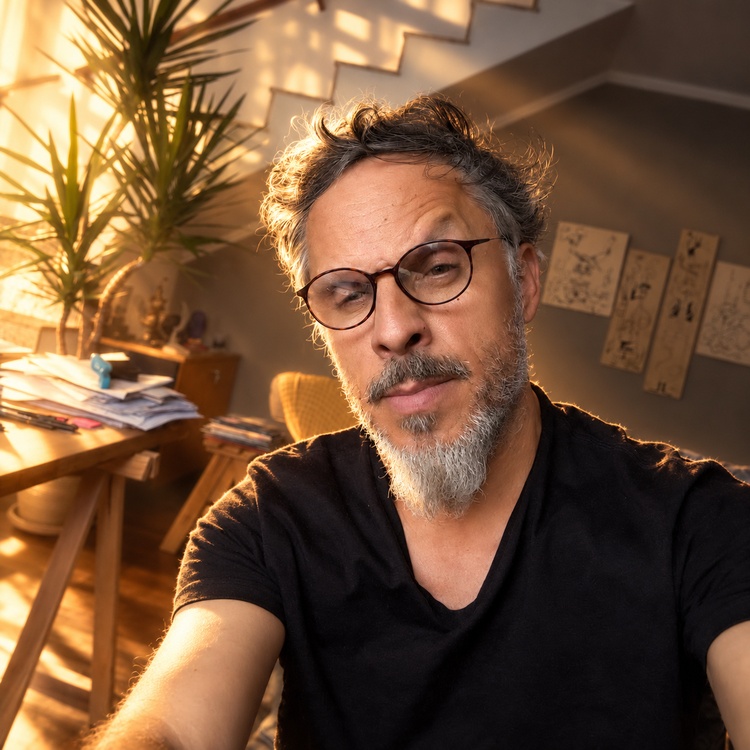
Gilmar Machado: Cartooning as a Weapon for Critical Thinking
A Special LATAM ARTE Conversation with a Brazilian Political Cartoonist
LATAM ARTE: You have devoted more than four decades of your life to cartooning and visual satire. What first attracted you to drawing and cartoons? Did you know from the beginning that this would become your life's profession?
Gilmar Machado: Drawing was more than a hobby for me, even during my teenage years. I always felt that through lines and images I could express things that were sometimes difficult to communicate with words. Gradually, I realized that cartooning is not simply about making people laugh; it is also a way of observing, analyzing, and questioning the world around us. When I entered the press, I understood that this visual language could become part of social and political life.
LATAM ARTE: You began your professional career in 1984 and spent many years working in the labor and trade union press. How did this experience influence your understanding of society?
Gilmar Machado: That period was extremely important in shaping my professional identity. Working in the labor press brought me closer to people's everyday lives, economic difficulties, inequality, and social struggles. I realized that politics does not happen only inside government buildings; it is present in people's daily lives. This experience taught me that to create a meaningful cartoon, I must understand society and listen to people's concerns.
LATAM ARTE: What do you consider the main responsibility of a political cartoonist? Should cartoons simply reflect reality, or should they also challenge those in power?
Gilmar Machado: A cartoonist must think freely and never consider any form of power beyond criticism. For me, cartooning is a form of visual journalism. With a single image, we can expose a contradiction that a lengthy article might not reveal as quickly. This does not mean opposing everything all the time. What matters is maintaining intellectual independence and not allowing political or economic power to dictate what we should see or how we should express it.
LATAM ARTE: Freedom of expression is one of the major issues in the world of cartooning. Many cartoonists around the world face threats, censorship, and pressure. How do you view this situation?
Gilmar Machado: Freedom of expression is essential to cartooning. When artists cannot draw freely because they fear threats or punishment, an important part of art's social function disappears. Of course, freedom of expression also comes with responsibility. I believe artists must be courageous while remaining aware of reality and the consequences of their work. Threats and violence cannot replace dialogue and criticism.
LATAM ARTE: During Jair Bolsonaro's presidency, you created numerous critical cartoons. How did that period affect your artistic work?
Gilmar Machado: It was a politically and socially tense period, and naturally it provided many subjects for cartooning. I tried to follow events critically and highlight contradictions and situations worth reflecting upon. For a cartoonist, it is important not simply to repeat political slogans but to look at reality from a different perspective and give audiences an opportunity to think.
LATAM ARTE: You have received important awards, including the HQ Mix Award and the Vladimir Herzog Award, and in 2024 you won the Grand Prize at the Piracicaba International Humor Exhibition. What do these achievements mean to you?
Gilmar Machado: Every award brings happiness, especially when it comes from professional colleagues and the artistic community. However, I have never considered awards the main objective of my work. More important is the opportunity to continue creating, maintaining independence, and connecting with audiences. Awards can provide motivation, but they also increase an artist's responsibility.
LATAM ARTE: Through your project Brasil em Charges, you have documented Brazilian political and social events through cartoons. Do you believe cartoons can become historical documents?
Gilmar Machado: Absolutely. Cartoons can capture the spirit of a historical period. An image may initially seem humorous, but years later it can become a document that helps us understand the concerns, conflicts, and social atmosphere of an era. Editorial cartoons are not only about current events; they also form part of a society's collective memory.
LATAM ARTE: Could you describe your creative process? When you read a political news story, how do you develop an idea for a cartoon? Is traditional hand drawing still central to your work?
Gilmar Machado: I usually begin by reading the news and trying to identify its main contradiction or central point. Sometimes a sentence, an action, or even a small detail can inspire the entire idea. Then I look for an image that can communicate the concept with as few elements as possible. Traditional drawing and direct contact with paper remain very important to me. Pencil and paper allow me to connect with an idea without an intermediary.
LATAM ARTE: Artificial intelligence is transforming illustration and the arts. Do you see this technology as an opportunity for artists or a threat to the future of cartooning?
Gilmar Machado: Every new technology brings both possibilities and concerns. Artificial intelligence can be useful in certain stages of the creative process, but artistic creativity is not simply about producing an image. Cartooning emerges from life experience, knowledge of society, human sensitivity, and an artist's critical perspective. No technological tool can replace that experience on its own. The main question is how we choose to use technology.
LATAM ARTE: What advice would you give to young artists who want to enter the world of political and social cartooning?
Gilmar Machado: I would advise young artists not to limit themselves to drawing. Read books and newspapers, follow history and politics, and remain curious about the society in which you live. Good drawing skills are essential, but they are not enough to become an effective cartoonist. You must learn to think, observe, and approach issues from different perspectives. Above all, find your own visual language.
LATAM ARTE: What distinguishes Latin American cartooning? Can visual satire create cultural connections between artists from Iran and Latin American countries?
Gilmar Machado: Latin America has a complex history of political change, social inequality, and cultural struggles, and these realities are reflected in its cartooning. Despite differences in language and culture, many human concerns are shared across countries. Visual satire can build bridges between cultures because images are not restricted by linguistic boundaries. Cooperation between Iranian and Latin American artists could create valuable opportunities for mutual understanding and the exchange of experiences.
LATAM ARTE: Finally, what projects are you currently working on, and how would you like your artistic legacy to be remembered by future generations?
Gilmar Machado: I still want to draw, observe, and ask questions about the world around me. It is important to me that cartooning remains alive and that younger generations continue developing it in their own language and style. If my work can one day help others look at history, society, and power with a more critical perspective, I will feel that my artistic journey has been worthwhile.

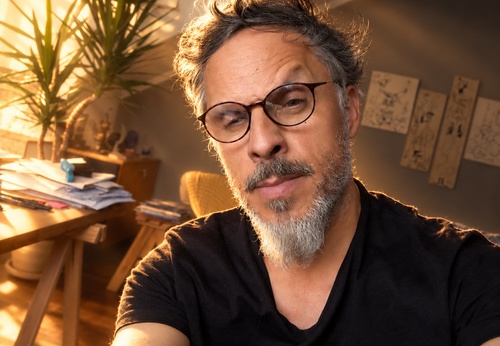
Gilmar
By LatAm ARTE
Gilmar is a cartoonist, publishes his drawings in newspapers, magazines and books. He is the author of ten comic strip/comics boo ...
Latest
Artist
- October 30, 2026
Maria Picasso Piquer
Interview
- October 30, 2026
Gilmar Machado: Cartooning as a Weapon for Critical Thinking
Video
- October 30, 2026
Gonzalo Cárcamo: Watercolor Master in Chile
Article
News
Publications
- October 29, 2026
Creative Nature Photography: Essential Tips and Techniques
Publications
- October 29, 2026
Watercolor Painting for Dummies
Daily Artwork
- October 29, 2026
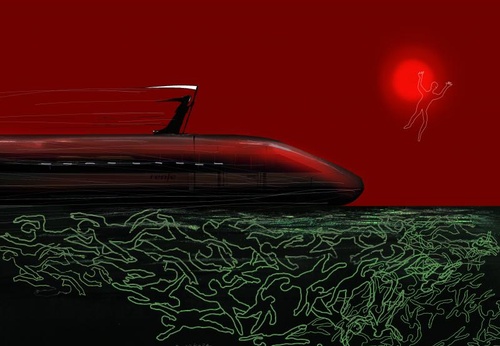
Train crash
Publications

- October 30, 2026
Gilmar Machado: Cartooning as a Weapon …
- August 26, 2026
Interview with the Palestinian Artist W…

- August 21, 2026
Interview with Yemeni Cartoonist Kamal …

- June 29, 2026
Exclusive Interview with Quinho for LAT…

- August 15, 2025
Interview with Kamal Sharaf

- June 05, 2025
When the Wall Breathes: Interview with …

- May 20, 2025
Imaginary Interview with David Alfaro S…

- May 11, 2025
Interview with Massoud Shojai Tabatabai

- March 25, 2025
Imaginary Interview with Sergio Aragonés

- March 24, 2025
Imaginary Interview with Ángel Boligán
- March 07, 2025
Imaginary Interview with Cau Gomez – Th…
- February 15, 2025
Imaginary Interview with Thomas Fluharty

- December 06, 2024
Interview with Pablo Picasso about "Dov…

- November 01, 2024
Imaginari Interview with Master Zirlado

- October 21, 2024
An Imaginary Interview with Frida Kahlo
- October 10, 2024
Interview with Diego Rivera: A Master o…

- September 14, 2024
Governments are afraid of the visual ar…

- August 23, 2024
A Hypothetical Interview with Claude Mo…

- July 27, 2024
An Imaginary Interview with Auguste Rod…

- June 20, 2024
Art and the deepest part of the human s…

- March 07, 2024
An imaginary interview with Van Gogh ab…
- May 11, 2025
Interview with Massoud Shojai Tabatabai
- August 15, 2025
Interview with Kamal Sharaf

- February 11, 2024
imaginary interview with van gogh,befor…
- October 21, 2024
An Imaginary Interview with Frida Kahlo
- March 24, 2025
Imaginary Interview with Ángel Boligán
- October 10, 2024
Interview with Diego Rivera: A Master o…

- February 02, 2024
Interview with a Ghost: Banksy Speaks
- June 29, 2026
Exclusive Interview with Quinho for LAT…

- July 31, 2023
Interview with Professor John A. Lent
- August 23, 2024
A Hypothetical Interview with Claude Mo…

- February 15, 2024
imaginary interview with Honoré Daumier

- February 08, 2024
interview with pablo picasso, imaginary
- May 20, 2025
Imaginary Interview with David Alfaro S…

- February 01, 2024
interview with Ralph Steadman , great a…
- March 07, 2025
Imaginary Interview with Cau Gomez – Th…
- August 21, 2026
Interview with Yemeni Cartoonist Kamal …
- February 15, 2025
Imaginary Interview with Thomas Fluharty

- March 08, 2024
An imaginary interview with Van Gogh an…

- April 18, 2024
An Imaginary Interview with Paul Cezanne
- October 21, 2024
An Imaginary Interview with Frida Kahlo
- February 08, 2024
interview with pablo picasso, imaginary
- March 07, 2024
An imaginary interview with Van Gogh ab…

- February 10, 2024
interview with mordillo ,master of smil…

- February 14, 2024
imaginary interview with Leonardo da Vi…
- October 10, 2024
Interview with Diego Rivera: A Master o…
- December 06, 2024
Interview with Pablo Picasso about "Dov…

- March 02, 2024
An imaginary interview with Salvador Da…
- February 02, 2024
Interview with a Ghost: Banksy Speaks
- February 11, 2024
imaginary interview with van gogh,befor…

- May 18, 2024
An Interview with Michelangelo
- February 01, 2024
interview with Ralph Steadman , great a…

- July 30, 2023
“Cartoons give us another reality of cu…
- August 23, 2024
A Hypothetical Interview with Claude Mo…
- June 12, 2024
Eduardo Costantini revolutionized Latin…
- November 01, 2024
Imaginari Interview with Master Zirlado
- June 05, 2025
When the Wall Breathes: Interview with …

- April 26, 2024
An Imaginary Interview with Caravaggio …
- June 16, 2024
A Candid Conversation with Fernando Bot…

- July 30, 2023
“My name is Paulo, but you can call me …