Who is the author when a machine creates a work of art?
Can an image created by Artificial Intelligence be considered a work of art? And if so, who should be recognized as its author?
These questions no longer belong only to technology laboratories and have become part of everyday life in the art world.
In recent years, generative Artificial Intelligence tools have started to produce increasingly sophisticated images. Using a few words, you can request a painting, an imaginary photograph, an illustration or a visual composition in different styles.
The ease of production, however, raised a series of issues that go far beyond technology.
One of the main discussions involves the data used to train the systems. Many models are developed from huge sets of digitally available images, texts and other information. This raised questions among artists who want to know whether their works were used in training in these technologies and under what conditions.
The problem is especially complex because Artificial Intelligence does not learn like a student who consciously observes a work. Its models identify statistical patterns present in the data used during training.
Even so, for many artists, a fundamental question remains: to what extent is it legitimate to use existing works to develop systems capable of generating new images?
There is also the problem of authorship.
When an artist writes a command to generate an image, chooses from dozens of results, modifies certain elements and finally uses that image in an exhibition, campaign or publication, human participation can be significant.
On the other hand, the greater the autonomy of the system in generating the result, the more difficult it becomes to define where the human contribution ends and the machine contribution begins.
This discussion could transform the very idea of authorship in the 21st century.
For centuries, the artist was seen as the one who controls the creative process from conception to execution of the work. With Artificial Intelligence, this model can be replaced by a more collaborative dynamic, in which the artist defines objectives, selects possibilities and interferes with the results produced by the algorithm.
There is yet another concern: access to technology.
Advanced Artificial Intelligence tools can expand the creation possibilities, but the development of these systems is concentrated in large technology companies. This means that a significant part of the new cultural production infrastructure is in the hands of private organizations.
The question, therefore, is not just whether Artificial Intelligence can produce art. It is also who controls the tools, data and platforms used to produce this art.
For artists, the challenge will be to learn how to use these technologies without losing the critical dimension of creation.
Artificial Intelligence can generate images in seconds, but it does not eliminate the need to choose, interpret, question and attribute meaning.
Perhaps the future of art will not be a competition between humans and machines. It could be a fight over the ability to decide how these machines will be used.
In this scenario, the artist will continue to play a fundamental role: not just producing images, but formulating questions about the world in which these images are created.
Latest
Publications
- September 12, 2026
Turner's Whaling Pictures
Publications
- September 12, 2026
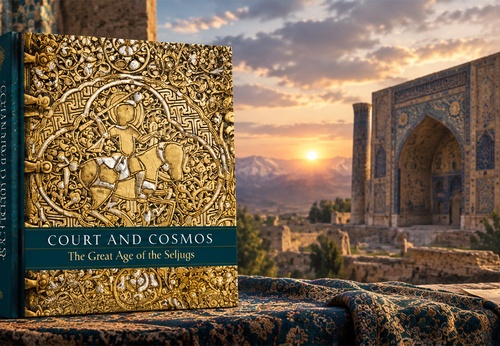
Court and Cosmos: The Great Age of the Seljuqs
Article
- September 12, 2026
Who is the author when a machine creates a work of art?
Publications
- September 12, 2026
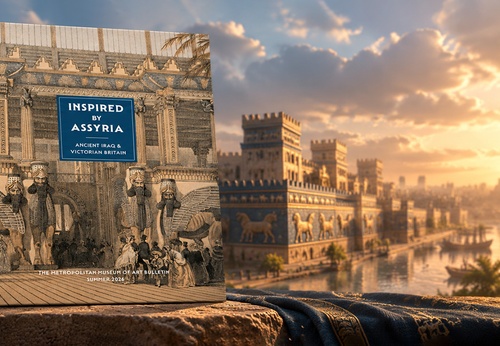
Inspired by Assyria: Ancient Iraq & Victorian Britain
Article
- September 12, 2026
Artificial Intelligence is changing the way art is made

Publications

Publications
Gallery
- September 10, 2026
Gallery of Illustration & Graphic Works by Andy Lovell – UK
Publications
- September 10, 2026
Mastering Modern Calligraphy

- September 12, 2026
Who is the author when a machine create…
- September 12, 2026
Artificial Intelligence is changing the…
- September 09, 2026
contemporary art

- September 08, 2026
The Invisible Friction: Copyright, Ethi…

- September 07, 2026
How Generative AI Transforms the Artist…
- September 06, 2026
Contemporary Sculpture: New Materials, …
- September 06, 2026
The Art of Sculpture: Between Matter, S…

- September 03, 2026
Who Is the Author of a Work Created wit…
- September 03, 2026
Artificial Intelligence and Art: A New …
- September 02, 2026
Painting as a Form of Emotional Express…
- September 02, 2026
Brazilian Art: The Mixture of Cultures …
- August 31, 2026
Contemporary Textile Art: Threads That …
- August 29, 2026
Artificial Intelligence and the Creatio…
- August 29, 2026
Political Cartooning in Brazil: When th…
- August 26, 2026
Sliman Mansour: The Artist Who Gave Pal…
- August 22, 2026
Artificial Intelligence and the Future …

- August 22, 2026
The Magic of Minimalism; Why "Less is M…
- August 21, 2026
Kamal Sharaf: The Cartoonist Who Turned…
- August 19, 2026
Canvas or Screen? The Evolution of Crea…
- August 19, 2026
The Magic of Colors
- August 29, 2023
The history of Bolivian art
- February 19, 2024
Analysis and meaning of Van Gogh's Star…
- January 28, 2024
Culture and Art in Argentina
- September 25, 2023
What is the importance of art in human …

- September 23, 2023
What is paint?

- August 23, 2023
The 11 types of art and their meanings
- August 10, 2023
14 questions and answers about the art …

- September 23, 2023
Painting characteristics
- August 30, 2023
First artistic manifestations
- September 23, 2023
History of painting
- January 12, 2024
10 most beautiful statues and sculpture…
- March 26, 2024
The importance of technology in art1
- March 26, 2024
Cultural identity and its impact on art…

- July 13, 2024
The impact of artificial intelligence o…
- October 18, 2023
History of sculpture
- April 07, 2024
Graffiti in Latin American culture
- December 20, 2024
What is art? Definition, concept and ar…
- November 21, 2024
The Role of Visual Arts in Society

- April 06, 2024
History of visual arts in Ecuador
- August 16, 2023
The 15 greatest painters in art history
- February 19, 2024
Analysis and meaning of Van Gogh's Star…

- August 13, 2023
9 Latino painters and their great contr…
- August 23, 2023
The 11 types of art and their meanings
- August 27, 2023
15 main works of Van Gogh
- August 10, 2023
14 questions and answers about the art …
- August 29, 2023
The history of Bolivian art
- January 28, 2024
Culture and Art in Argentina
- November 06, 2023
5 Latin American artists and their works
- September 23, 2023
Painting characteristics
- September 23, 2023
What is paint?
- September 25, 2023
What is the importance of art in human …
- March 26, 2024
Cultural identity and its impact on art…
- August 30, 2023
First artistic manifestations
- December 18, 2023
10 iconic works by Oscar Niemeyer, geni…

- August 24, 2023
The most famous image of Ernesto "Che" …
- January 26, 2025
10 of the best Bolivian painters
- January 12, 2024
10 most beautiful statues and sculpture…
- January 20, 2024
What is the relationship between art an…

- October 30, 2023
Characteristics of Contemporary Art
- May 26, 2024
Técnicas de artes visuais