The Magic of Light and Color
The Magic of Light and Color: A Look at the Impressionist Movement and the Capture of the Moment
Art has always served as a mirror to the world around us. However, in the late 19th century, a group of young, rebellious painters in Paris decided to turn this mirror directly toward the sun. They were weary of the rigid rules, dark colors, and historical themes favored by France’s "Académie des Beaux-Arts." Rather than recording reality with photographic precision, these artists sought to capture the "sensation" of a fleeting moment on canvas—a decision that gave birth to one of the most popular art movements in history: Impressionism.
Stepping Out of the Dark Studio into the Embrace of Nature
Before the Impressionists, painters typically worked in enclosed studios under artificial lighting. Artists such as Claude Monet, Pierre-Auguste Renoir, and Camille Pissarro, however, took their easels outdoors—a practice known as *en plein air* (painting in the open air). Their goal was to capture sunlight at different times of the day. Monet, for instance, repeatedly painted the same subjects—such as Rouen Cathedral or his water lilies—at various hours to demonstrate how shifting light completely transforms the visual identity of a subject.
Techniques That Broke the Rules
What sets Impressionist paintings apart is their bold technique:
Rapid, short brushstrokes: Because the light changed quickly, there was no time to precisely mix colors on a palette. Instead, the artists applied colors in short, thick strokes directly onto the canvas.
Vivid, pure colors: The use of black was drastically reduced. Shadows were not rendered in black or gray, but rather through the use of complementary colors (such as violet and dark blue).
Blurred lines: In these paintings, there are no sharp, clearly defined outlines. Everything is immersed in an aura of light and atmosphere.
Acceptance amidst a storm of criticism
Initially, art critics mocked these works harshly. In fact, the term "Impressionism" was coined as a derisive jab at Claude Monet’s famous painting, "Impression, Sunrise." One critic even wrote that these paintings were less complete than half-finished wallpaper! Yet, it was not long before the public’s eyes grew accustomed to this new way of seeing, and the world became captivated by the freshness, vitality, and intimacy of these works.
Why does Impressionism continue to win hearts?
The significance of Impressionism is not defined solely by its technique; this movement transformed the philosophy of art. Impressionism teaches us that the world around us is neither static nor lifeless; rather, it is in a state of constant flux, vibrating and dancing within the light. Instead of focusing on "what we see," this art centers on "how we see" and "how we feel."
Ultimately, Impressionism paved the way for modern art, granting subsequent generations of artists the courage to depict the world not as it is, but as they perceive it within their own minds and hearts.
Latest
Article
- October 25, 2026
The Magic of Light and Color

News
Publications
- October 25, 2026
OUTDOOR PHOTOGRAPHY WORKSHOPS

Daily Artwork
- October 25, 2026
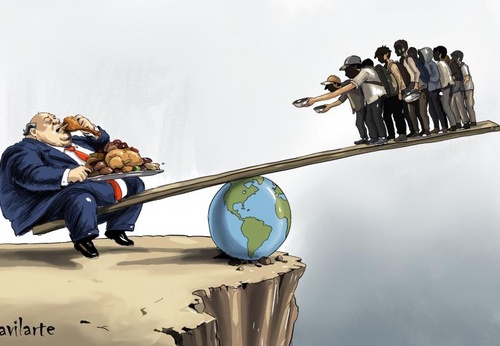
Peace on the war table
Daily Artwork
- October 25, 2026
Abysses
Publications

Publications
- October 25, 2026
DK | ANIMAL | THE DEFINITIVE VISUAL GUIDE
Article
Article
- October 24, 2026
The Renaissance of Urban Art: Beyond Graffiti in Latin America
- October 25, 2026
The Magic of Light and Color

- October 24, 2026
Roots and the Avant-Garde: The Fusion o…

- October 24, 2026
The Renaissance of Urban Art: Beyond Gr…

- October 21, 2026
Guatemala: Mayan Art, Protest, and the …

- October 21, 2026
Honduras: Art, Migration, and the Voice…

- October 20, 2026
A Mural Telling the Story of Afro-Carib…
- October 20, 2026
Panama: Art, Transit, and the Crossroad…

- October 18, 2026
Dominican Republic: Art, Diaspora, and …
- October 16, 2026
Uruguay: Torres García, Constructivism,…
- October 16, 2026
Venezuela: Kinetic Art, Modernity, and …

- October 12, 2026
Artificial Intelligence in the Art Worl…

- October 12, 2026
Art and Artificial Intelligence: A New …

- October 11, 2026
The Future of Artists in the Age of Art…

- October 11, 2026
Artificial intelligence and art: creati…
- October 08, 2026
Peru: Indigenism, Photography, and the …
- October 08, 2026
Mexico: Surrealism and the Power of Wom…

- October 07, 2026
Art and Artificial Intelligence: A New …
- October 07, 2026
Urban Art: How Art Transforms Cities

- October 06, 2026
Cuba: Revolution, Diaspora, and the Aes…

- October 05, 2026
Urban Art in Latin America: Walls That …
- August 29, 2023
The history of Bolivian art
- February 19, 2024
Analysis and meaning of Van Gogh's Star…
- January 28, 2024
Culture and Art in Argentina

- September 25, 2023
What is the importance of art in human …

- September 23, 2023
What is paint?

- August 23, 2023
The 11 types of art and their meanings
- August 10, 2023
14 questions and answers about the art …

- September 23, 2023
Painting characteristics
- August 30, 2023
First artistic manifestations
- January 12, 2024
10 most beautiful statues and sculpture…
- September 23, 2023
History of painting
- October 18, 2023
History of sculpture
- November 21, 2024
History of Visual Arts

- April 06, 2024
History of visual arts in Ecuador

- March 26, 2024
The importance of technology in art1

- March 26, 2024
Cultural identity and its impact on art…
- August 27, 2023
The history of art Mexico

- July 13, 2024
The impact of artificial intelligence o…

- December 20, 2024
What is art? Definition, concept and ar…
- April 07, 2024
Graffiti in Latin American culture
- February 19, 2024
Analysis and meaning of Van Gogh's Star…

- August 13, 2023
9 Latino painters and their great contr…
- August 23, 2023
The 11 types of art and their meanings
- August 27, 2023
15 main works of Van Gogh
- August 10, 2023
14 questions and answers about the art …
- August 29, 2023
The history of Bolivian art
- January 28, 2024
Culture and Art in Argentina

- November 06, 2023
5 Latin American artists and their works
- September 23, 2023
Painting characteristics
- September 23, 2023
What is paint?
- September 25, 2023
What is the importance of art in human …
- August 30, 2023
First artistic manifestations
- March 26, 2024
Cultural identity and its impact on art…
- December 18, 2023
10 iconic works by Oscar Niemeyer, geni…

- January 26, 2025
10 of the best Bolivian painters

- August 24, 2023
The most famous image of Ernesto "Che" …
- January 12, 2024
10 most beautiful statues and sculpture…
- January 20, 2024
What is the relationship between art an…
- May 26, 2024
Técnicas de artes visuais
- October 30, 2023
Characteristics of Contemporary Art