Art in Bolivia: Between Ancestral Heritage and Contemporary Expression
Bolivian art is a complex tapestry where pre-Columbian heritage, colonial imposition, and contemporary searches for identity converge. With more than thirty-six indigenous nations, Bolivia possesses one of the richest and most diverse artistic traditions in Latin America, though also one of the least recognized in international art circles.
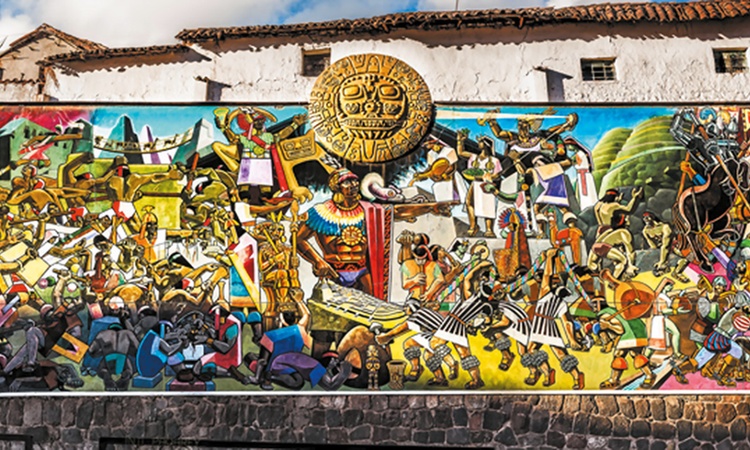
Pre-colonial Roots. Long before the Inca expansion, the Tiwanaku culture left a first-rate artistic legacy. The Gate of the Sun, a monumental stone block, translates the geometric patterns of Andean textiles into stone, while the chullpas—cylindrical funerary towers—reveal a particular conception of death and eternity. These artistic forms follow a rigorous geometric logic—the square and the cube as organizing principles—that constitutes the basis of Andean aesthetics.
Colony and Republic. Spanish colonization imposed the European artistic system, but Bolivian production never entirely lost its local roots. During the 19th century, republican architecture transitioned from late Baroque to Neoclassicism, with the Potosí Cathedral and the La Paz Cathedral as prime examples. However, the official historiography of Bolivian art systematically excluded Indigenous production from the realm of "art," relegating it to the category of "crafts." This exclusion only began to crumble in the 20th century.
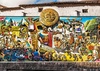
The turning point of the 20th century: Arturo Borda. In the history of modern Bolivian art, Arturo Borda (1883-1953) occupies a central place. Nicknamed "Crazy Borda," this painter subverted the 19th-century tradition that subordinated painting to portraits of independence heroes and political propaganda. He turned his gaze toward everyday life—his mother washing clothes, his family—and, above all, he was the first Bolivian painter to take Indigenous reality seriously. His work, El yatiri (1919), portrays an Andean ritual scene, presenting Indigenous people as workers with their own cultural practices, not as an excluded "other."
Contemporary Art and the Challenge of the "Non-Western." One of the central debates in contemporary Bolivian art is how to incorporate Indigenous cultural traditions into the discourse of "art." The ASUR Indigenous Art Museum in Sucre offers a revealing example: it exhibits textiles from the Tarabuco and Jalq'a nations as "works of art"—illuminated on the wall, with the names of their creators (all women) duly credited—thus breaking the prejudice that "what is produced by non-Western cultures can only be crafts." However, most Bolivian museums continue to operate under a folkloric logic, presenting Indigenous creation as "ethnic cultural expression" rather than as an individual artistic achievement.
Contemporary Painting Bolivian painting tradition has been rather conservative, but in the 21st century, a generation has emerged that conceptually rethinks the limits of "painting." In 2021, curator Douglas Rodrigo Rada brought together the exhibition "Support and Matter" with artists such as Adriana Bravo, Raquel Schwartz, and Roberto Valcárcel, who "escape the framework of traditional painting while still employing a distinctly pictorial language." These practices raise a fundamental question: what does it mean to paint from Bolivia in the contemporary context?
Intangible Heritage. It cannot be ignored that the most vibrant forms of Bolivian art reside in its intangible cultural heritage. UNESCO has recognized eight Bolivian cultural expressions as Intangible Cultural Heritage of Humanity, including the Carnival of Oruro (2001), the Fiesta de Gran Poder (2019), the Andean worldview of the Kallawaya people (2008), the Pujllay and Ayarichi (2014), and the Fiesta de Alasitas (2017). These celebrations and rituals, which merge Catholic faith with Andean traditions, constitute the core of Bolivian cultural identity.
During the Alasitas Festival, held every January 24th, residents of La Paz buy miniatures that represent their dreams and hopes—from traditional foods and houses to computers, credit cards, and even atomic bombs—condensing the individual and collective aspirations of an entire society into a single "minute."
Latamarte
Latest
Gallery
- September 21, 2026
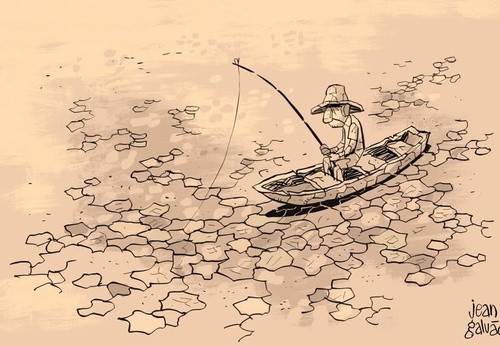
Gallery of Cartoons by Jean Galvão – Brazil
Article
- September 21, 2026
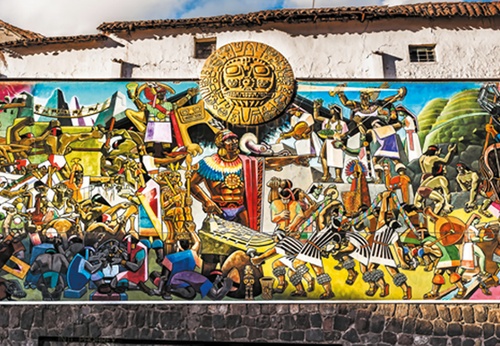
Art in Bolivia: Between Ancestral Heritage and Contemporary Expression
Publications
- September 21, 2026
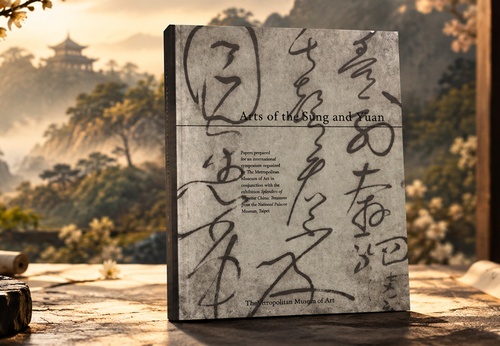
Arts of the Sung and Yuan
Daily Artwork
- September 21, 2026
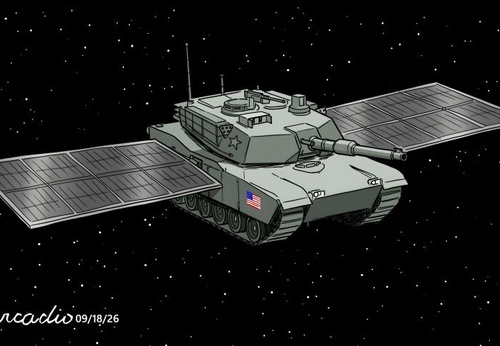
The US orbits its weapons in space.

Daily Artwork
- September 21, 2026
US Cash, Yemen Bombs
Publications
Publications
- September 21, 2026
An Egyptian Bestiary
Publications
- September 20, 2026
Enamels of Limoges
Publications
- September 20, 2026
Chinese Decorative Arts
- September 21, 2026
Art in Bolivia: Between Ancestral Herit…
- September 20, 2026
Culture, Art, and Music in Colombia

- September 16, 2026
Modern Art in the Face of Technology an…
- September 16, 2026
Modern Art and the Construction of New …

- September 12, 2026
Who is the author when a machine create…

- September 12, 2026
Artificial Intelligence is changing the…
- September 09, 2026
contemporary art

- September 08, 2026
The Invisible Friction: Copyright, Ethi…

- September 07, 2026
How Generative AI Transforms the Artist…
- September 06, 2026
Contemporary Sculpture: New Materials, …
- September 06, 2026
The Art of Sculpture: Between Matter, S…

- September 03, 2026
Who Is the Author of a Work Created wit…

- September 03, 2026
Artificial Intelligence and Art: A New …

- September 02, 2026
Painting as a Form of Emotional Express…
- September 02, 2026
Brazilian Art: The Mixture of Cultures …
- August 31, 2026
Contemporary Textile Art: Threads That …

- August 29, 2026
Artificial Intelligence and the Creatio…

- August 29, 2026
Political Cartooning in Brazil: When th…
- August 26, 2026
Sliman Mansour: The Artist Who Gave Pal…

- August 22, 2026
Artificial Intelligence and the Future …
- August 29, 2023
The history of Bolivian art
- February 19, 2024
Analysis and meaning of Van Gogh's Star…
- January 28, 2024
Culture and Art in Argentina

- September 25, 2023
What is the importance of art in human …

- September 23, 2023
What is paint?

- August 23, 2023
The 11 types of art and their meanings
- August 10, 2023
14 questions and answers about the art …

- September 23, 2023
Painting characteristics
- August 30, 2023
First artistic manifestations
- January 12, 2024
10 most beautiful statues and sculpture…
- September 23, 2023
History of painting
- October 18, 2023
History of sculpture

- March 26, 2024
The importance of technology in art1
- March 26, 2024
Cultural identity and its impact on art…

- July 13, 2024
The impact of artificial intelligence o…
- August 27, 2023
The history of art Mexico
- April 07, 2024
Graffiti in Latin American culture

- December 20, 2024
What is art? Definition, concept and ar…
- November 21, 2024
History of Visual Arts

- November 21, 2024
The Role of Visual Arts in Society
- February 19, 2024
Analysis and meaning of Van Gogh's Star…

- August 13, 2023
9 Latino painters and their great contr…
- August 23, 2023
The 11 types of art and their meanings
- August 27, 2023
15 main works of Van Gogh
- August 10, 2023
14 questions and answers about the art …
- August 29, 2023
The history of Bolivian art
- January 28, 2024
Culture and Art in Argentina
- November 06, 2023
5 Latin American artists and their works
- September 23, 2023
Painting characteristics
- September 23, 2023
What is paint?
- September 25, 2023
What is the importance of art in human …
- August 30, 2023
First artistic manifestations
- March 26, 2024
Cultural identity and its impact on art…
- December 18, 2023
10 iconic works by Oscar Niemeyer, geni…

- August 24, 2023
The most famous image of Ernesto "Che" …

- January 26, 2025
10 of the best Bolivian painters
- January 12, 2024
10 most beautiful statues and sculpture…
- January 20, 2024
What is the relationship between art an…
- October 30, 2023
Characteristics of Contemporary Art
- May 26, 2024
Técnicas de artes visuais