Art in Panama
Art in Panama: Between Indigenous Tradition and the Contemporary Avant-Garde
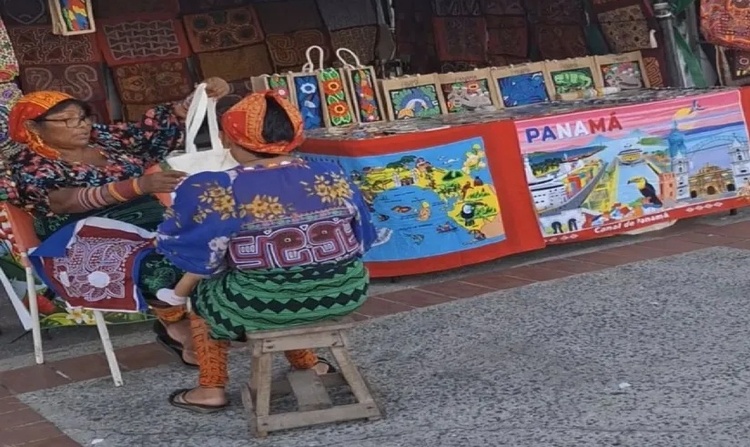
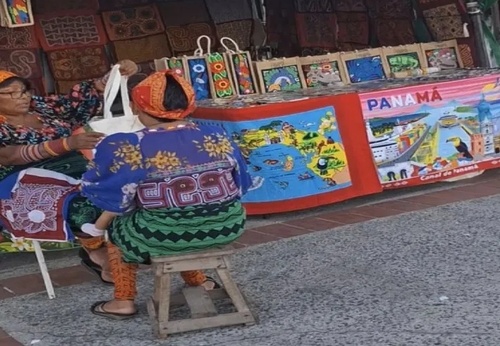
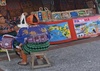
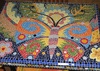
Panamanian art serves as a melting pot where indigenous traditions, colonial heritage, and a contemporary scene—increasingly recognized on the international stage—converge. Its visual richness is rooted in the nation’s indigenous cultures, most notably in the *mola*—a textile art form created by the Guna people—which stands as one of the country’s most distinctive artistic expressions. *Molas* are crafted using an "inverse appliqué" technique, involving multiple layers of fabric that are stitched and cut away; they evolved from a tradition of painting geometric designs onto the body, eventually developing into the complex compositions that are now globally celebrated as works of textile art. This heritage, alongside the *sombrero pintao*—designated an Intangible Cultural Heritage of Humanity by UNESCO in 2017—underscores the enduring vitality of Panamanian artisanal traditions.
In the realm of academic painting, the 20th century marked the professionalization of art in Panama. Roberto Lewis is considered the foundational figure of the national painting movement; his influence extended to students such as Humberto Ivaldi and Juan Manuel Cedeño, who took the initial steps toward developing a visual language infused with indigenous nuances. By the mid-20th century, abstraction was introduced by Alfredo Sinclair, while artists like Teresa Icaza explored the tropical landscape through vibrant hues and the incorporation of collage.
Panama’s contemporary art scene has achieved significant international reach. Donna Conlon and Jonathan Harker—known for addressing geopolitics and social dynamics through humor and critique—represented Panama in the exhibition *Horizon Ablaze* at the Taichung Museum of Art (Taiwan) in 2026. Their work transforms everyday sounds—such as the clinking of beer bottles or mangoes falling onto zinc roofs—into artistic experiences. The Museum of Contemporary Art of Panama (MAC Panamá) has established itself as a key platform for emerging talent, as evidenced by the Young Art Prize, which led to an exhibition by Milko Delgado titled *Eterno florecer de un cuerpo encantado* (“Eternal Flourishing of an Enchanted Body”)—a project that, drawing from the artist’s non-binary experience, questions the structures that govern our lives. Artists such as Jorge Chen, Gilberto Vallarino, and Radamés Pinzón continue to push the boundaries of Panamanian painting, exploring themes ranging from the ecological crisis in the Azuero region to the legacy of segregation in the former Canal Zone.
latamarte
Latest
Article
- November 03, 2026
Art in Venezuela
Article
- November 03, 2026
Art in Panama
Daily Artwork
- November 03, 2026
Electoral game
Publications
- November 03, 2026
Adobe Illustrator Classroom by Brian Wood
Publications
- November 03, 2026
Spectrum: Heritage Patterns and Colors
Article
- November 02, 2026
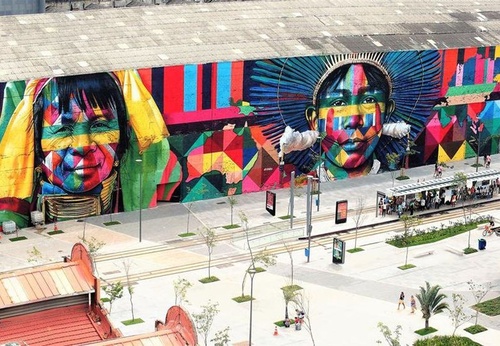
From Brazil to the World: The Global Reach of Brazilian Muralists
Article
- November 02, 2026
The Revolution of Colors: The Social Role of Urban Art in Brazil
Publications
- November 02, 2026
THE END OF POLIO | Sebastião Salgado
Daily Artwork
- November 02, 2026
humanity paths of humanity
- November 03, 2026
Art in Venezuela
- November 03, 2026
Art in Panama
- November 02, 2026
From Brazil to the World: The Global Re…
- November 02, 2026
The Revolution of Colors: The Social Ro…
- November 01, 2026
Tarsila do Amaral and the Colors of Bra…
- November 01, 2026
Beco do Batman: The Vibrant Heart of Ur…
- October 29, 2026
Women in Latin American Art: Identity, …

- October 28, 2026
The World of Graphic Arts: Definition a…
- October 27, 2026
Sustainable Art: Transforming Waste int…

- October 27, 2026
The Timeless Magic of Black-and-White P…
- October 26, 2026
The Hidden Language of Abstract Art: A …

- October 26, 2026
The Evolution of Digital Art: The Canva…
- October 25, 2026
The Magic of Light and Color
- October 24, 2026
Roots and the Avant-Garde: The Fusion o…
- October 24, 2026
The Renaissance of Urban Art: Beyond Gr…
- October 21, 2026
Guatemala: Mayan Art, Protest, and the …

- October 21, 2026
Honduras: Art, Migration, and the Voice…
- October 20, 2026
A Mural Telling the Story of Afro-Carib…
- October 20, 2026
Panama: Art, Transit, and the Crossroad…

- October 18, 2026
Dominican Republic: Art, Diaspora, and …
- August 29, 2023
The history of Bolivian art
- February 19, 2024
Analysis and meaning of Van Gogh's Star…
- January 28, 2024
Culture and Art in Argentina

- September 25, 2023
What is the importance of art in human …

- September 23, 2023
What is paint?

- August 23, 2023
The 11 types of art and their meanings
- August 10, 2023
14 questions and answers about the art …

- September 23, 2023
Painting characteristics
- August 30, 2023
First artistic manifestations
- January 12, 2024
10 most beautiful statues and sculpture…
- October 18, 2023
History of sculpture
- September 23, 2023
History of painting
- November 21, 2024
History of Visual Arts

- March 26, 2024
The importance of technology in art1
- April 06, 2024
History of visual arts in Ecuador

- July 13, 2024
The impact of artificial intelligence o…
- March 26, 2024
Cultural identity and its impact on art…
- August 27, 2023
The history of art Mexico

- December 20, 2024
What is art? Definition, concept and ar…
- April 07, 2024
Graffiti in Latin American culture
- February 19, 2024
Analysis and meaning of Van Gogh's Star…

- August 13, 2023
9 Latino painters and their great contr…
- August 23, 2023
The 11 types of art and their meanings
- August 27, 2023
15 main works of Van Gogh
- August 10, 2023
14 questions and answers about the art …
- August 29, 2023
The history of Bolivian art
- January 28, 2024
Culture and Art in Argentina
- November 06, 2023
5 Latin American artists and their works
- September 23, 2023
Painting characteristics
- September 23, 2023
What is paint?
- September 25, 2023
What is the importance of art in human …
- August 30, 2023
First artistic manifestations
- March 26, 2024
Cultural identity and its impact on art…

- January 26, 2025
10 of the best Bolivian painters
- December 18, 2023
10 iconic works by Oscar Niemeyer, geni…

- August 24, 2023
The most famous image of Ernesto "Che" …
- January 12, 2024
10 most beautiful statues and sculpture…
- May 26, 2024
Técnicas de artes visuais
- January 20, 2024
What is the relationship between art an…
- November 21, 2024
History of Visual Arts