Art and Resistance: The Role of Visual Arts in Latin American Dictatorships
Visual arts in Latin America have never been merely decorative or contemplative. During the military dictatorships that plagued the continent between the 1960s and 1980s—in Brazil (1964-1985), Argentina (1976-1983), Chile (1973-1990), Uruguay (1973-1985), and other countries—artists used their creativity as a form of resistance, denunciation, and survival. This article explores how painting, printmaking, photography, performance, and installation became weapons against censorship, torture, and enforced disappearance.
1. Printmaking as a Weapon of Dissemination
In countries with high illiteracy rates, printed images were accessible and easily replicated. In Brazil, the Group of Five (Carlos Scliar, Renina Katz, among others) produced woodcuts and serigraphs of social critique. In Chile, the publication of Artesanía Visual (1974) and the work of Taller de Gráfica Libre brought images of resistance to the Pinochet regime to the streets.
Argentine artist Lea Lublin (1929-1999) created posters and pamphlets with subversive messages. Printmaking allowed art to circulate clandestinely, pasted on walls or hidden in books.
2. Photography and Memory: Showing the Invisible
Faced with press censorship, documentary photography became an act of courage. The Chilean Photographers Collective (formed by Claudio Pérez, Jorge Campos, among others) recorded protests, arrests, and life in working-class neighborhoods, risking their lives. Many of these collections were buried or sent into exile.
In Argentina, the Mothers of the Plaza de Mayo used photographs of their disappeared children as posters, transforming private images into a public symbol of struggle. Photographer Sara Facio (1932-2024) documented resistance through portraits of artists, writers, and mothers.
In Brazil, Claudia Andujar (1931–) photographed the Yanomami people's struggle against the invasion of gold miners—a resistance that gained strength precisely during the dictatorship.
3. Installation and Performance: The Body as Protest
When brushes and canvases were censored, the body itself became both support and message.
· Hélio Oiticica (Brazil): During his exile in New York (1971-1978), he created the Eden series, which included tents, projections, and interactive objects. Although not openly political, his libertarian proposal was a direct attack on military moralism.
· Lygia Pape (Brazil): In 1968, the year of AI-5, she created the Book of Time, an installation with measuring tapes and mirrors that questioned control and freedom. Her series Ttéia (1970s) used threads that the viewer had to walk through, simulating labyrinths of repression.
Graciela Carnevale (Argentina): In 1968, she carried out the action El encierro: she invited spectators to a gallery, left, closed the door and left them locked inside for an hour. The work simulated kidnapping and disappearance, foreshadowing the terror to come.
Lotty Rosenfeld (Chile, 1943-2020): A member of CADA (Collective of Art Actions), she modified traffic signs in Santiago, writing phrases such as "UNA CASA ES UN CUERPO" (A house is a body) — a minimal but powerful act against surveillance.
4. Mail Art and Exile
Communicating between countries was dangerous, but the mail functioned as a clandestine network. Mail art allowed exiled artists—such as the Brazilian Paulo Bruscky (1949–)—to send collages, stamps, and coded messages to partners in Europe and the USA. These networks circumvented censorship and created a transnational community of resistance.
5. The "Generation 80" and the Return to Painting
With the democratic opening (mid-1980s), a new generation emerged that, at first glance, seemed apolitical, but which carried the memory of the dictatorship in a diluted form. In Brazil, Generation 80 (Daniel Senise, Leonilson, Beatriz Milhazes, Leda Catunda) painted with vibrant colors and irony, but frequently addressed absence, silence, and fracture.
Latest
Article
- October 16, 2026
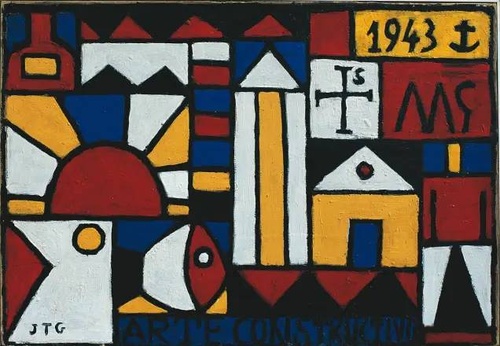
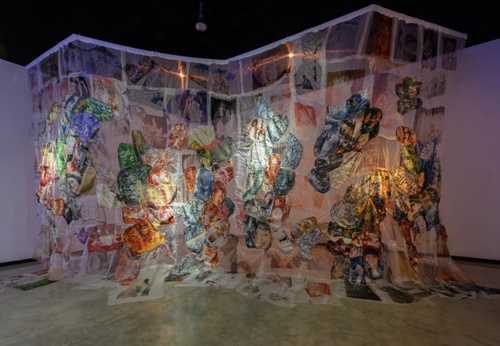
Uruguay: Torres García, Constructivism, and the School of the South
Article
- October 16, 2026
Venezuela: Kinetic Art, Modernity, and Art in Times of Crisis
Daily Artwork
- October 16, 2026
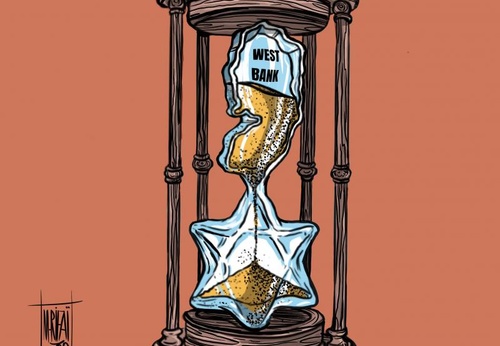
West bank
Daily Artwork
- October 16, 2026
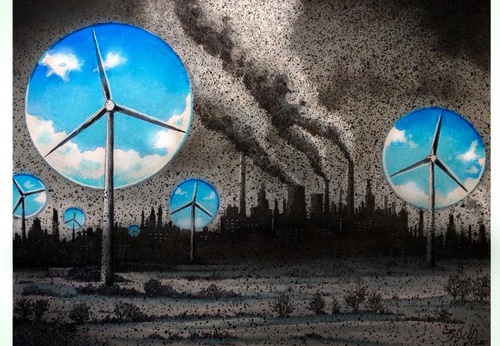
Renewable energy
Publications
- October 16, 2026
DK | WEAPON: A VISUAL HISTORY OF ARMS AND ARMOR
Publications
- October 15, 2026
Gold of the Americas
Daily Artwork
- October 15, 2026
Sudan
Gallery
- October 15, 2026
Gallery Of Humor Drawing By Aziz Bouzekri - Morocco
Publications
- October 15, 2026
Mediaeval Folk in Painting (Milner Craft Series) by Ann Johnston
- October 16, 2026
Uruguay: Torres García, Constructivism,…
- October 16, 2026
Venezuela: Kinetic Art, Modernity, and …

- October 12, 2026
Artificial Intelligence in the Art Worl…

- October 12, 2026
Art and Artificial Intelligence: A New …

- October 11, 2026
The Future of Artists in the Age of Art…

- October 11, 2026
Artificial intelligence and art: creati…
- October 08, 2026
Peru: Indigenism, Photography, and the …
- October 08, 2026
Mexico: Surrealism and the Power of Wom…

- October 07, 2026
Art and Artificial Intelligence: A New …
- October 07, 2026
Urban Art: How Art Transforms Cities
- October 06, 2026
Cuba: Revolution, Diaspora, and the Aes…
- October 05, 2026
Urban Art in Latin America: Walls That …
- October 04, 2026
Argentina: Kinetic Art and Spectator Pa…
- September 30, 2026
Cuba: Revolution, Diaspora, and the Aes…
- September 30, 2026
Costa Rica: Art, Nature, and the Constr…

- September 29, 2026
Colombia: Violence, Color, and the Sear…
- September 29, 2026
Chile: Art, Utopia, and Resistance in t…
- September 26, 2026
Bolivia: Art as a Weave of Ancestral an…
- September 26, 2026
Brazil: From Anthropophagism to the Con…
- September 22, 2026
Argentina: Between Cosmopolitan Avant-G…
- August 29, 2023
The history of Bolivian art
- February 19, 2024
Analysis and meaning of Van Gogh's Star…
- January 28, 2024
Culture and Art in Argentina

- September 25, 2023
What is the importance of art in human …

- September 23, 2023
What is paint?

- August 23, 2023
The 11 types of art and their meanings
- August 10, 2023
14 questions and answers about the art …

- September 23, 2023
Painting characteristics
- August 30, 2023
First artistic manifestations
- January 12, 2024
10 most beautiful statues and sculpture…
- September 23, 2023
History of painting
- October 18, 2023
History of sculpture
- April 06, 2024
History of visual arts in Ecuador
- November 21, 2024
History of Visual Arts

- March 26, 2024
The importance of technology in art1
- March 26, 2024
Cultural identity and its impact on art…
- July 13, 2024
The impact of artificial intelligence o…
- August 27, 2023
The history of art Mexico
- April 07, 2024
Graffiti in Latin American culture

- December 20, 2024
What is art? Definition, concept and ar…
- February 19, 2024
Analysis and meaning of Van Gogh's Star…

- August 13, 2023
9 Latino painters and their great contr…
- August 23, 2023
The 11 types of art and their meanings
- August 27, 2023
15 main works of Van Gogh
- August 10, 2023
14 questions and answers about the art …
- August 29, 2023
The history of Bolivian art
- January 28, 2024
Culture and Art in Argentina
- November 06, 2023
5 Latin American artists and their works
- September 23, 2023
Painting characteristics
- September 23, 2023
What is paint?
- September 25, 2023
What is the importance of art in human …
- August 30, 2023
First artistic manifestations
- March 26, 2024
Cultural identity and its impact on art…
- December 18, 2023
10 iconic works by Oscar Niemeyer, geni…

- January 26, 2025
10 of the best Bolivian painters

- August 24, 2023
The most famous image of Ernesto "Che" …
- January 12, 2024
10 most beautiful statues and sculpture…
- January 20, 2024
What is the relationship between art an…
- May 26, 2024
Técnicas de artes visuais
- October 30, 2023
Characteristics of Contemporary Art