Contemporary Art in Panama
Contemporary Art in Panama: Women, Identity, and New Languages
The Panamanian art scene of recent decades has undergone a profound transformation, driven largely by a generation of women artists who address issues of identity, gender, memory, and territory through diverse artistic languages. Far removed from the folkloric image long associated with Panamanian art, these creators have successfully integrated their work into international circuits and the global contemporary art debate.
One of the central figures is Donna Conlon, whose work addresses geopolitics, consumerism, and social dynamics through humor and critique. Her work, created in collaboration with Jonathan Harker, transforms everyday sounds—beer bottles, mangoes falling on tin roofs—into artistic experiences that invite us to rethink the relationship between nature, the economy, and urban life. Conlon and Harker represented Panama at the Horizon Ablaze exhibition at the Taichung Art Museum (Taiwan) in 2016, solidifying Panama's presence in the Asian art circuit.
Another fundamental voice is that of Martanoemí Noriega, whose practice focuses on historical memory and making the Afro-Caribbean community visible. Her mural for the Afro-Caribbean Museum of Panama not only narrates the history of this community but also dedicates a central space to "the great invisibles of official history: Afro-Caribbean women," whose work has been systematically silenced. This gesture of historical redress is also an aesthetic statement: art as a living archive of dignity.
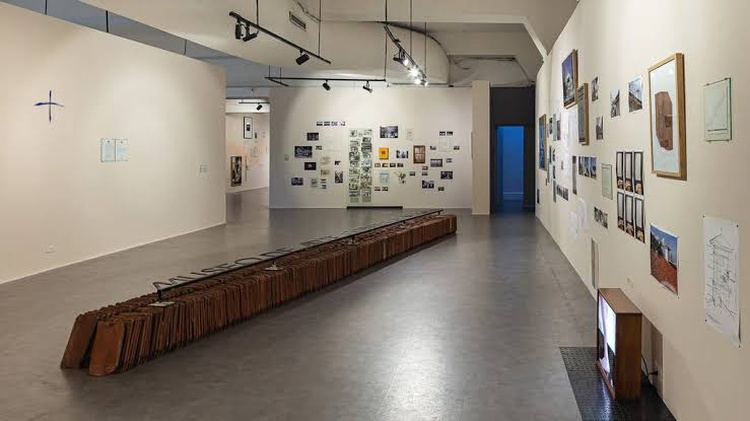
The Museum of Contemporary Art of Panama (MAC Panama) has been a key space for this new generation. Its Young Artists Award has promoted artists like Milko Delgado, whose exhibition, Eternal Blooming of an Enchanted Body, addresses, from his non-binary experience, the structures that order our lives. Delgado, along with other emerging artists, represents a scene that is no longer defined by national geography but by its capacity to engage with global issues: the ecological crisis, migration, gender identity, and colonial memory.
Panamanian textile tradition, especially the Guna mola, remains a source of inspiration and a living heritage that engages with contemporary practices. Contemporary artists and designers incorporate mola techniques and motifs into their works, establishing a bridge between ancestral tradition and current creation. In this sense, contemporary Panamanian art is characterized by a dual perspective: toward the past—its Indigenous and Afro-Caribbean roots—and toward the future—the global languages of digital art, installation, and performance. It is an art that, in its diversity, affirms that Panama is not only a geographical bridge but also a melting pot of identities in constant reinvention.
Latamarte
Latest
Article
- November 14, 2026
Art in Venezuela
Article
- November 14, 2026
Contemporary Art in Panama
Contest
- November 14, 2026
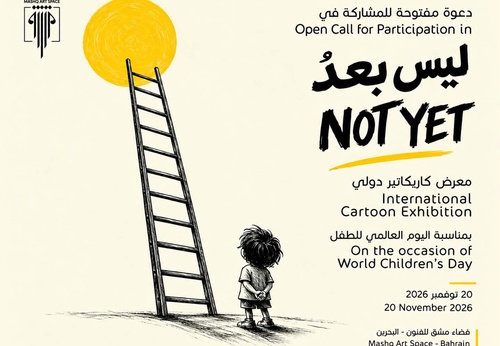
“NOT YET” International Cartoon Exhibition - Bahrain 2026
Contest
Daily Artwork

Artist
- November 14, 2026
Laura Vázquez García
Gallery
- November 14, 2026
Gallery Of Watercolor Painting By Laura Vázquez García - Spain
Gallery
Publications
- November 13, 2026
A Collection of Artworks by Massoud Shojai Tabatabai
- November 14, 2026
Art in Venezuela
- November 14, 2026
Contemporary Art in Panama
- November 12, 2026
The Impact of Sebastião Salgado’s Photo…
- November 11, 2026
Art in Venezuela: Public Space, Social …
- November 11, 2026
Art in Panama: Cultural Resistance and …
- November 10, 2026
Our North is the South: Universal Const…

- November 10, 2026
Magical Realism Beyond the Page: Latin …
- November 09, 2026
Art as Resistance: When Creation Transf…
- November 09, 2026
Art in the Digital Age: Between Creativ…

- November 08, 2026
AI and Identity in Latin American Art

- November 08, 2026
AI and Latin American Visual Heritage

- November 07, 2026
The Rise of Contemporary Indigenous Art…

- November 07, 2026
Neoconcretism: When Art Invites Touch

- November 06, 2026
Microsoft Introduces a Font Inspired by…
- November 06, 2026
Latin American Artists: From 1785 to Now
- November 05, 2026
The Power of Figurative Art in the Expr…

- November 05, 2026
The Pioneering Spirit of Argentine Kine…
- November 04, 2026
Threads of History: The Ancient Art of …
- November 04, 2026
The Legacy of Mexican Muralism
- November 03, 2026
Art in Venezuela
- August 29, 2023
The history of Bolivian art
- February 19, 2024
Analysis and meaning of Van Gogh's Star…
- January 28, 2024
Culture and Art in Argentina

- September 25, 2023
What is the importance of art in human …

- September 23, 2023
What is paint?

- August 23, 2023
The 11 types of art and their meanings

- September 23, 2023
Painting characteristics
- August 10, 2023
14 questions and answers about the art …
- August 30, 2023
First artistic manifestations
- January 12, 2024
10 most beautiful statues and sculpture…
- September 23, 2023
History of painting
- October 18, 2023
History of sculpture
- May 26, 2024
Técnicas de artes visuais

- April 06, 2024
History of visual arts in Ecuador

- March 26, 2024
The importance of technology in art1
- November 21, 2024
History of Visual Arts

- July 13, 2024
The impact of artificial intelligence o…
- March 26, 2024
Cultural identity and its impact on art…
- August 27, 2023
The history of art Mexico

- December 20, 2024
What is art? Definition, concept and ar…
- February 19, 2024
Analysis and meaning of Van Gogh's Star…

- August 13, 2023
9 Latino painters and their great contr…
- August 23, 2023
The 11 types of art and their meanings
- August 27, 2023
15 main works of Van Gogh
- August 10, 2023
14 questions and answers about the art …
- August 29, 2023
The history of Bolivian art
- January 28, 2024
Culture and Art in Argentina
- November 06, 2023
5 Latin American artists and their works
- September 23, 2023
Painting characteristics
- September 23, 2023
What is paint?
- September 25, 2023
What is the importance of art in human …
- August 30, 2023
First artistic manifestations
- March 26, 2024
Cultural identity and its impact on art…

- January 26, 2025
10 of the best Bolivian painters
- December 18, 2023
10 iconic works by Oscar Niemeyer, geni…

- August 24, 2023
The most famous image of Ernesto "Che" …
- January 12, 2024
10 most beautiful statues and sculpture…
- May 26, 2024
Técnicas de artes visuais
- November 21, 2024
History of Visual Arts

- January 20, 2024
What is the relationship between art an…