Kamal Sharaf: The Cartoonist Who Turned His Pen into a Language of Protest
Kamal Sharaf is a prominent Yemeni cartoonist known for his political and social work in the Arab world. A significant part of his artistic career has been devoted to political, social and humanitarian issues, with an effort to transform cartooning from mere visual satire into a means of expressing truth and documenting the events of his time.
Sharaf's serious artistic career began in 1997. In interviews, he has emphasized the importance of developing a personal artistic identity from the beginning. For him, a cartoonist should not merely execute other people's ideas. The artist should have a cause, an idea and a position. In his view, persistence and honesty eventually lead to the development of a recognizable artistic signature.
One of the major influences on his artistic outlook was Naji al-Ali. Sharaf has recalled finding a book of the Palestinian cartoonist's work in a second-hand book market in Sana'a. Al-Ali's drawings showed him that cartooning could be much more than entertainment. It could defend an issue, express people's suffering and confront power. This influence has remained an important part of Sharaf's artistic worldview.
Sharaf believes that the idea is more important than style. Consequently, he does not restrict himself to a single visual approach. He may use realistic drawing in some works and exaggerated or cartoon-like forms in others. For him, the visual language must serve the subject. When dealing with tragic subjects, particularly war and civilian suffering, he tends toward greater realism and a more limited use of color.
This is one of the defining characteristics of his work: technique serves the message. In humorous cartoons, exaggeration and caricatural language may dominate. When the subject is death, war or human suffering, however, the image becomes more serious and realistic.
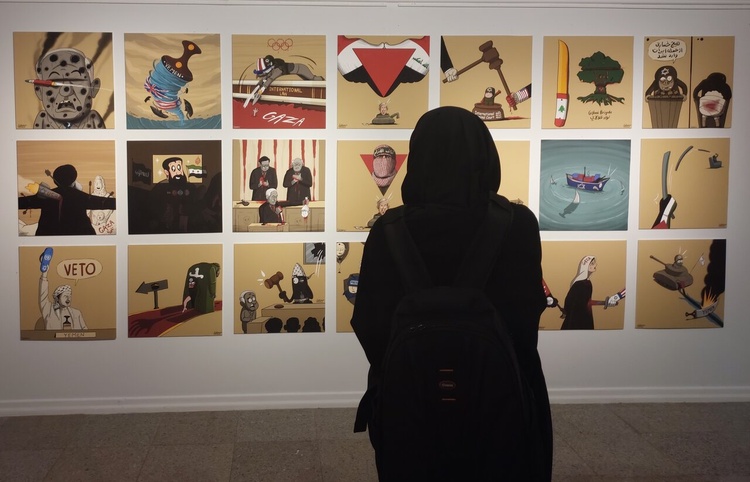
In recent years, Palestine and Gaza have become major subjects in Sharaf's work. According to a Pars Today report, during the first fifteen months following the October 7, 2023 attacks, he produced around 500 artworks related to Palestine and the broader resistance context. The scale of this production demonstrates his sustained visual response to political and military events in the region.
Sharaf's cartoons frequently explore the relationship between power and the individual, war and its victims, media and truth, and politics and everyday life. Political figures in his work are sometimes more than individual personalities. They can become symbols of broader political structures or conditions. This approach helps make his work understandable beyond the borders of Yemen.
Another important characteristic of Sharaf's work is his concern with direct communication with the audience. In an interview about cartooning, he emphasized that the art's simplicity and speed of communication allow it to reach different audiences, from less-educated viewers to highly educated readers. The internet has further expanded this potential by allowing cartoonists to circulate their work internationally without depending entirely on newspapers and traditional media.
Sharaf has also embraced digital tools. His education and experience in digital drawing, character design and animation have contributed to the development of his visual language. Yet technology, in his approach, does not replace thought. It is simply a tool for executing ideas more efficiently.
For Sharaf, a cartoonist must preserve an independent artistic identity. He has spoken about the political and media pressures that cartoonists may face and argues that an artist who genuinely believes in his subject should not easily abandon his path because of pressure. His career reflects his view of political cartooning as a serious and demanding art form. Academic research on Yemeni cartooning has also documented Sharaf's experiences with threats and pressure connected to his political work.
Ultimately, Kamal Sharaf's significance cannot be measured only by the number of works he has produced or by their political subjects. His importance lies in his effort to preserve personal identity, intellectual independence and the expressive power of visual language.
In a world overwhelmed by images and information, a cartoonist can still achieve something remarkably difficult: make the viewer stop for a moment. And that brief pause may be where thinking begins.
Massoud Shojai Tabatabai

Kamal Sharaf
By LatAm ARTE
Kamal Sharaf, a renowned Yemeni cartoonist, is one of the most prominent artists of the cultural front of the resistance. Born ...
Latest
Article
- October 08, 2026
Peru: Indigenism, Photography, and the Memory of the Andes
Article
- October 08, 2026
Mexico: Surrealism and the Power of Women's Art
Daily Artwork
- October 08, 2026
Genocide tunnel .. Gaza genocide did not stop yet ..
Publications
Article
- October 07, 2026
Art and Artificial Intelligence: A New Frontier of Creation
Article
- October 07, 2026
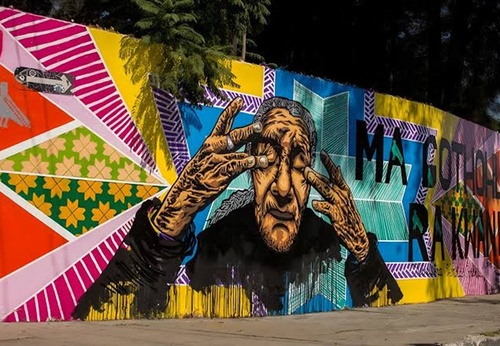
Urban Art: How Art Transforms Cities
Daily Artwork
Daily Artwork
- October 07, 2026
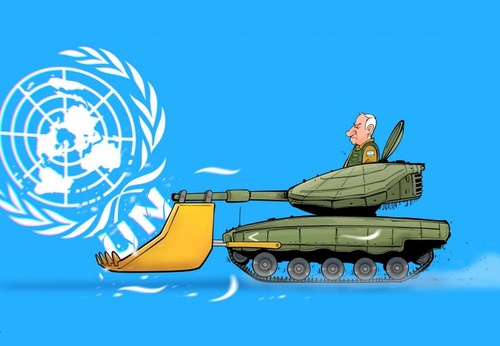
Netanyahu and International Laws…
Publications
- October 07, 2026
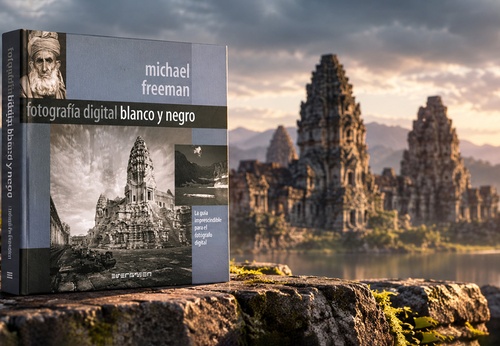
Digital Black and White Photography
- October 08, 2026
Peru: Indigenism, Photography, and the …
- October 08, 2026
Mexico: Surrealism and the Power of Wom…

- October 07, 2026
Art and Artificial Intelligence: A New …
- October 07, 2026
Urban Art: How Art Transforms Cities

- October 06, 2026
Cuba: Revolution, Diaspora, and the Aes…

- October 05, 2026
Urban Art in Latin America: Walls That …
- October 04, 2026
Argentina: Kinetic Art and Spectator Pa…
- September 30, 2026
Cuba: Revolution, Diaspora, and the Aes…

- September 30, 2026
Costa Rica: Art, Nature, and the Constr…

- September 29, 2026
Colombia: Violence, Color, and the Sear…
- September 29, 2026
Chile: Art, Utopia, and Resistance in t…
- September 26, 2026
Bolivia: Art as a Weave of Ancestral an…
- September 26, 2026
Brazil: From Anthropophagism to the Con…
- September 22, 2026
Argentina: Between Cosmopolitan Avant-G…
- September 22, 2026
Art in Venezuela: Modernity, Kinetic Ar…
- September 21, 2026
Art in Bolivia: Between Ancestral Herit…

- September 20, 2026
Culture, Art, and Music in Colombia

- September 16, 2026
Modern Art in the Face of Technology an…
- September 16, 2026
Modern Art and the Construction of New …

- September 12, 2026
Who is the author when a machine create…
- August 29, 2023
The history of Bolivian art
- February 19, 2024
Analysis and meaning of Van Gogh's Star…
- January 28, 2024
Culture and Art in Argentina

- September 25, 2023
What is the importance of art in human …

- September 23, 2023
What is paint?

- August 23, 2023
The 11 types of art and their meanings
- August 10, 2023
14 questions and answers about the art …

- September 23, 2023
Painting characteristics
- August 30, 2023
First artistic manifestations
- January 12, 2024
10 most beautiful statues and sculpture…
- September 23, 2023
History of painting
- October 18, 2023
History of sculpture
- November 21, 2024
History of Visual Arts

- March 26, 2024
The importance of technology in art1
- April 06, 2024
History of visual arts in Ecuador

- July 13, 2024
The impact of artificial intelligence o…
- March 26, 2024
Cultural identity and its impact on art…
- August 27, 2023
The history of art Mexico

- December 20, 2024
What is art? Definition, concept and ar…
- April 07, 2024
Graffiti in Latin American culture
- February 19, 2024
Analysis and meaning of Van Gogh's Star…

- August 13, 2023
9 Latino painters and their great contr…
- August 23, 2023
The 11 types of art and their meanings
- August 27, 2023
15 main works of Van Gogh
- August 10, 2023
14 questions and answers about the art …
- August 29, 2023
The history of Bolivian art
- January 28, 2024
Culture and Art in Argentina
- November 06, 2023
5 Latin American artists and their works
- September 23, 2023
Painting characteristics
- September 23, 2023
What is paint?
- September 25, 2023
What is the importance of art in human …
- August 30, 2023
First artistic manifestations
- March 26, 2024
Cultural identity and its impact on art…
- December 18, 2023
10 iconic works by Oscar Niemeyer, geni…

- January 26, 2025
10 of the best Bolivian painters

- August 24, 2023
The most famous image of Ernesto "Che" …
- January 12, 2024
10 most beautiful statues and sculpture…
- January 20, 2024
What is the relationship between art an…

- October 30, 2023
Characteristics of Contemporary Art
- May 26, 2024
Técnicas de artes visuais